
US-Iran Conflict Claims Saudi Arabia as Casualties, "Ambitious Project" at Risk
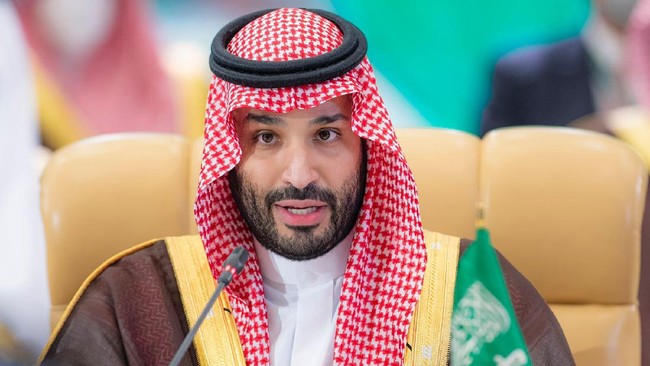
Riyadh — Crown Prince Mohammed bin Salman’s ambitious plan to transform Saudi Arabia into a global centre of innovation, prosperity, and modernity is now under threat. Escalating military tensions in the Middle East threaten the “ambitious project” of Vision 2030, which was designed to rival Dubai as a regional business hub and attract Western talent and investment.
This began when the United States and Israel launched airstrikes on Iran on 28 February, killing Iran’s supreme leader, Ayatollah Khamenei. This prompted indiscriminate retaliation from Iran, targeting not only Israel but all Gulf states with American military bases, including Saudi Arabia.
This week, Saudi Arabia’s air defences had to shoot down several Iranian drones and cruise missiles, whilst an attack on the Ras Tanura refinery briefly halted operations. The incident immediately shattered the illusion of security that has long been championed in the Gulf region.
Dania Thafer, Executive Director of the Gulf International Forum, stated that normalising volatility poses a major risk to Saudi Arabia’s economic expansion. According to her, MBS’s transformation agenda depends heavily on the credibility of long-term forecasts, not merely absolute security.
“Vision 2030 assumes that global investors, multinational corporations, and expatriate talent will view Saudi Arabia as a stable environment for capital, innovation, and lifestyle. This assumption becomes more difficult to sustain if the Gulf is no longer seen as an oasis of stability in the Middle East, but rather as an active front line,” Thafer told the Independent on Tuesday, 10 March 2026.
Thafer added that prolonged instability will damage the narrative of transformation in the Gulf. This, according to her, will weaken the safe business hub model that Dubai has cultivated and which Saudi Arabia is now attempting to replicate.
One of the main pillars of MBS’s plan is the Neom megaproject, a vision of a future city that is the most ambitious in human history. The project, valued at more than US$490 billion (approximately 8.2 quadrillion rupiah), includes the development of mountain ski resorts, coastal resorts, an industrial zone in the Red Sea, and a megastructure city stretching 170 kilometres called The Line.
However, the project has faced various obstacles, ranging from delays to cost overruns, forcing the Saudi government to begin scaling back its development. Experts warn that prolonged conflict will increasingly hamper MBS’s ability to attract senior talent from the West.
Exodus of Foreign Residents
Dr. Neil Quilliam from Chatham House believes that the main challenge for Saudi Arabia is the crisis’s impact on the country’s ability to retain expatriate executives. This is crucial for persuading international businesses to establish regional headquarters in Riyadh.
“The problem for Saudi Arabia beyond the immediate crisis is the impact it will have on the country’s ability to attract and retain senior expatriate executives, persuade international businesses to establish their regional headquarters in Riyadh, and continue implementing Vision 2030,” said Quilliam.
Nevertheless, there is an argument that Saudi Arabia may have greater resilience compared to the UAE, another Arab nation also building a reputation as a global financial centre. Dania Thafer notes that reputationally, Saudi faces fewer losses because security is not their “brand” in the way it is for Dubai, given its larger territory.
Quilliam agrees that Saudi Arabia’s territory, comparable in size to Western Europe, is a major advantage in the recovery process. To date, domestic flights in Saudi Arabia continue to operate and many expatriates leaving the UAE are actually moving to the Kingdom via land routes.
“Although Saudi Arabia’s targeting in the current conflict will damage short-term investor and expatriate confidence in the kingdom, it will recover, albeit slowly, given the scale of its national transformation projects and temporarily supported by high oil and gas prices,” he said.
On the other hand, Dr. Omar Al-Ghazzi, a professor at the London School of Economics and Political Science, offers a different perspective, suggesting that Iranian attacks could backfire on Tehran itself. The attacks could instead trigger deeper discussions about collective security in the Gulf that unite Saudi and UAE interests.
“At the economic level, the Iranian attacks have caused damage, particularly for the UAE, because Dubai is the most globally and economically successful city in the region. Dubai has long been a symbol of Gulf prosperity. Generally, Saudi Arabia is less of a target. For example, Saudi air travel has been less affected,” explained Al-Ghazzi.