
Unri Students Assist Digital-Based Fisheries Management in Agam
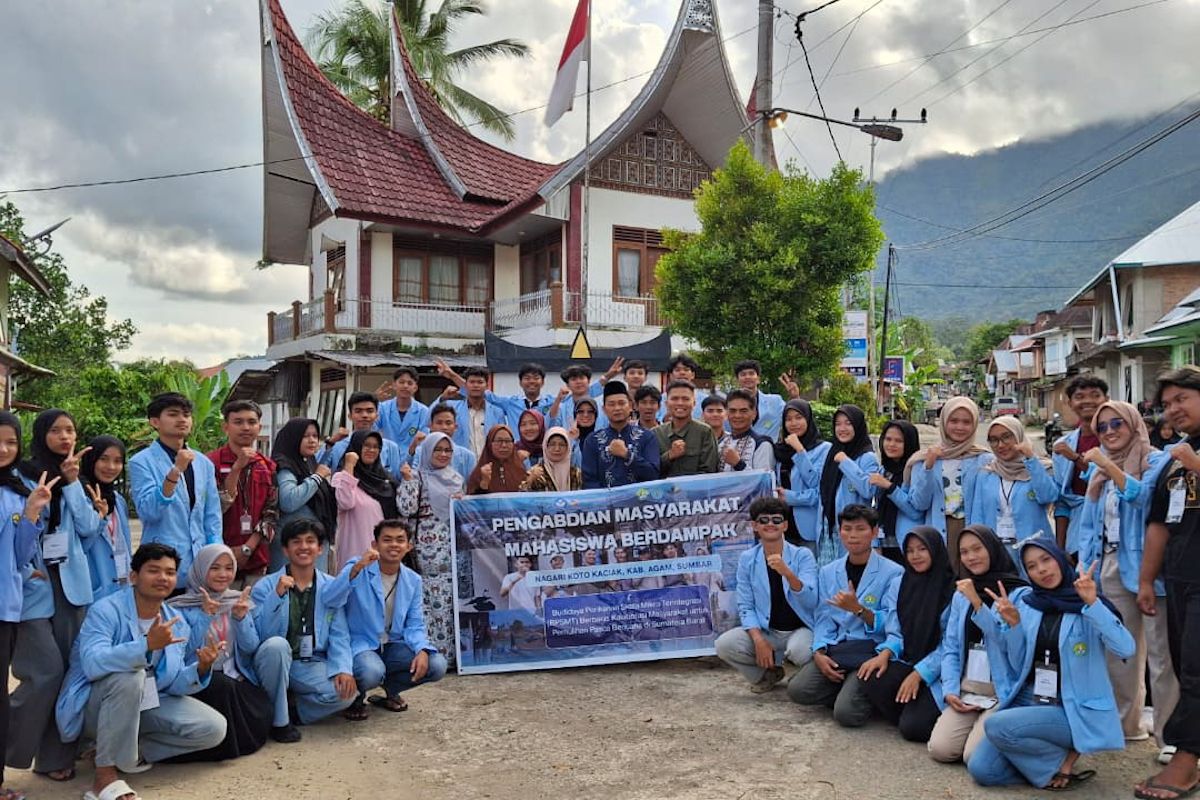
Students from Universitas Riau (Unri) are assisting the community in Nagari Koto Kaciak, Agam Regency, West Sumatra, in managing fisheries through digitalisation by introducing adaptive cultivation and ecosystem-based digital marketing.
The Head of the Group and Assistant Lecturer in the Marine Science Department of the Faculty of Fisheries and Marine Sciences at Universitas Riau, Rizki Oktavian, stated that this effort involves introducing the BPSMT-DIGIFISH system, namely micro-scale integrated fish farming based on a digital ecosystem.
“The classic problem in Nagari Koto Kaciak is the low productivity of fisheries and an unintegrated supply chain. The community has been trapped in conventional methods that are vulnerable to failure when disasters strike,” said Rizki in his statement in Jakarta on Saturday.
To address this situation, Unri students are introducing the BPSMT-DIGIFISH system as a model for micro-scale integrated fish farming that combines digital technology with an ecosystem approach based on local community needs.
Through the Recirculating Bucket-Based Fish Farming method, the community is trained to produce independent food sources on limited land with a flexible and easily applicable system in various conditions.
The advantage of this system lies in its portable nature, allowing cultivation containers to be easily moved when disaster threats occur, providing an adaptive solution to the geographical conditions of the area.
He emphasised that this technology is not merely a tool, but a form of enlightenment that can change the community’s mindset towards a more modern and sustainable production system.
In addition to the cultivation aspect, the students are also promoting value addition through collaboration with local SMEs to process fishery products into ready-to-eat items with market competitiveness.
The product “LEMBUKU” or spiced catfish serves as a concrete example of transforming previously sold raw harvests into high-economic-value processed products with packaging and business legality.
Product marketing is conducted through digital platforms, thereby opening up broader market access and significantly increasing community income opportunities compared to the previous traditional sales system.
It is known that the programme involves around 50 students who allocate 160 effective working hours in empowerment activities, covering production, business management, and integrated digital marketing aspects.
Rizki affirmed that the approach used is Participatory Action Research, so the community is actively involved as subjects of change, not just recipients of the programme benefits.
Furthermore, he said that through this programme, residents are provided with training from making cultivation tools, production management, to using digital technology for independent and long-term sustainable marketing.
He emphasised that integration with the tourism sector through tourism awareness groups also opens up opportunities for developing ecotourism and fisheries-based education that can sustainably enhance the local economy.
Rizki hopes that the programme can build post-disaster self-reliance through a resilient system, so the community not only recovers but also has stronger economic competitiveness in the future.
“This small effort from Unri students is a reminder to us all that post-disaster recovery should not stop at providing emergency aid,” said Rizki.