
Trump Claims Iranian Missiles Will Soon Reach US, but US Intelligence Disagrees
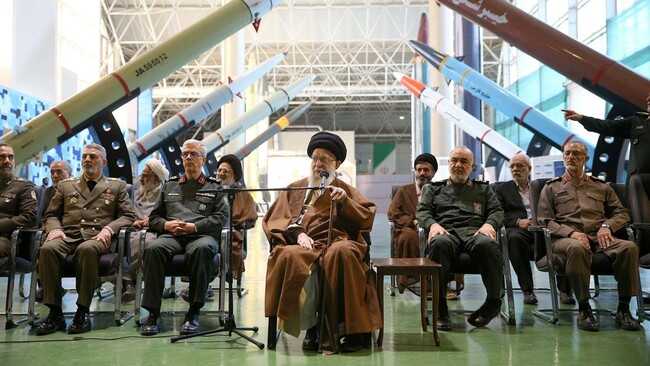
When President Donald Trump warned that Iran would “soon” possess missiles capable of reaching the American mainland, his statement immediately drew scrutiny in Washington. However, according to three sources familiar with US intelligence assessments, the claim is not supported by the latest intelligence evaluations and is considered exaggerated.
This prompted questions about some of Trump’s arguments for potentially attacking the Islamic Republic.
In his state of the union address to Congress on Tuesday, 24 February 2026, Trump began building a case to the American public for why Washington could launch an attack on Iran. He stated that Tehran was “working on missiles that will soon reach” the United States.
However, two sources cited no change to the unclassified 2025 assessment by the US Defence Intelligence Agency (DIA). That report stated Iran would likely require time until 2035 to develop a “militarily viable intercontinental ballistic missile” (ICBM) from the space-launch vehicles (SLVs) it already possesses.
One source stated that even if China or North Korea, which work closely with Iran, provided technological assistance, Iran would likely still require up to eight years at minimum to produce “something that is truly equivalent to an ICBM and operational.”
All three sources spoke anonymously because they were discussing sensitive intelligence information. They stated they were unaware of any US intelligence assessment indicating Iran was developing missiles that would soon be capable of reaching the American mainland. However, they did not rule out the possibility of new intelligence reports they were not aware of.
A similar report was first published by The New York Times, which stated that US intelligence agencies believed Iran would likely need years before possessing missiles capable of striking the United States.
The White House and Rubio’s Statement
In response to these doubts, White House spokeswoman Anna Kelly defended the president’s statement.
“President Trump is absolutely correct in highlighting the serious concerns posed by Iran, a country that chants ‘death to America,’ which possesses intercontinental ballistic missiles,” she said, according to Reuters on Friday, 27 February 2026.
Trump’s statement emerged as US and Iranian representatives were negotiating regarding Tehran’s nuclear programme. Thus far, no signs of a breakthrough have appeared that could prevent a possible US attack, amid Washington’s massive military deployment in the region.
Trump himself had not yet provided much public explanation for the reasons that could lead the US to take its most aggressive action against Iran since the 1979 Revolution.
In his address, he alluded to Tehran’s support for militant groups, persecution of demonstrators, and Iran’s missile and nuclear programmes as threats to the region and the United States.
Without providing evidence, Trump also stated that Tehran had begun rebuilding its nuclear programme, which he claimed had been “obliterated” by US air strikes in June against three major uranium enrichment facilities.
US Secretary of State Marco Rubio spoke more cautiously on Wednesday. He said Iran was “on a path towards the capability to one day develop a weapon that could reach the American mainland.”
Tehran’s Denial
Iran denied it was pursuing nuclear weapons. Tehran stated that uranium enrichment, a process that can produce fuel for nuclear power plants or nuclear warheads depending on the level of enrichment, was conducted solely for civilian purposes.
In an interview with India Today TV released on Wednesday, Iranian Foreign Minister Abbas Araghchi denied that his country was expanding its long-range missile capabilities.
“We are not developing long-range missiles. We deliberately limit their range to below 2,000 kilometres,” he said. “We do not wish this to become a global threat. We only possess them for self-defence. Our missiles provide a deterrent.”
IAEA Assessment and Technical Capability
The US intelligence community and the International Atomic Energy Agency (IAEA) have previously stated that Iran halted its nuclear weapons development programme in 2003.
However, according to the IAEA, Tehran has in recent years continued enriching uranium, including approaching levels that could be used for weapons.
Trump also threatened to attack Iran if the country executed people arrested during anti-government protests in January or failed to reach a nuclear agreement in negotiations with the US.
Iran is known to possess the largest ballistic missile arsenal in the Middle East, with the capability to reach Israel, US bases in the region, and parts of Europe.
The country is also developing space-launch vehicles that have placed satellites into orbit, technology which according to experts could be modified into ICBMs capable of carrying nuclear warheads.
The difference is that SLVs are used to launch satellites into orbit, whilst ICBMs must possess a re-entry vehicle (RV) capable of protecting the warhead from extreme temperatures and pressure as it re-enters Earth’s atmosphere.
David Albright, a former UN nuclear inspector and president of the think tank Institute for Science and International Security, assessed that Iran remains far from possessing such capability.
“Iran is capable of launching extremely long-range missiles thanks to its space launch programme,” Albright said. “However, considerable effort is required to develop an adequate re-entry vehicle.”
Albright and several other experts also noted that Israeli air strikes last year and in 2024 have severely damaged major facilities where Tehran produces liquid and solid-fuelled ballistic missiles.