
Trump Caught in the Iran War, Advancing Hits, Retreating Hits
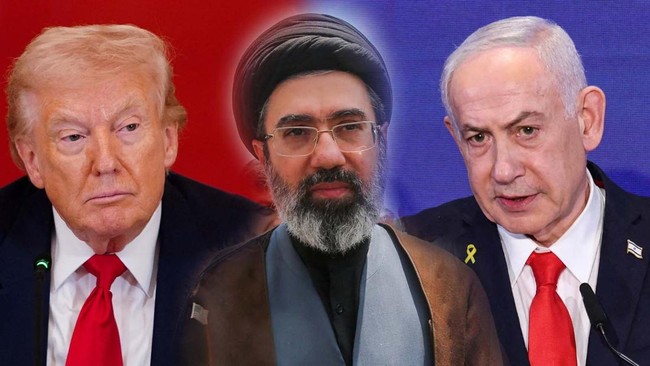
Ending the war without an agreement with Iran could bring major strategic consequences for the Middle East region, particularly for Gulf countries worried that Tehran might emerge from the conflict in a stronger position.
These concerns have arisen after US President Donald Trump stated that Washington would end the war “quite quickly”, even opening the possibility of doing so without a formal agreement.
If the war is halted without an agreement, Iran is seen as able to maintain its grip on Middle Eastern energy supplies, while Arab Gulf oil and gas producers must face the impacts of a conflict they neither started nor shaped.
Rather than weakening the Iranian government, such a situation could instead make it stronger after surviving US and Israeli attacks for weeks, launching strikes on Arab Gulf states, and shaking the global energy market by effectively closing the Strait of Hormuz.
In an interview with Reuters before his national address on Wednesday (1/4/2026), Trump said the US would end the war with Iran “quite quickly”, and had previously signalled that the conflict could be stopped even without an agreement.
Ending the war without clear guarantees regarding post-conflict conditions is viewed as a significant risk for Gulf countries. This could leave the region to bear the consequences of a war that ultimately benefits Iran.
“The problem is stopping the war without real results,” said Mohammed Baharoon, director of the B’huth Research Center in Dubai. “He [Trump] might stop the war, but that doesn’t mean Iran will.”
According to Baharoon, as long as US forces remain at bases in the Gulf region, Iran will continue to threaten that area. This is the core of the Gulf states’ concerns. Iran could exit the war undefeated and with greater influence, while the Gulf states bear the economic and strategic costs of an unresolved conflict.
Baharoon added that the weakening of freedom of navigation in the region would be a major concern. Iran, he said, could begin playing the territorial waters card and setting rules in the Strait of Hormuz, a vital route for global energy supplies.
“This goes beyond Hormuz,” he said. “Iran has placed its hand on a global economic pressure point.”
Tehran’s ability to disrupt energy flows, he continued, sends a clear message that anyone considering future attacks on Iran must think twice.
This logic explains why Gulf countries have avoided direct involvement in the war. Officials in the region say their main concern is preventing the conflict, which began as a US-Israeli campaign against Iran, from turning into a more dangerous confrontation between Sunni and Shia Muslims that could reshape the Middle East for decades.
Strategic Miscalculation
The risk of escalation is also exacerbated by what political analysts call a fundamental miscalculation by the US regarding how Iran would respond to attacks on its leadership.
The assassination of Iran’s Supreme Leader Ali Khamenei at the start of the conflict, intended as a decisive blow, instead changed the rules of the game. He was replaced by his son, Mojtaba Khamenei, and the action meant to “decapitate” the system turned into a provocation requiring resistance and retaliation.
“In one step, Trump and Benjamin Netanyahu have turned a geopolitical conflict into a religious and civilisational one,” said Middle East expert Fawaz Gerges, quoted by Reuters. “They have elevated Khamenei from a contested leader to a martyr.”
Regional analysts say the killing of Ali Khamenei has instead given greater legitimacy to the hardline instincts of Iran’s leadership, uniting the clerical elite and the Revolutionary Guard in a narrative of existential resistance, where surrender is unthinkable and survival becomes a sacred value.
They argue that the assumption that removing the top leader would fracture the system ignores Iran’s layered institutions, parallel power structures, and long track record of resilience, from the eight-year war with Iraq to decades of US sanctions.
As a result, analysts say, it is not surrender but radicalisation. Iran has become angrier and more defiant, while the region must bear the consequences.
“Khamenei was an Ayatollah; this is not something you do, especially a foreign power killing an Ayatollah,” said Alex Vatanka. “But this is Trump… a man without brakes, and for Shia clerical institutions… he has violated every norm and protocol.”
Iran’s “Energy” Weapon
US and Israeli decision-makers are not entirely blind to Iran’s ideological strength but appear to have underestimated its resilience, said terrorism expert Magnus Ranstorp.
He said the initial assumption was air dominance, with destroying missile launchers, command centres, and senior figures providing freedom of movement and strategic constraints. However, Iran’s system has instead strengthened, not fractured, supported by parallel institutions designed to survive under pressure.
Washington is also seen as having miscalculated Iran’s asymmetric retaliation capacity. Tehran does not need to win the air war but only to impose costs. For decades, Iran has invested in identifying pressure points, with energy assets and the Strait of Hormuz at the centre of its strategy.
By attacking energy infrastructure and threatening the Strait of Hormuz, Iran drives up oil prices, triggers global inflation, and shifts the pressure to the US and its allies. The goal is not military victory on the battlefield but creating economic fatigue.
Prematurely ending the war without security guarantees would leave Gulf countries vulnerable, with potential for retaliation