
TPST Bantargebang Landslide: Pramono Follows Environment Minister's Directive
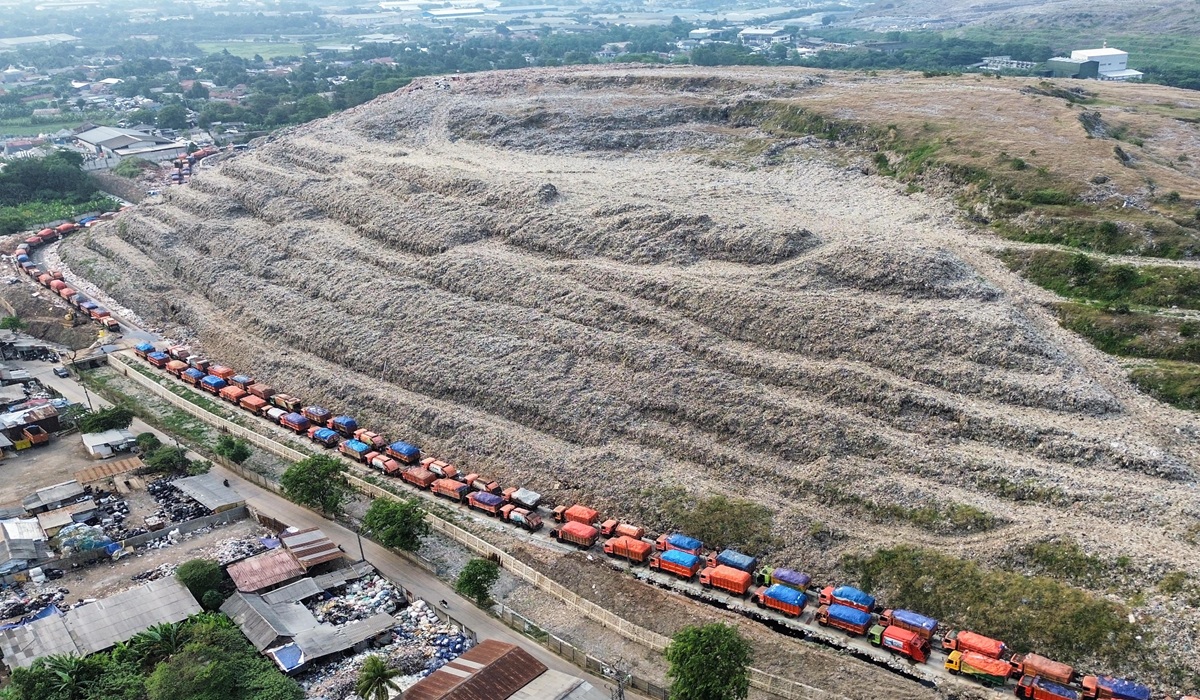
Jakarta Governor Pramono Anung claimed to have followed directives from the Ministry of Environment to cease open dumping operations at one area of TPST Bantargebang in West Java following a landslide at the facility.
Open dumping is a waste management method involving the dumping and stacking of waste on open land without sorting, processing, or soil coverage.
“In accordance with the Minister’s directive in zone 4A, we will not conduct open dumping there,” Pramono said at Jakarta City Hall on Tuesday, 10 March.
Beyond this, Pramono stated that the Jakarta Provincial Government continued to coordinate with the Ministry of Environment to realise a waste-to-energy project that is a priority for President Prabowo Subianto.
“We are now collaborating to be able to utilise locations and will certainly free up new land. Bantargebang will be dedicated to a Waste-to-Energy Power Plant (PLTSa) that will operate there,” Pramono explained.
“For this, approximately 8 to 10 hectares of land are required. Meanwhile, this land can be utilised to accommodate existing waste,” he added.
Previously, a collapse of a waste mound approximately 50 metres high in Zone IV of TPST Bantargebang on Sunday, 8 March, claimed four lives. The incident is viewed as evidence of systemic failure in Jakarta’s waste management.
Environment Minister and head of the Environmental Control Agency (KLH/BPLH) Hanif Faisol Nurofiq stressed that the tragedy served as a stern warning to the Jakarta Provincial Government to immediately cease open dumping waste management methods, which are deemed hazardous to public and worker safety.
Hanif described the condition of TPST Bantargebang as the “tip of the iceberg” regarding Jakarta’s waste management problems.
According to him, the facility has accommodated approximately 80 million tonnes of waste over 37 years, placing it at a critical capacity threshold.
The use of open dumping methods at the site is deemed to violate provisions in Law No. 18 of 2008 on Waste Management. The existing system is considered incapable of adequately reducing safety risks for surrounding communities.
“This incident should not have occurred if management had been conducted according to regulations. TPST Bantargebang must serve as a lesson for all of us to reform immediately, for the sake of human life and environmental preservation,” Hanif stated when visiting the landslide site on Monday, 9 March.
Environmental organisations assessed the Bantargebang waste mound collapse in Bekasi, West Java, which killed at least four people, as evidence of a serious crisis in waste management governance.
Governor Pramono Anung expressed surprise that workers at TPST Bantargebang continued working during heavy rainfall.
The March 2026 TPST Bantargebang landslide tragedy serves as a stern warning. The dangers of open dumping methods and the government’s strict regulations to eliminate the practice are significant concerns.
BRIN researcher Reza Cordova stated that most final waste processing facilities (TPA) in Indonesia have exceeded capacity and carry risks of methane gas explosions.
Over 340 waste disposal sites (TPA) across Indonesia still employ open dumping methods despite being legally prohibited.
Regional governments that continue open dumping practices at final processing sites (TPA) beyond the deadline set for 2026 will face sanctions.
The government stated that approximately 40 final processing sites (TPA) in Indonesia still conduct fully open dumping practices.