
The Strait of Hormuz and a Changing Global Order
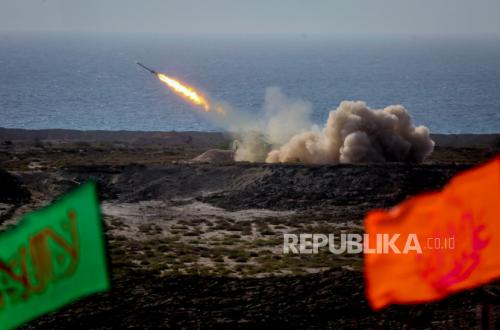
Looking back at the narrative surrounding the Strait of Hormuz—at the global energy flowing through this narrow waterway, at Persia’s long historical memory, at shifting global power balances, and at fierce debates within American politics—one finds an unavoidable impression: the world we have known for several decades is changing.
For nearly eighty years following the Second World War, the international system functioned unofficially with a “global arbiter”. Many nations may not always have agreed with Washington’s policies, but almost all understood one reality: the United States possessed the military, economic, and political capacity to maintain stability across the world’s vital sea lanes.
The Strait of Hormuz is one symbol of this system.
Through this narrow waterway linking the Persian Gulf to the Indian Ocean, oil tankers from various nations move daily, carrying energy that fuels the global economy. For decades, the stability of this route was maintained relatively well because military power ensured that international commerce could continue uninterrupted.
However, like many systems in history, this one was never truly permanent. In recent years, mounting signs indicate that the global balance is shifting towards a new phase.
Competition between the United States and China is increasingly felt in economic, technological, and geopolitical domains. Russia plays an ever-more active role in various international conflicts.
In this increasingly multipolar world, regional conflicts often have the potential to draw wider global powers into the fray. Tensions surrounding the Strait of Hormuz exemplify this clearly.
On one side lies Iran—a nation viewing itself not only as a modern political actor but also as the heir to a long Persian civilisation. Such historical consciousness often gives Iran a different perspective in facing international pressure.
On the other side is Israel, which sees Iran as a long-term strategic threat to its security. Underlying all this is President Donald Trump’s foreign policy attempting to maintain America’s position in an increasingly complex global order.
Yet in an increasingly multipolar world, even the greatest powers cannot always control every conflict dynamic. Here we begin to understand why the Strait of Hormuz feels like a small mirror of the vast changes underway.
At this waterway converge various interests: global energy, geopolitical rivalries, and historical memory of nations. When all these interests meet in a confined space, stability becomes far more fragile than we often imagine.
In such circumstances, rationalising Iran may be nearly impossible—at least in the short term. Historical wounds, geopolitical pressure, and security logic often cause each party to move within circles of suspicion that are difficult to break.
Yet precisely for this reason, one thing must not disappear from the international stage: communication.
The world must maintain dialogue channels with all parties involved in tensions around the Strait of Hormuz. With Iran, certainly. But also with the United States and even with Israel through whatever diplomatic channels remain available.
Often in international politics, such conversations do not occur directly. They move through intermediary nations, multilateral forums, or broader networks of diplomatic relations.
Yet the existence of such communication channels often remains the only way to prevent regional crises from transforming into far larger conflicts. Because ultimately, there is one old lesson that repeats throughout the history of warfare: there is never truly absolute victory.
War may produce victors on the battlefield. But it almost always leaves behind long wounds—economic, political, and humanitarian—that all parties must bear.
In a world losing its global arbiter, stability can no longer be maintained entirely by one power alone. It must be built through a more fragile, more complex, and often more uncertain balance. Here, nations choosing diplomacy and equilibrium can play an important role.
For Indonesia, this increasingly divided world presents both challenges and opportunities. Indonesia may not be a global military power, but the nation possesses a strategically important geographic position, a developing economy, and a tradition of relatively moderate diplomacy. In an increasingly tense global situation, the wisest course for Indonesia is not to become trapped in bloc rivalries.
Instead, Indonesia can continue maintaining communication with various parties, strengthening its own economic and energy resilience, and playing the role of diplomatic bridge in an increasingly complex international system. Because in a world without an arbiter, often what is most needed is not merely power. What is most needed is the ability to maintain balance.
The Strait of Hormuz may be merely a narrow waterway on the world map. Yet from it we can see a far larger picture of history in motion.
Through this waterway move oil tankers, military fleets, and geopolitical interests of various nations. It is the place where the world’s energy flows—and simultaneously where changes in the global order begin to become visible.
And perhaps from this narrow strait we can read one increasingly clear reality in today’s international politics: that the world which once appeared to have a single regulator is now slowly transforming into something else.