
The Light of Ramadan Behind Bars
Correctional facilities should, in essence, reflect how a nation treats its citizens who have strayed. They are not merely places of punishment, but laboratories for change.
Mataram (ANTARA) - Correctional institutions, wherever they are located, are never truly silent; behind high walls and iron gates, life continues. There are officers starting their duties with discipline, inmates preparing for daily activities, and the sounds of prayers or quiet conversations filling the corridors of the cells.
Correctional facilities are not just places of punishment, but spaces for pause, where the state tests the meaning of rehabilitation and considers whether it truly becomes a path back for someone who has strayed, or simply turns into a waiting room before they return to society without any meaningful change?
This issue is important to examine because the image of correctional institutions is often perceived in a singular way, as being overcrowded, prone to violations, and far from humanitarian values. This perception is not without reason.
Classic problems such as overcrowding, limited facilities, and even practices of deviation often become the focus of attention. However, amidst these various challenges, efforts to improve the system continue in several regions, including in Nusa Tenggara Barat (NTB).
In NTB, a more rehabilitation-oriented approach has begun to appear more systematically in recent years. The momentum of Ramadan 2024 provides one of the interesting portraits to be explored in more depth.
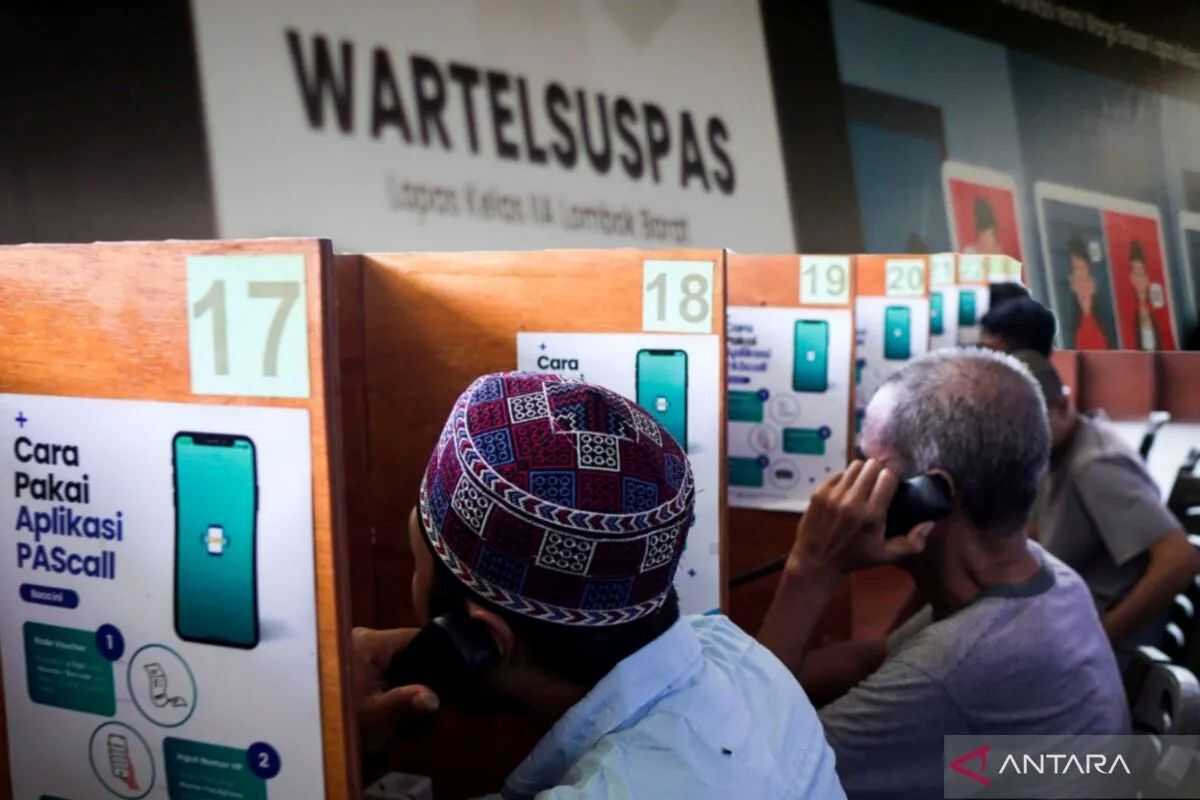
The Directorate General of Corrections of NTB provides video call services for inmates in all correctional facilities and detention centers. This service is a development of the Special Correctional Telecommunications Center or Wartelsuspas, which previously only provided voice calls.
This policy refers to Law Number 22 of 2022 concerning Corrections, which guarantees the right of inmates to communicate with their families and legal counsel. At the Class IIA Lombok Barat Correctional Institution, inmates use this facility in turn. During Ramadan, the intensity of use increases, and the duration of communication is regulated so that all residents have a fair opportunity.
At the Class IIB Dompu Correctional Institution, the Wartelsuspas service is optimized every Monday to Friday in two time slots, with a strict registration and supervision mechanism. All activities are recorded administratively to maintain transparency and prevent the misuse of illegal communication devices.
At the same time, spiritual guidance is also strengthened. The Lombok Barat Correctional Institution facilitates congregational Tarawih prayers and recitation of the Quran in the prison mosque. The Mataram Correctional Institution uses Ramadan as a momentum to strengthen faith, with lectures, religious consultations, and assessments of behavior that can be considered in the proposal for remission. Officers not only guard but also participate in worship.
From this series of policies, one common thread emerges: the correctional system strives to treat inmates as whole human beings, not just as statistical figures.