
Tesla's FSD Technology Deemed to Pose "Major Danger" by Euro NCAP
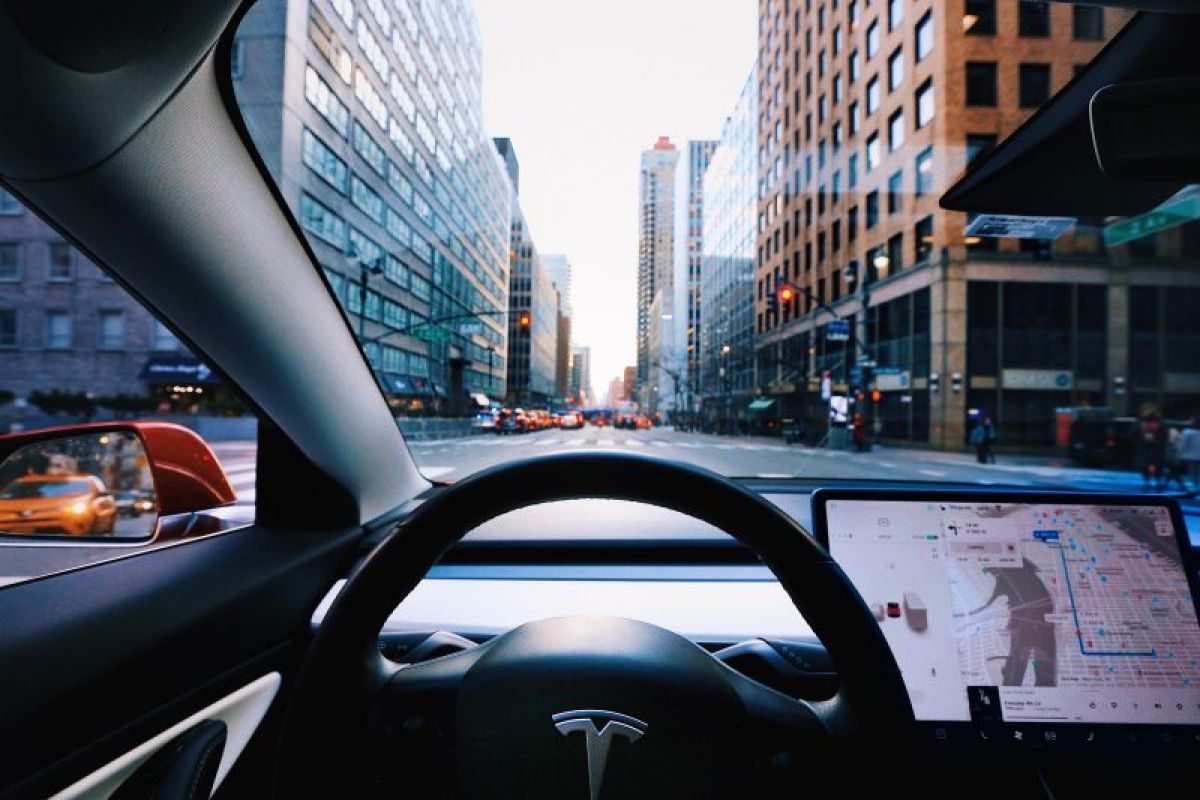
Jakarta (ANTARA) - A representative from Euro NCAP, the European vehicle safety assessment body that serves as a global benchmark, has described Tesla’s Full Self-Driving (FSD) technology as dangerous and irresponsible.
Speaking to media in Australia and New Zealand, Euro NCAP’s Technical Director, Richard Schram, stated that the much-praised Tesla technology would not score well under current testing criteria.
“(Tesla’s FSD) is impressive, but there is a major danger: over-reliance on the system. What I want to see from Tesla is, ‘this is truly full self-driving, and we will take full responsibility for anything that happens forever,’” Schram said, as quoted by the Drive website on Monday local time.
For context, FSD (Supervised) allows compatible Tesla Model 3 or Tesla Model Y vehicles to handle complex driving situations such as city roads, stopping at traffic lights, and parking, thanks to camera-based hardware and rapid processing capabilities.
This technology is not yet available in Europe due to regulatory concerns and higher safety standards for autonomous systems, partly because of the close proximity of countries with differing road signs and rules.
Schram said the biggest issue with Tesla’s FSD (Supervised) is its name, as it gives the impression that the car is responsible, when in fact the responsibility still lies with the driver.
“If you want to call it automation, go ahead, but that means you (the car manufacturer) are responsible. Fairly, and not just with Tesla, generally nothing is truly self-driving; everything is an assistance system. An advanced assistance system still requires driver involvement. If that’s balanced, it’s fine,” Schram stated.
As part of the 2026 regulations, testing will include the resilience of driver monitoring systems, particularly in terms of accuracy and tracking capabilities.
For the 2029 regulatory changes, the safety body plans to test how “smart” the monitoring systems are, for example, active safety systems should only intervene if they truly detect that the driver is not seeing a significant hazard.
According to Euro NCAP, if the system issues warnings merely because the driver looks away (for instance, to check surroundings) or changes the radio, while still being aware of the situation, then the technology is considered poorly implemented.
However, the 2029 regulations are still in the formulation stage and will involve input from car manufacturers before being announced closer to implementation.