
Surakarta Palace Welcomes Lailatul Qadar: Two Versions of Selikuran Night Tradition This Year
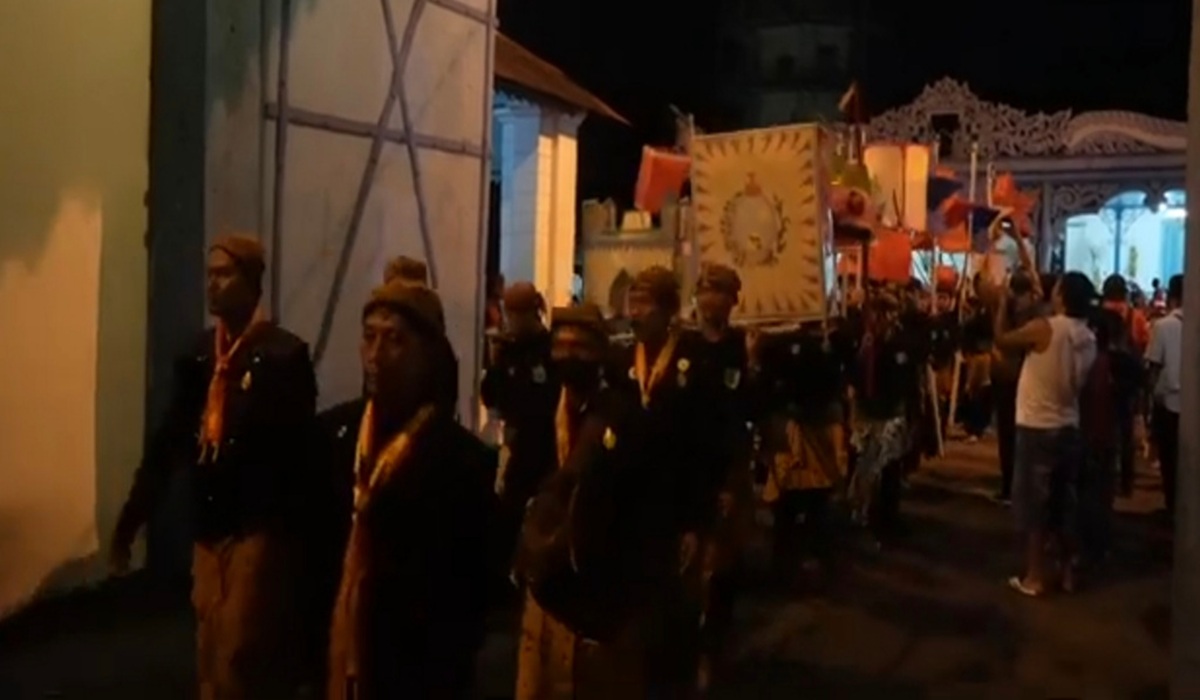
In Solo city, the celebration of Lailatul Qadar is traditionally held at the Kasunanan Palace of Solo or Surakarta Hadiningrat Palace. This tradition, known as Malam Selikuran, features a procession of 1,000 tumpeng on 20 Ramadan, Monday evening (9 March). The Malam Selikuran or Tumpeng Sewu tradition is traditionally held in two versions.
This year, the Malam Selikuran ceremony is organised by the faction of Sinuhun Pakoe Boewono XIV (Purbaya) and PB Hangabehi (Palace Customary Council Institution/LDA).
“The traditional ceremony welcomes the descent of divine revelation of Lailatul Qadar, received by Prophet Muhammad. This Malam Selikuran tradition has existed since the era of the Demak Palace or Sunan Kalijaga,” said Kanjeng Pangeran Eddy Wirabhumi, Chairman of the Legal Institution of the Customary Council at the Kasunanan Palace, to Media Indonesia on Monday afternoon (9 March).
The Malam Selikuran tradition forms part of efforts to spread Islam in Java and continued during the Islamic Mataram kingdom, under Sultan Agung, and has been preserved to the present day. The tradition, in the form of tumpeng sewu, is paraded with ting lamps and lanterns as symbols of the Lailatul Qadar night.
According to him, tumpeng sewu can also be interpreted as the concept of a king sharing fortune with society. The distribution of rice tumpeng that has been blessed at the Grand Mosque of Surakarta Palace represents the king’s attention to his people.
“Indeed, there are many philosophies contained in each portion of blessed rice distributed. All of it can be understood as gratitude for the blessings given by God Almighty,” said the husband of the head of the LDA, GRAy Koes Murtiyah.
During the periods of PB X to PB XII, the tumpeng sewu tradition during selikuran night was paraded from the palace to the Kapujanggan pavilion in Taman Sriwedari. However, over time, the procession has also been conducted from the Grand Mosque of the Kasunanan Palace.
Wirabhumi added that in the selikuran night celebration tradition, anyone is permitted to perform the customary ceremony.
“The more who participate or celebrate, the better,” he added.
The selikuran night tradition held by the Palace Customary Council, which is a faction of Sinuhun PB XIV Hangabehi on Monday evening (9 March 2026), will be accompanied by hadrah performances circling the Baluwarti before proceeding to the Grand Mosque. There will also be torches carried by 1,000 palace servants and soldiers together with Solo’s residents, which always receives significant public attention, as in previous years.
“The selikuran or tumpeng procession in the time of PB X did indeed circle the Baluwarti. But beyond that, it does not matter which is most correct. This selikuran night customary tradition is for the good of this nation,” he concluded.
Separately, the faction of PB XIV Purbaya also holds the selikuran night, with a procession from the Pagelaran of Surakarta Palace to the Joglo Sriwedari pavilion, approximately 2 kilometres from the Kasunanan Palace of Surakarta.