
Strengthening Digital Autonomy as a Future Strategy for Public Services
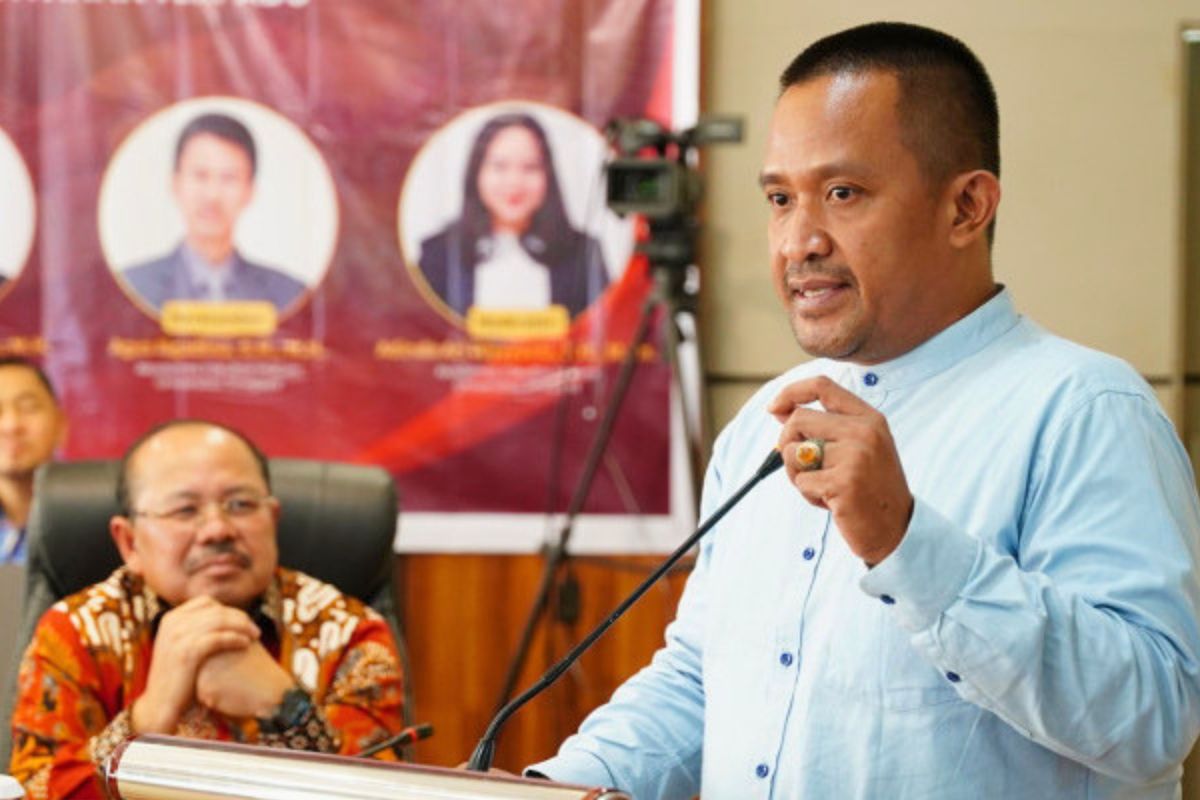
Deputy Chair of the Indonesian Ombudsman Rahmadi Indra Tektona stated that strengthening digital autonomy could be a future strategy for public services in Indonesia.
According to Rahmadi, in a statement in Jakarta on Saturday, digital transformation must deliver inclusive, swift, transparent public services oriented towards community needs.
According to him, local government paradigms have undergone significant changes from conventional administrative bureaucracy to integrated and participatory digital services.
“Technology must bring government closer to the people. Digitalisation of public services is not merely system modernisation, but an effort to deliver more responsive and accountable services,” Rahmadi said.
However, Rahmadi highlighted several challenges in implementing digital autonomy, including regional digital infrastructure gaps, limited civil service human resources capacity, data security threats, overlapping central and regional systems, and bureaucratic resistance to cultural change.
“The success of digital transformation is not measured by the number of applications created, but by how evenly services are experienced by the public,” he said.
Rahmadi also stressed the importance of public participation in monitoring and evaluating digital-based public services to enhance transparency and public trust in local governments.
Meanwhile, former Indonesian Ombudsman Chairperson Amzulian Rifai (2016-2021) emphasised that public service quality reflects good governance.
He argued that good public services generally correlate with lower corruption and maladministration in the bureaucracy.
“If public services are good, the bureaucracy is usually sound and corruption is low. Maladministration often serves as a gateway to corruption,” Rifai said.
He also highlighted how digitalisation of public services has brought significant changes in governance.
It was noted that various services previously handled manually are now more accessible to the public through digital systems, from transportation services, business administration to court services.
Thus, he stated that digital transformation also drives increased transparency and efficiency in public services, reducing public reliance on lengthy and cumbersome bureaucratic processes.
He noted that the biggest challenges in bureaucratic reform often lie in human resource quality and ongoing corrupt practices across various sectors.
“Supervisory bodies, both internal and external, must have strong integrity. The Ombudsman exists to ensure public services operate in line with principles of fairness, transparency, and accountability,” he said.