
South Kalimantan Directorate General of Corrections Supports Acceleration of Integration Rights Provision
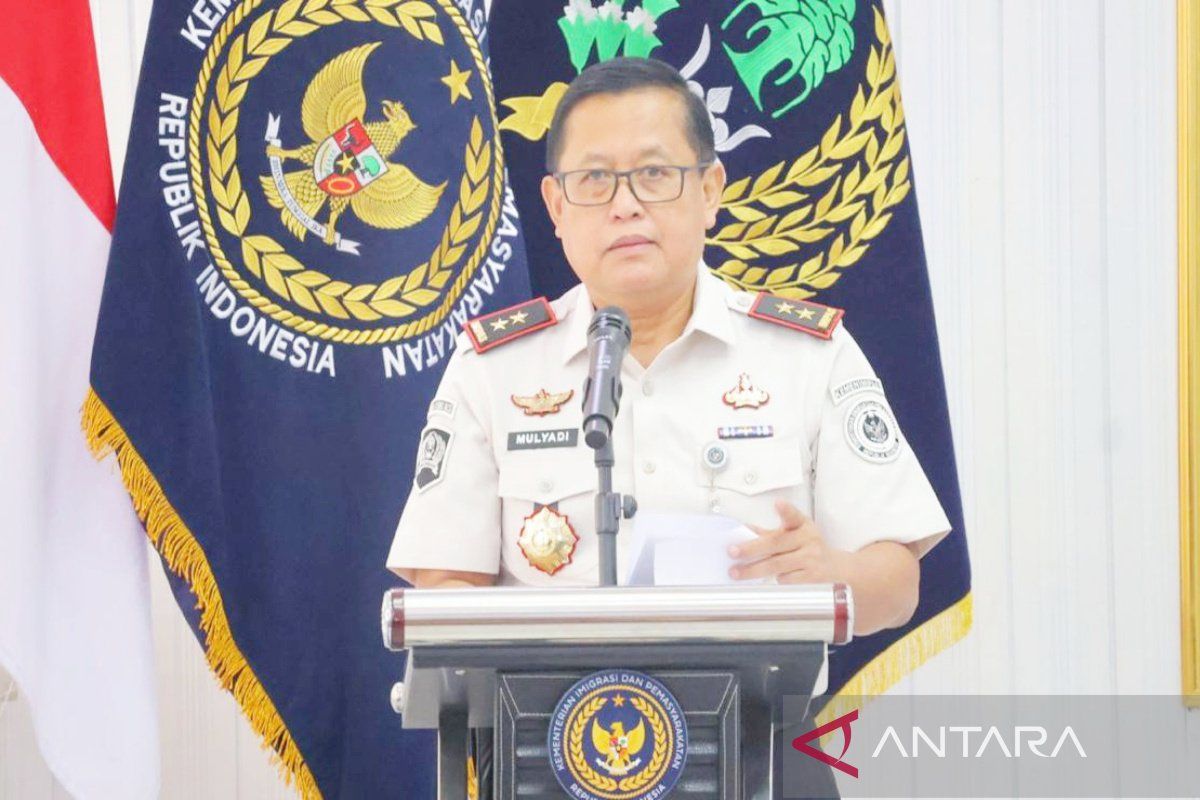
Banjarmasin (ANTARA) - The South Kalimantan Regional Office of the Directorate General of Corrections (Ditjenpas Kalsel) supports the acceleration of granting integration rights to correctional inmates as one of the efforts to address overcrowding challenges in prisons and detention centres.
“We are promoting responsible and sustainable social reintegration,” said the Head of the South Kalimantan Ditjenpas Regional Office, Mulyadi, in Banjarmasin on Tuesday.
The granting of integration rights is the process of rehabilitating inmates outside the prison to gradually return to society, including conditional release (PB), conditional leave (CB), and pre-release leave (CMB).
Mulyadi expressed commitment to continuing support for national policies and enhancing professionalism, accountability, and the quality of correctional services oriented towards the recovery and social reintegration of inmates.
During the synchronisation and coordination of correctional governance with the Assistant Deputy for Correctional Governance Coordination of the Coordinating Ministry for Law, Human Rights, Immigration, and Corrections on Monday (11/5), Mulyadi outlined the real conditions of corrections in South Kalimantan, which currently faces challenges of overcrowding and overstaying.
These conditions have resulted in an occupancy rate of 94 per cent.
In addition, based on data as of 9 May 2026, there are still 12 detainees exceeding their time limits, spread across several correctional units with various administrative and legal process obstacles.
Mulyadi stated that this situation demands attention and comprehensive handling measures.
He noted that both issues cannot be viewed partially but require a systemic approach, strengthened governance, and closer synergy among stakeholders.
Meanwhile, Assistant Deputy for Correctional Governance Coordination Jumadi emphasised that overstaying detainees is a systemic and cross-sectoral issue that requires inter-law enforcement agency collaboration.
“Synergy and concrete steps are needed to achieve ‘zero overstaying’,” he said.
He explained that the Coordinating Ministry for Law, Human Rights, Immigration, and Corrections has encouraged the formation of an Integrated Task Force for Handling Overstaying as part of national policy recommendations.
The task force is expected to strengthen inter-agency coordination, data synchronisation, and the development of more effective and integrated mechanisms for releasing detainees.