
Sorting at the Source: Jakarta's Way Out of the Waste Emergency
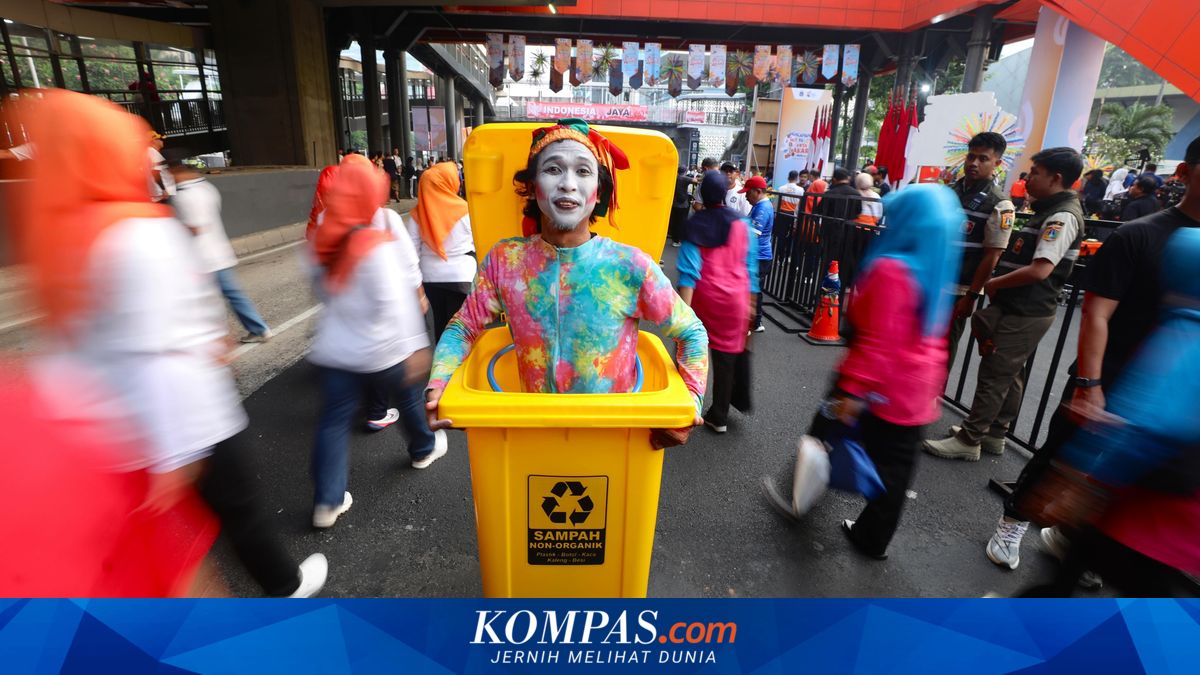
The DKI Jakarta Provincial Government is seriously addressing the waste problem in the capital. Following the issuance of Governor’s Instruction No. 5 of 2026 on the “Movement for Sorting and Processing Waste at the Source”, the DKI Jakarta Provincial Government is intensively conducting socialisation, education, provision of supporting facilities, as well as collaboration with communities, offices, the business world, and residents at the RT/RW level.
Head of the DKI Jakarta Environmental Agency, Dudi Gardesi Asikin, stressed that transformation is the key to success that must be pursued and supported by all levels of society. Integrated waste management from upstream to downstream is an important foundation for Jakarta to become a global city.
“Environmental issues, particularly waste, require the cooperation of all parties to create broader, sustainable impacts and accelerate Jakarta’s transformation towards a cleaner and more environmentally friendly city,” said Dudi to Kompas.com on Tuesday (12/5/2026).
According to him, one indicator of Jakarta’s success in becoming a cleaner and more sustainable city is the reduction in waste generation sent to the Integrated Waste Processing Site (TPST) Bantargebang.
Success is also measured by increased community participation in sorting waste, increased volume of waste that is recycled or processed, and reduced practices of indiscriminate dumping and burning of waste.
Conceptually, if sorting and processing run optimally, around 90 percent of waste can be resolved at the upstream level through organic processing and recycling. Thus, only around 10 percent of waste becomes residue and needs further processing at end-of-life facilities.
“If waste is already sorted from the source, the processing of organic and inorganic waste can be carried out more optimally. Thus, the waste load sent to TPST Bantargebang can be significantly reduced because only residue enters TPST Bantargebang,” explained Dudi.
In the next stage, strengthening is carried out through the optimisation of waste banks, Reduce, Reuse, Recycle Waste Processing Sites (TPS3R), and the RDF Plant Rorotan which processes low-value inorganic waste into alternative fuel.
Meanwhile, on the downstream side, Jakarta is accelerating the construction of Waste-to-Electricity Processing Facilities (PSEL) in Bantargebang and Tanjungan to reduce reliance on open dumping systems.
The DKI Jakarta Provincial Government hopes that waste management can transform into a modern, integrated, and sustainable system by placing waste reduction at the source as the main foundation. For this reason, the government continues to encourage the creation of a community culture that is more environmentally conscious based on a circular economy.
On the other hand, the business world is also encouraged to be actively involved. Office areas, shopping centres, markets, hotels, restaurants, and cafes are asked to handle their respective waste management.
Amid the threat of a waste emergency, some residents have taken action to build independent management systems from the smallest environments. One of them is Joko Sarjono, the initiator of Kampung Edukasi Wisata Bhinneka in RT 014 RW 006, Kebon Kosong Village, Kemayoran, Central Jakarta.
The waste bank in his area was born from residents’ concerns about poor waste governance in Jakarta. At that time, many residents were still accustomed to dumping and burning waste indiscriminately.