
Social Minister states DTSEN update necessary to refresh beneficiary data
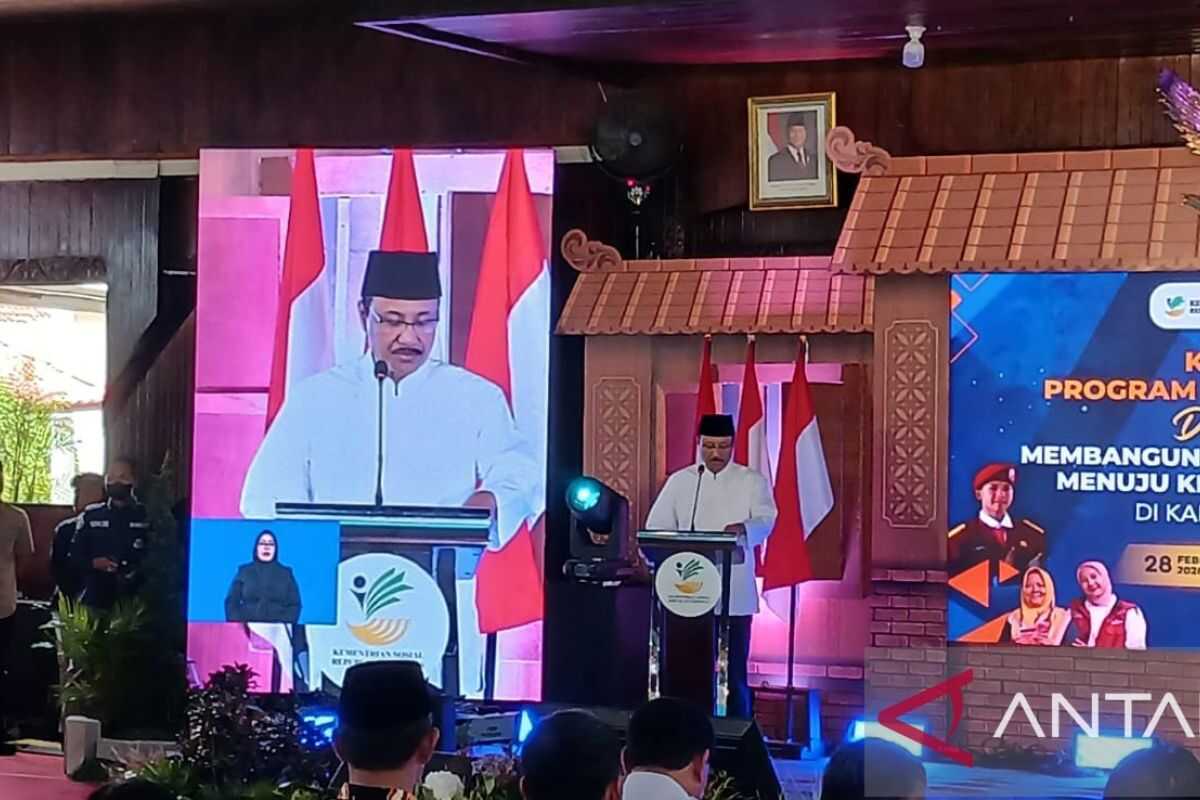
Nganjuk – Indonesia’s Minister of Social Affairs Saifullah Yusuf has stated that updating the National Single Social and Economic Data (DTSEN) requires collaboration across all stakeholders to ensure welfare assistance beneficiaries are correctly identified.
The minister revealed that data updating involves not only the Ministry of Social Affairs but all parties, including regional governments, working collaboratively.
“There are two channels for data updating: formal and participatory channels,” he explained during a DTSEN socialisation event at Nganjuk Regency Office in East Java on Saturday. “The formal channel is highly strategic as it involves village leaders and officials up to the district head.”
He added that the participatory channel involves broad community participation through various mechanisms including applications, command centres, WhatsApp, mentors, and volunteers.
“We want as many parties as possible involved in updating this data. The more participants involved, the more accurate the data will be,” he said.
The minister emphasised the importance of socialising the DTSEN update, both to implement the President’s directive and to ensure beneficiary data is accurate and targeted.
Data analysis has revealed concerning findings: more than 4.6 million household beneficiaries (KPM) have received assistance for over five years, approximately 360,000 beneficiaries have received aid for more than 18 years, and 2.7 million beneficiaries are still of working age. These figures prompted the minister to stress the importance of empowerment programmes.
“If families remain unchanged after five consecutive years of assistance, it indicates that the support programme has failed,” he explained.
The minister stressed that data updating is essential for ensuring government programmes succeed and that beneficiary families eventually become self-sufficient.
Approximately 11 million programme participants were previously marked as inactive; however, more than 896,000 have since been reactivated under various schemes.
The government has also established an objection period allowing beneficiary families to receive information before being marked inactive and to determine whether they should transition to self-sufficiency or remain in the assistance programme.
“There is an objection period so beneficiary families can be informed before being deactivated, and to determine whether they will transition to self-sufficiency or continue receiving benefits,” he stated.
The minister also appreciated regional government policies allocating budgets for disadvantaged communities. For example, in Nganjuk, the universal health coverage programme allows individuals not registered in central government data to access regional health insurance subsidy programmes.