
Share Ownership Transparency Strengthens Indonesian Capital Market Credibility
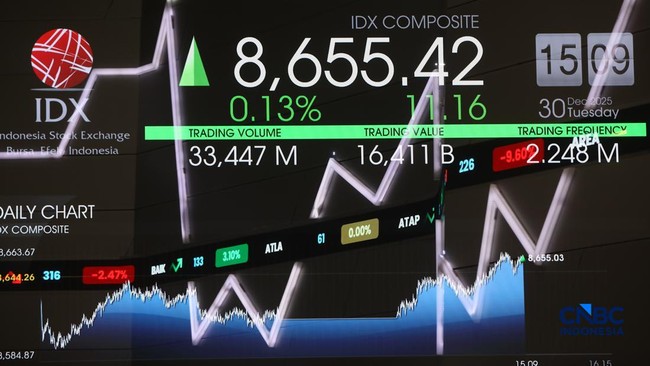
Jakarta — The Indonesia Stock Exchange (BEI) and Indonesia Central Securities Depository (KSEI) are continuing to strengthen public disclosure of information to create a healthier Indonesian capital market.
One significant development is the issuance of share ownership information for listed companies holding above 1% of shares. This represents an important milestone in strengthening capital market governance in Indonesia.
BEI and KSEI officially announced the disclosure policy on Tuesday, 3 March 2026. The policy follows Financial Services Authority (OJK) Commissioner Board Decision No. 1/KDK.04/2026, which designates BEI and KSEI as providers of public share ownership data for listed companies.
Under these provisions, share ownership data above 1% will be compiled by KSEI and published monthly through the official BEI website. The initiative aims to provide a more transparent picture of the shareholding structure of companies listed on Indonesia’s capital market.
Acting BEI Chief Executive Jeffrey Hendrik stated that this measure is part of ongoing efforts to enhance transparency and strengthen capital market governance in Indonesia.
“Strengthening market data quality is part of a long-term commitment to building an Indonesian capital market that is credible and trustworthy. With improved information openness, it is hoped that the confidence, integrity, and credibility of the national capital market will be further strengthened,” Jeffrey said in an official statement.
Globally, openness regarding share ownership has become standard practice in implementing good corporate governance (GCG) principles. Through this policy, Indonesia’s capital market will increasingly align with international standards that emphasise transparency, accountability, and investor protection.
BEI and KSEI are committed to continuously raising standards of information disclosure in line with global best practices, whilst ensuring fair, orderly, and efficient securities trading. Transparency means not only opening up data, but also ensuring it is easily accessible, well-structured, and relevant to investor needs.
For investors, more detailed share ownership data can serve as an additional reference when conducting fundamental analysis. This information can be combined with financial reports, earnings performance, cash flows, and industry prospects to generate more comprehensive investment decisions.
Moreover, transparency plays a crucial role in strengthening market integrity. When information is available openly and equally to all market participants, the potential for information asymmetry can be minimised, allowing share price formation mechanisms on the exchange to operate more fairly.
This step also confirms BEI’s role not only as a securities trading operator, but also as an institution actively promoting governance strengthening and investor protection. In the context of developing national financial inclusion, policies such as this form an important foundation for building an increasingly competitive and sustainable capital market.