
Searching for the UN Secretary-General Amidst a Fractured and Challenging World
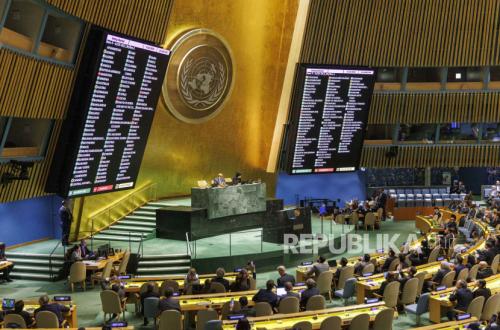
The term of United Nations Secretary-General António Guterres will end on 31 December 2026. Amid a world increasingly characterised by prolonged conflicts, rivalries among major powers, and pressures on multilateralism, the question of who will succeed him becomes ever more relevant.
More than just a leadership transition, the election of the next UN Secretary-General will indicate the direction in which the world is moving and how far change is possible.
On paper, there are no formal rules requiring geographical rotation in the selection of the Secretary-General. However, in practice, considerations of regional balance are almost always present as an unwritten norm. In this context, Latin America and the Caribbean are often cited as having a strong political claim.
This region last held the position through Javier Pérez de Cuéllar from Peru during 1982–1991. With the emergence of several candidates from the region, the narrative of a “Latin American turn” is gaining strength in diplomatic discussions.
However, as with many things at the UN, what appears as a norm does not always determine the outcome. Several candidates emerging so far demonstrate complex and intriguing dynamics. Rafael Grossi from Argentina, currently serving as Director General of the International Atomic Energy Agency (IAEA), brings strong credentials in non-proliferation and nuclear diplomacy.
His experience in handling issues with Iran, North Korea, and nuclear facilities in Ukraine gives him a profile as a figure familiar with global strategic crises. In the perception of some parties, he is also seen as relatively more “comfortable” for Western countries.
On the other hand, Rebeca Grynspan from Costa Rica offers a different profile. As Secretary-General of UNCTAD and former Vice President, she is known as a development economist and effective negotiator. Her role in supporting the Black Sea Grain Initiative, which helped stabilise global food supplies by tens of millions of tonnes, is a significant highlight (UNCTAD, 2023). Grynspan represents the type of technocratic candidate with UN system experience and relatively non-confrontational— a combination that often becomes an asset in sensitive selection processes.
The name Michelle Bachelet from Chile presents another dimension. This former two-term President and ex-UN High Commissioner for Human Rights has widespread global recognition. However, her track record on human rights issues also raises political controversies. In particular, the UN High Commissioner’s Office report on the situation in Xinjiang in 2022—released towards the end of her tenure—is considered by some to be late and insufficiently firm in concluding the violations that occurred.
This criticism then became one of the factors sparking resistance, including from circles in the United States, to her candidacy (Reuters, 2026). In such dynamics, high-profile figures with great visibility are more vulnerable to early rejection.
Outside Latin America, Macky Sall from Senegal emerges as the only prominent African candidate at present. As former President of Senegal and Chairman of the African Union, he carries significant political weight. However, the lack of official support from the African Union makes his position not entirely solid. In a situation where Latin American candidates are locked in competition and none truly dominates, Sall has the potential to emerge as a “dark horse”—a compromise figure born from the deadlock of other candidates.
To understand these dynamics, it is important to see how the UN Secretary-General is actually selected. Formally, the Secretary-General is appointed by the General Assembly on the recommendation of the Security Council (UN Charter, Article 97). However, in practice, the determination process occurs through a series of closed straw polls in the Security Council.
In each round, Security Council members give assessments of “encourage”, “discourage”, or “no opinion” to candidates. As the process advances, votes from the five permanent Security Council members—United States, Russia, China, United Kingdom, and France—become decisive. A single signal of rejection from one of the permanent members is practically enough to end a candidate’s nomination.
This is where the paradox lies. On one hand, the UN is an organisation with universal membership. On the other, the selection of its highest leader is heavily influenced by the political calculations of five countries. Transparency has indeed increased through public dialogues in the General Assembly, but the actual decision remains in the closed rooms of the Security Council. The UN Secretary-General ultimately is not always the most ideal figure, but rather the one most acceptable—or least rejected—by the permanent members.
The challenges facing the next Secretary-General are also not light. The UN is currently under serious financial pressure. Several member states are delaying payment of contributions, while funding needs for peacekeeping operations and humanitarian aid continue to rise. The Secretary-General has even warned of a potential liquidity crisis that could affect the organisation’s operational capabilities (Reuters, 2026). This situation forces the UN to make significant efficiencies and programme adjustments.
On top of this financial pressure, geopolitical fragmentation is increasingly narrowing the UN’s room for manoeuvre. Rivalries between major powers often paralyse the Security Council, thereby reducing the organisation’s ability to respond to conflicts effectively. In this context, the UN no longer operates in an environment conducive to global cooperation, but in a system increasingly marked by competition and distrust.
In such conditions, expectations for the new Secretary-General need to be set realistically. The world may not need—and it seems unlikely to produce—a transformative figure.