
President pledges to present progress report on 16 August
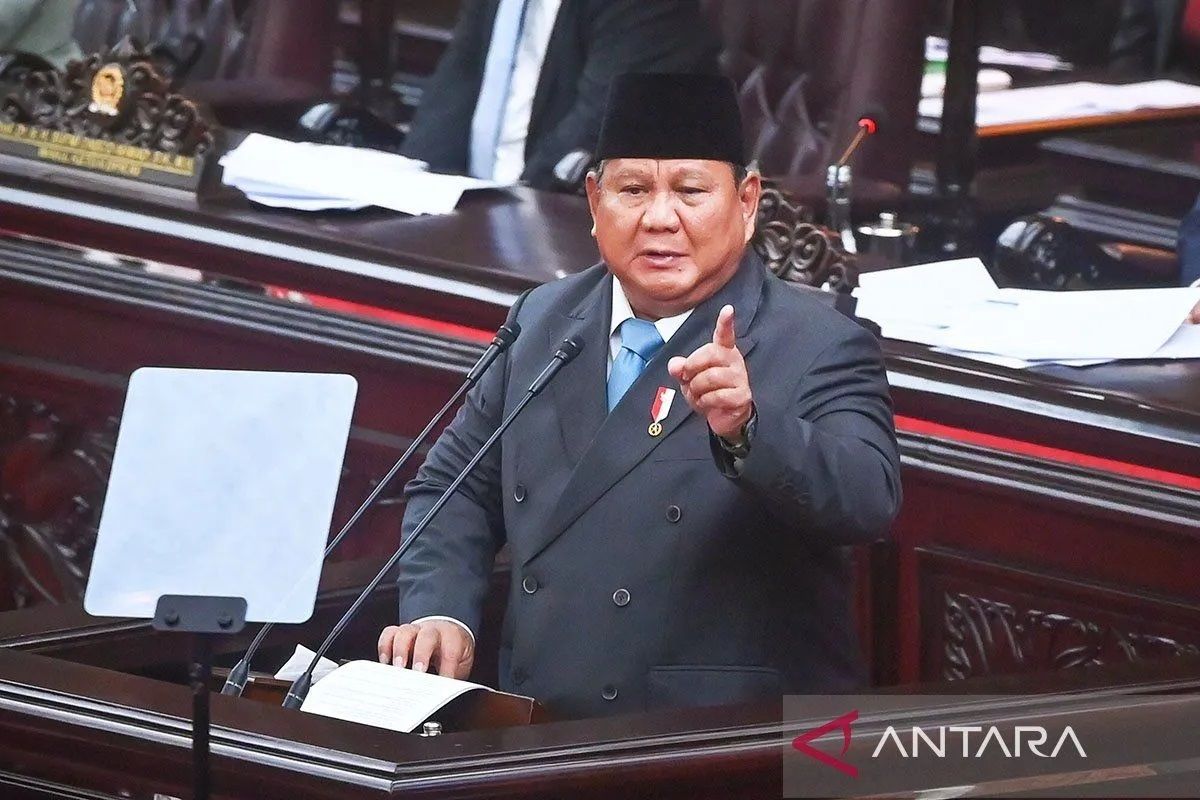
The government I lead is determined to return to this podium in August to present a progress report on the advances achieved ahead of Indonesia’s 81st year of independence.
The August progress report is, as a constitutional matter, aligned with the state address and the annual presentation of the Note on Finance and the Draft State Budget (RAPBN), traditionally held on 16 August.
In the projections of the performance report, the strengthening of the people’s economy through a national cooperative network is set to be one of the main indicators the government will present.
Currently, the government notes that 1,061 units of Koperasi Merah Putih have been operating nationwide as the foundation for a reoriented, people-based logistics system.
The government targets a massive quantitative expansion, planning to operate at least 20,000 cooperative units by August, and projecting more than 60,000 by year-end.
The President emphasised that this cooperative network will function as the first supply chain in Indonesia directly owned by the government to control logistics stability and to promote welfare at the grassroots level.
Through the integration of cooperatives at village, sub-district, and district levels, the hundreds of trillions of rupiah that have historically flowed overseas are projected to return and remain domestically.
In addition to the cooperatives, the August progress report will also highlight accelerated steps the government is taking to address risks arising from the global energy crisis through domestic downstream development.
The government is currently fast-tracking the production lines for biosolar fuel using crude palm oil (CPO), while refining technical studies for converting palm oil into petrol.
The national energy diversification strategy is further expanded by plans to process coal into solar power and gas, and by utilisation of agricultural waste such as corn stalks to produce cheap cooking energy for households.
In the electricity infrastructure cluster, the government is relying on an accelerated programme to build Solar Power Plants (PLTS) with a capacity target of 100 gigawatts (GW) within the next three years.