
Prabowo's Rules Threaten to Hinder Indonesia's Digital Economy
Government Regulation No. 17 of 2025, or PP TUNAS, will come into full effect from March next. Implementation regulations through ministerial decrees are currently being drafted.
Several industry associations have voiced concerns about the regulation. Among them is the Indonesian E-commerce Association (iDEA), which presented findings from discussions held in February.
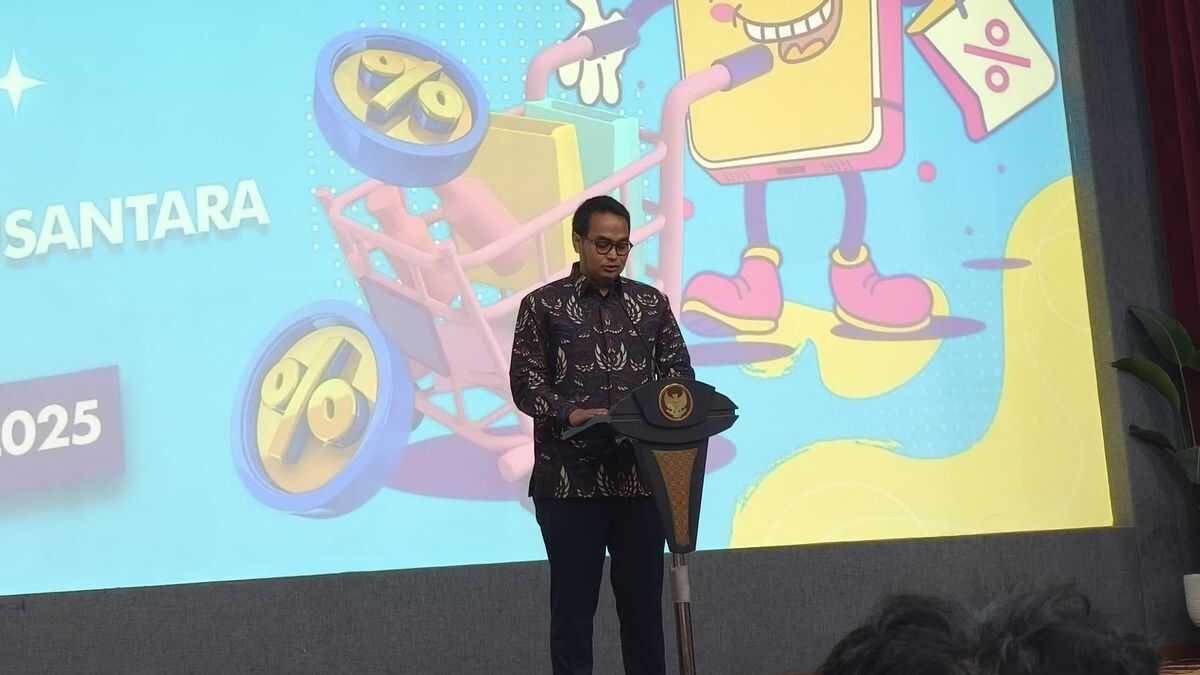
iDEA Chairman Hilmi Adrianto said the proposed regulations restrict access to nearly all digital services. He highlighted that the proposed risk assessment framework would classify nearly all digital services as high-risk without considering the protective measures already implemented by individual platforms.
“We believe this risk classification mechanism needs further elaboration, and this automatic high-risk labelling also needs further review to ensure equal treatment across platforms,” Hilmi said during a media briefing on 27 February, as reported by CNBCIndonesia.com.
Additionally, age verification lacks clear and uniform technical standards. Ultimately, he argued, this will create privacy and data security risks, increase compliance costs, and create system fragmentation across platforms.
Hilmi stressed that age verification should create a safer digital environment, not merely exclude children from platforms.
“If implemented uniformly, this regulation could certainly restrict teenagers’ access to communication, education, and digital transaction services that have already become part of their daily activities,” he explained.
Impact on Indonesia’s Digital Economy
Hilmi also highlighted disproportionate administrative burdens. The digital sector will face additional obligations including self-assessment, risk reporting, and supervisory authority requirements, as well as potential access restrictions for teenagers.
This situation could also hinder innovation and growth of Indonesia’s digital economy.
“This situation could actually hinder existing innovation, slow the growth of Indonesia’s digital economy, and reduce investment in the digital sector,” he said.
Modantara (Indonesian Digital Mobility and Delivery Association) Executive Director Agung Yudha said that if digital economy regulations lack clear risk-based assessments, they will create legal uncertainty and overall protection uncertainty.
“This will create uncertainty because legal certainty is one factor, and consistency of implementation is also an important factor regarding business decisions to invest in a market. This will certainly add obstacles or challenges,” Agung said.
Indonesian Chamber of Commerce and Industry (Kadin) Deputy Secretary General for Communication and Informatics Firlie Ganinduto urged authorities to consider the regulation’s impacts and implications on all stakeholders in the ecosystem, including business operators who will implement it and play important roles.
“We must pay attention to these matters, and we want to emphasise that every regulation issued by the government, especially this digital regulation, must be implementative and adaptive,” Firlie said.
Launched by Prabowo
Government Regulation No. 17 of 2025 on Child Protection in Electronic System Governance (PP TUNAS), signed on 28 March 2025 and effective from 1 April 2025, was announced directly by President Prabowo Subianto at the Presidential Palace.
The regulation requires every Electronic System Operator (ESO) to filter harmful content, provide easily accessible reporting mechanisms, and ensure rapid and transparent remediation processes.
One important aspect of PP TUNAS is the classification of age groups and platform risk levels. The Communication and Digital Ministry regulates restrictions on children’s access to applications on mobile devices and social media based on low, medium, and high-risk categories.
The following are ESO obligations under PP TUNAS:
Filter harmful content for children
Provide easily accessible reporting mechanisms
Conduct rapid and transparent remediation
Implement user age verification to prevent exposure to negative content
Implementation will occur in stages with a two-year adjustment period.
The following are website and application categories under PP TUNAS:
Below 13 years: may only access fully safe platforms, such as educational websites or children’s platforms
13-15 years: may access platforms with low to medium risk
16-17 years: may access high-risk platforms, but must have parental guidance
18 years and above: may independently access all platform categories
However, PP TUNAS does not explicitly specify which applications fall under low, medium, or high-risk categories. Platforms such as X, Instagram, or YouTube must conduct their own evaluation and report their category to the Communications and Digital Ministry.
The following are assessment aspects for determining social media categories for children:
Contact with unknown persons
Exposure to pornographic content, violent content, content harmful to physical safety, and other inappropriate content