
Petrokimia Gresik strengthens security of raw materials to face global turbulence
Geopolitical conflicts and disruptions to global logistics routes can impact world sulphur prices and supplies.
Jakarta (ANTARA) - Petrokimia Gresik, an agroindustry solutions company and member of the Pupuk Indonesia holding, is strengthening its strategy to secure sulphur supplies as a strategic commodity for the national fertiliser and chemical industries amid geopolitical dynamics in the Middle East.
This effort, according to Petrokimia Gresik’s President Director, Daconi Khotob, is part of the company’s commitment to maintaining national food security and supporting domestic industrial self-reliance.
Around 33 per cent of world sulphur trade, or 20 million tonnes per year, comes from the Persian Gulf region, he continued in his statement in Jakarta on Wednesday, and Indonesia still imports more than 75 per cent of its sulphur needs from the Middle East region.
“Geopolitical conflicts and global logistics disruptions can affect world sulphur prices and supplies,” Daconi said.
On the other hand, national sulphuric acid needs continue to increase and currently reach around 19 million tonnes per year, with the largest contribution coming from the fertiliser sector and mineral downstreaming industries, particularly nickel.
According to him, this situation positions Indonesia as one of the world’s sulphur demand centres, making sulphur a strategic commodity in supporting national food security and industrial resilience.
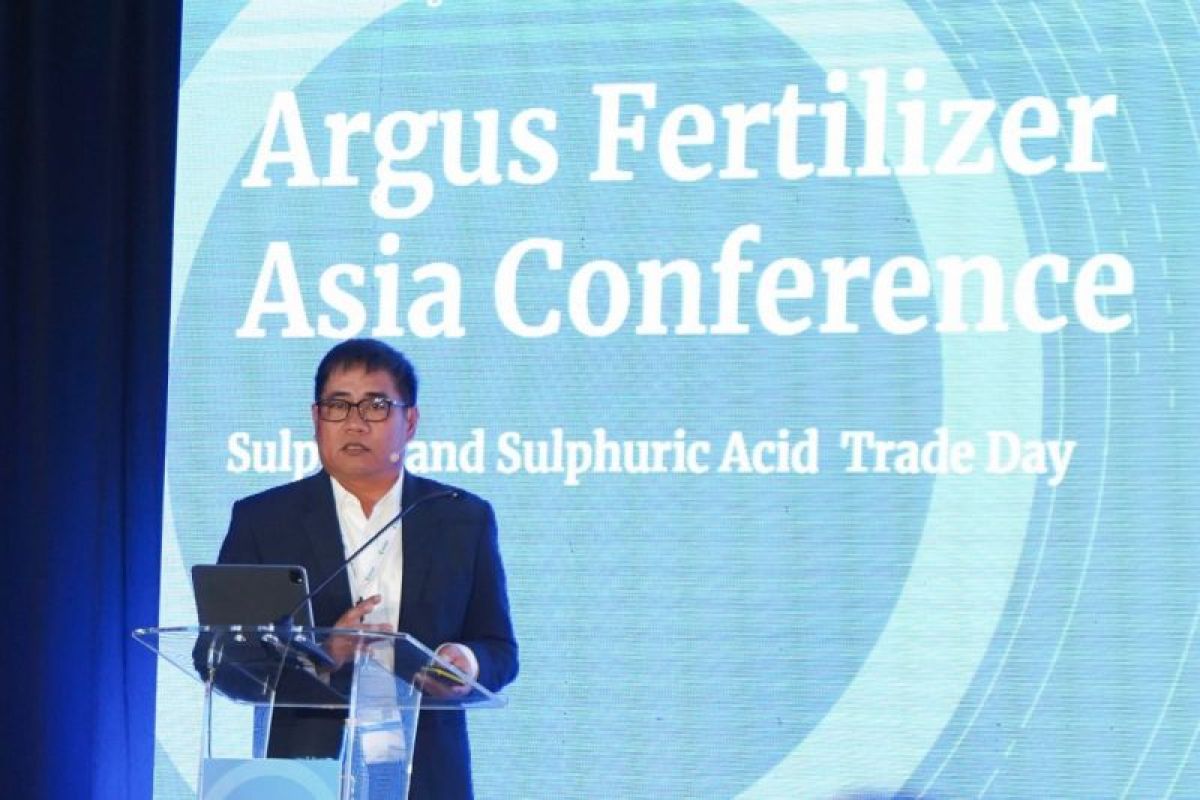
While speaking at the Argus Fertilizer Asia Conference 2026 international conference in Bali on Tuesday (31/3), he explained that Petrokimia Gresik is not only part of the sulphur supply chain but also part of the solution for the national industry.
This state-owned fertiliser company, he added, has a sulphuric acid plant with a production capacity of 1.8 million tonnes per year, integrated with the fertiliser production process and other chemical products.
“We have facilities for processing sulphur into sulphuric acid that are integrated with the fertiliser production process and chemical products. Through these facilities, the company also contributes to strengthening domestic industrial raw material supplies,” Daconi explained.
Furthermore, Daconi conveyed that global geopolitical dynamics affecting sulphur supplies and prices demand that the company strengthen raw material supply security strategies through supply chain enhancement and optimisation of domestic production capacity.
To that end, the company is implementing several strategic steps, including diversifying sulphur supply sources, strengthening long-term contracts to maintain supply and price stability, and enhancing raw material storage and distribution infrastructure.
“These steps are important to maintain the resilience of the national fertiliser and chemical industries, given that sulphur and sulphuric acid are key raw materials in the production of phosphate and NPK fertilisers, and are used in various industries such as metal processing, water treatment, and other chemical industries,” he said.
He added that Indonesia is currently a global demand centre for sulphur, driven by mineral downstreaming policies, expansion of the nickel battery supply chain along with the growth of electric vehicle (EV) battery production, which increases sulphur needs, particularly for the high-pressure acid leaching (HPAL) process that uses large amounts of sulphuric acid, as well as increasingly stringent environmental regulations that boost sulphur-based processing needs.
Daconi emphasised that amid current global dynamics, Petrokimia Gresik’s main focus is to maintain supply and production stability so that national fertiliser needs can still be met properly as part of supporting national food self-sufficiency.
“We continue to make optimal efforts to maintain production continuity through supply chain strengthening and domestic capacity, so that national fertiliser needs can still be met properly as part of national food security,” he said.