
Note These Sentiments That Could Drive the Market Next Week
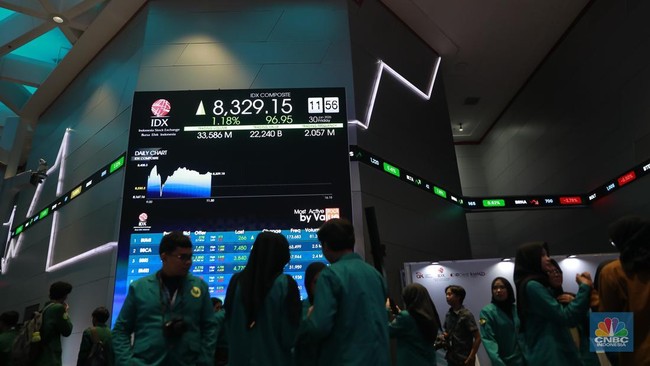
Jakarta, CNBC Indonesia - This week opens with a series of data releases that directly touch on the main pulses of the domestic inflation market, trade balance, and US labour indicators.
The direction of risky asset movements will heavily depend on whether price pressures ease and whether the global economy remains strong enough to withstand high interest rates.
At the same time, high energy prices and global supply chain disruptions keep cost-of-living pressures alive. This situation leads market participants to hold positions while awaiting certainty from incoming data one by one.
Here is the economic agenda throughout this week.
Indonesia’s Trade Balance
The Central Statistics Agency is scheduled to release March trade balance data on Monday (4/5). In February 2026, the surplus was recorded at US$1.28 billion, a sharp drop from US$3.09 billion in the same period last year and below market expectations.
This movement was triggered by imports growing 10.85% year-on-year to US$20.89 billion, while exports only rose 1.01%. Export growth was supported by fats and vegetable oils as well as electrical machinery, while oil and gas exports were pressured by a sharp decline in crude oil.
If this pattern continues, the surplus margin could remain thin. This condition will affect perceptions of Indonesia’s external strength, especially amid still-high import financing needs.
Indonesia’s Inflation
On the same day, April inflation will be the main focus. In March 2026, annual inflation was recorded at 3.48%, down from 4.76% the previous month and within Bank Indonesia’s target range.
The slowdown mainly came from the housing and food groups, while some components like transportation and restaurants experienced increases. Core inflation fell to 2.52%, signalling more controlled price pressures.
The latest figures will determine how much room Bank Indonesia has in maintaining rupiah stability without adding pressure from the interest rate side.
US Factory Orders and Industrial Signals
From the United States, March factory orders data will be released on Monday evening Indonesian time. In February, this indicator was stagnant after previously growing 0.4%.
This condition depicts a manufacturing sector starting to lose momentum. Weakening demand could impact production and investment, especially when financing costs are still high.
If contraction continues, markets will begin adjusting expectations for US economic resilience in the second quarter.
Fed Officials’ Speeches
On the same day, speeches from Federal Reserve officials will be watched to capture the latest policy direction. Previous statements often touched on price pressures from energy and global uncertainties.
New comments will provide additional clues regarding the duration of high interest rates, especially after labour data showed mixed results.
ISM Services and JOLTS
Moving into Tuesday (5/5), two important indicators from the services and labour sectors will be released. March ISM Services PMI was at 54, down from 56.1 in February. This decline was triggered by weakening business activity and labour absorption.
At the same time, the price index in the survey actually rose to the highest level since 2022, driven by rising energy costs and logistics disruptions.
For the labour market, job openings fell to 6.882 million in February. The decline occurred across various sectors and regions, indicating slowing labour demand.
The combination of slowing activity and cost pressures will be a key factor in reading future inflation direction.
US Non-Farm Payrolls and Unemployment Rate
Towards the end of the week, market focus will turn to the US employment report on Friday (8/5). In March, the US economy added 178,000 jobs, well above expectations.
The increase mainly occurred in the health, construction, and transportation sectors. On the other hand, the federal government sector and financial activities recorded declines.
The unemployment rate was at 4.3%, with a slight decline in labour force participation. The latest data will determine whether the labour market is still strong enough or starting to lose steam.
Results that are too strong could keep interest rate pressures high. Conversely, significant weakening will open room for policy expectation adjustments.
US Consumer Confidence
The preliminary May consumer sentiment index will also be released on the same day. In April, the index was at 49.8, reflecting still-low confidence.
Small changes in this indicator often have a big impact on consumption expectations, which is the backbone of the US economy.
China’s Trade
Closing the week, China will release April trade data on Saturday (9/5). In March, the trade surplus fell to US$51.13 billion, the lowest level in more than a year.
Exports only grew 2.5% due to seasonal factors and a high base from last year. On the other hand, imports surged 27.8% and hit a record high, driven by needs for raw materials and technology purchases.
The import surge reflects efforts to secure supplies amid global disruptions. However, slowing exports remain an important note for global demand prospects.
The latest release will be a week-ending determinant of sentiment direction, especially for commodity markets and countries with high export dependence.