
Not Iran, Trump's Actions Bring "Hell" to His Own Country
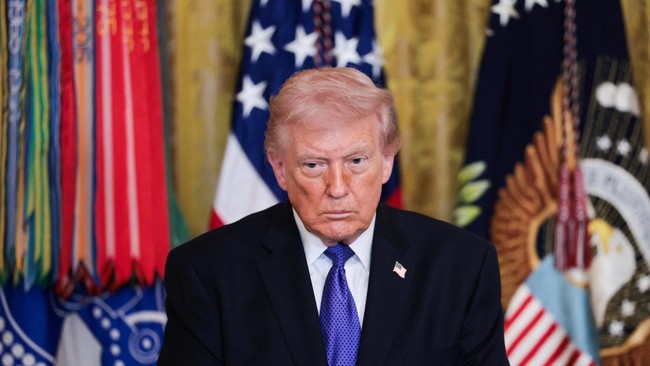
Jakarta, CNBC Indonesia - The stern warning issued by United States President Donald Trump regarding the closure of the Strait of Hormuz has provoked a sharp response from top Iranian officials. Iran’s Parliament Speaker Mohammad Baqer Qalibaf stated that Washington’s military actions are worsening the situation not only in the Middle East but also for American citizens themselves.
In his statement on Monday (6/4/2026), Qalibaf accused Trump’s war policy against Iran of potentially bringing severe consequences for the American people. He voiced this criticism after Trump issued an ultimatum demanding the reopening of the strategic shipping route through the Strait of Hormuz.
Through a harshly toned post on the Truth Social platform on Sunday, Trump warned that Iran would “live in hell” if the route was not reopened for trading ships by Tuesday at 8:00 PM Eastern Time. In the same statement, Trump also renewed threats to strike key Iranian infrastructure, including power plants and bridges.
Several hours after that statement, Qalibaf responded via X, urging Trump to stop what he called a “dangerous game.”
“Your reckless steps are dragging the United States into a HORRIFIC HELL for every family, and our entire region will burn because you insist on following Netanyahu’s orders,” wrote Qalibaf, referring to Israeli Prime Minister Benjamin Netanyahu.
He added a stern warning to Washington that military strategies would bring no benefits to the United States.
“Don’t get it wrong: You won’t gain anything through war crimes,” the Iranian official added.
This tension is closely linked to Iran’s closure of the Strait of Hormuz following the US and Israeli air strike campaign against Iran on 28 February. Shortly after the military operation began, Tehran announced that the strait would be closed to ships deemed “enemies.”
The Iranian government then affirmed that navigation rules in the area would be changed and that the Strait of Hormuz would not be accessible to US or Israeli ships for an extended period.
The Strait of Hormuz is the world’s most vital energy route. Around 20% of global oil shipments typically pass through those narrow waters. Additionally, about 20% of the world’s liquefied natural gas (LNG) trade relies on that route.
Disruptions to traffic in the strait due to the ongoing conflict are now beginning to impact the global energy market. Energy prices are rising, including in the US.
Meanwhile, criticism of Washington’s approach has also come from Russia. Russia’s ambassador to international organisations in Vienna, Mikhail Ulyanov, said the US government has failed to understand Iran’s position in the negotiation process.
According to him, as reported by RT, Tehran will only accept an agreement built on “reasonable compromises,” not pressure or unilateral ultimatums from external parties.