
New Crisis Begins: From Energy to Food, the World Enters Danger Zone
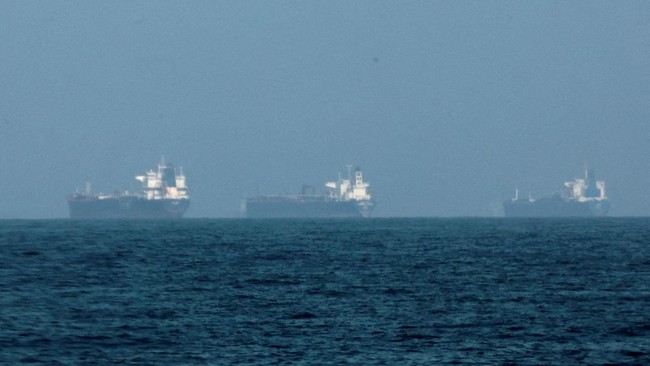
Escalation of the Iran conflict is now spreading to commodities rarely highlighted in broader markets: fertiliser. Disruptions in the Strait of Hormuz, a vital global trade route, are hindering large-scale distribution of fertiliser products, triggering price spikes and concerns over global food resilience. Approximately one-third of global fertiliser trade by sea passes through the Strait of Hormuz. This route is now experiencing severe disruptions since the conflict intensified, with ship traffic nearly halted and several incidents of attacks on vessels in the area. These obstacles are directly impeding export flows from the Middle East region, which has long been the world’s centre for nitrogen fertiliser production. Citing CNBC International, prices are reacting swiftly. Urea granular FOB in Egypt, the main benchmark for the nitrogen fertiliser market, has surged to around US$700 per metric tonne, up from US$400-490 before the war. Oxford Economics notes that urea prices have risen about 50% since the conflict began, while ammonia has increased around 20%. Rises are also occurring in potash and sulphur, extending pressure across the entire fertiliser supply chain. The global supply structure is exacerbating the situation. About 30% of current fertiliser export supplies cannot reach markets, including from Saudi Arabia, Qatar, Bahrain, and Iran. Iran itself plays a key role in global nitrogen fertiliser exports, with significant contributions to world urea trade. When distribution routes are blocked, the missing supply is immediately felt in international markets. Threatening the Planting Season The impacts are beginning to affect the agricultural sector at a crucial time. Farmers in the northern hemisphere are entering the planting season, while those in the south are in the harvest phase. Demand for nitrogen fertiliser spikes sharply during this period. Urea is widely used for major commodities like maize, wheat, and various horticultural crops. Technically, nitrogen plays an irreplaceable role in the annual planting cycle. Unlike potash or phosphate, whose use can sometimes be deferred within a season, nitrogen must be available every year. When distribution is disrupted, the direct link between fertiliser application and harvest yields is disturbed. A decline in supply today opens risks of reduced productivity in the coming months. This pressure is seen as broader than the 2022 Russia-Ukraine crisis. At that time, disruptions mainly affected potash. Now, they target nitrogen—the core component in plant growth. Moreover, the impacts span more producer countries at once, from Iran to other Gulf states. The sulphur market is worsening the situation. Nearly 50% of global sulphur trade comes from the same region. Before the conflict, the sulphur market was already tight, with prices peaking earlier this year. Disruptions in production and exports are further constricting supply, opening room for further price increases. Fertiliser production is also disrupted upstream. Limited storage for unsent products is forcing some facilities to halt operations. QatarEnergy has even stopped urea production after halting LNG production. On the other hand, China is beginning to restrict fertiliser exports to safeguard domestic supply, reducing global supply alternatives. Although global food stocks are entering 2026 in relatively high condition, this buffer is only temporary. A mere 5% drop in harvest yields would be enough to drive food inflation. Developing countries are the most vulnerable due to limited purchasing power against rising fertiliser and food prices. India and East Africa are noted to have high exposure. Reliance on fertiliser and gas imports makes agricultural production costs in these regions more sensitive to price volatility. In high-price conditions, access to fertiliser could become limited, forcing farmers to reduce usage and lower yields. The impacts also extend to advanced countries. The United States, despite domestic production, still imports about a third of its fertiliser needs. Global price rises directly pressure farmers’ production costs. Concerns are emerging regarding uneven distribution or the need to ration fertiliser use. Several US agricultural groups have called for government intervention to mitigate cost pressures. They assess that energy and fertiliser price surges amid the planting season create dual pressures on the agricultural sector. Logistical disruptions in the Strait of Hormuz are accelerating the transmission of this pressure to food prices.