
Muzani Highlights Low Domestic Milk Production, Targets Highlands as Centres
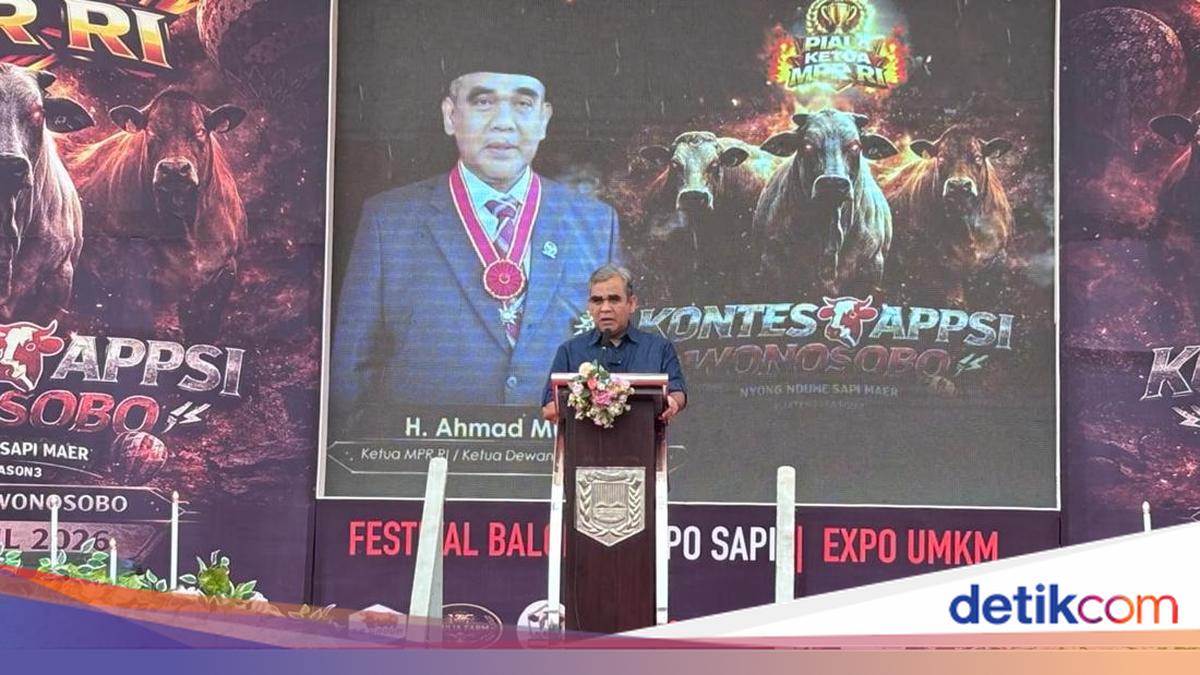
MPR Chairman Ahmad Muzani has highlighted the persistently low national milk production compared to domestic needs. He described this situation as a major opportunity to promote the development of dairy cattle centres, particularly in cool-climate areas such as Wonosobo, Central Java.
Muzani made these remarks while opening the APPSI Cattle Contest in Wonosobo, Central Java, on Saturday (25/4/2026). According to him, domestic milk production currently meets only about a quarter of the total national requirement.
“Our milk production is at most around 23 to 25 percent of national needs. That means there is still about 75 percent of the market that can be filled,” said Muzani.
He assessed that highland areas like Wonosobo have great potential to be developed into dairy cattle centres. The cold natural conditions are deemed suitable for supporting livestock productivity, especially for milk producers.
“With its cold climate and highlands, Wonosobo is highly potential to become a centre for meeting the national need for fresh milk,” he stated.
Muzani also connected milk needs to the government’s Free Nutritious Meals (MBG) programme. He estimated that demand for fresh milk would continue to increase with the implementation of that programme.
“In the future, milk needs will be even greater. MBG will encourage fresh milk consumption as part of fulfilling public nutrition,” he explained.
Additionally, Muzani highlighted the low productivity of dairy cows in Indonesia compared to other countries. He noted that the average dairy cow in the country only produces 10-15 litres of milk per day, while in subtropical countries it can reach 25-30 litres per day.
“This is a significant gap and affects the economy of farmers,” he said.
Therefore, he encouraged the development of cattle breeds that are more adaptive to tropical climates but still have high productivity. According to him, this is important to increase the competitiveness of the national livestock sector.
On that occasion, Muzani also hoped for support in the form of investments and government policies to accelerate the development of dairy cattle centres in various regions.
“We need promotion, supportive conditions, and of course investment so that potential areas can develop into national milk centres,” he concluded.