
MP: Non-Civil Servant Lecturers' Salaries Below UMK Not an Economic Issue, but a Humanitarian One
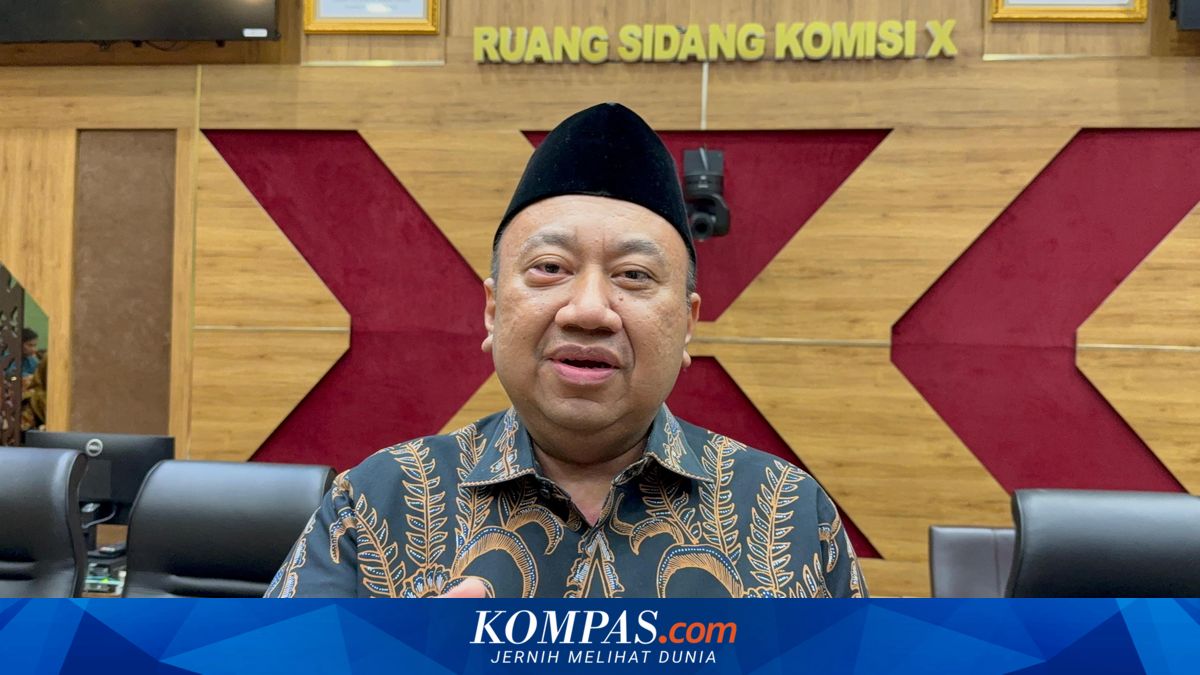
JAKARTA, KOMPAS.com - Deputy Chairman of Commission X of the Indonesian House of Representatives, Lalu Hadrian Irfani, assessed that the issue of salaries for non-civil servant (non-ASN) lecturers below the city minimum wage (UMK) is no longer merely an economic matter but has entered the realm of humanity.
“If non-ASN lecturers are treated like daily workers with variable salaries, while their 12-hour daily workload is equivalent to that of ASN lecturers, in my view, this is no longer an economic problem; it has entered the realm of humanity and social justice,” said Lalu, when contacted by Kompas.com on Tuesday (5/5/2026).
Lalu emphasised that the state must not allow the salary system for lecturers to be entirely determined by market mechanisms or the policies of individual universities.
According to him, the government needs to intervene to address the inequalities that occur, particularly between ASN and non-ASN lecturers at public legal entity universities (PTNBH).
Lalu also mentioned that the Constitutional Court (MK) ruling on the material review of Law No. 14 of 2005 on Teachers and Lecturers will serve as a reference for future policy formulation.
“We certainly respect the ongoing constitutional process at the MK. We will not influence the decision and will await the ruling as a reference for determining next steps, both in legislative and oversight functions,” Lalu stated.
Lalu assured that the substance of the MK ruling will be accommodated in the National Education System Bill (RUU Sisdiknas), including demands for lecturers’ base salaries to be at least equivalent to the minimum wage in the region where the university is located.
“Thus, lecturers’ base salaries shall at least be equivalent to the applicable regional minimum wage in the area where the higher education institution is located,” he concluded.
“If relying solely on a base salary of Rp 3,390,500, that amount is below the Depok city minimum wage (UMK) applicable for 2025-2026,” said Irwansyah, during the hearing of case number 272/PUU-XXII/2025 on Tuesday.
He explained that the lecturer salary system is highly dependent on campus autonomy policies regulated through rector’s regulations, thus not providing equal protection for all educators.
“The components of lecturers’ income are highly variable and based on performance or incentives, not on a fixed minimum standard of living guarantee,” he said.
In agreement, Chair of the Gadjah Mada University Workers’ Union (SEJAGAT), Amalinda Savirani, assessed that the salary system in PTNBH does not yet reflect a sense of justice.
Based on SEJAGAT’s internal survey, 60 percent of lecturers considered the wages received unworthy compared to their workload, qualifications, and performance.