
Ministry of Villages Hopes Japanese Language Training Will Boost Village Economy
Jakarta (ANTARA) - The Ministry of Villages and Underdeveloped Regions (Kemendes PDT) hopes that the implementation of a Japanese language training programme for rural communities and underdeveloped areas will drive improvements in family economies as well as broader societal welfare.
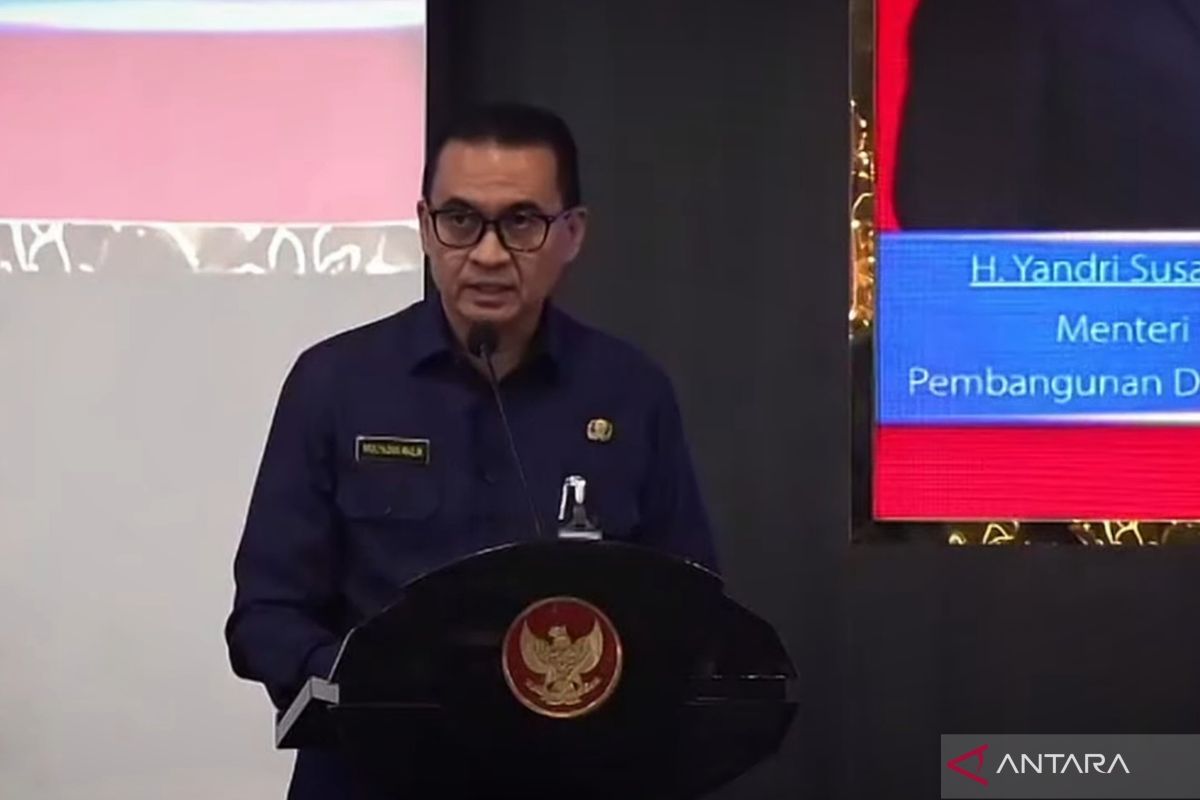
“We hope this training can serve as a collective effort to raise the living standards of participants, support family economies, and ultimately contribute to enhancing the welfare of rural communities and underdeveloped regions on a wider scale,” said Head of the Village and Underdeveloped Regions Information Development Agency (BPI) of Kemendes PDT, Mulyadin Malik, during the Opening of Japanese Language Training Batch 2 at the Kemendes office in Jakarta on Thursday.
He stated that the training not only focuses on improving foreign language skills but also opens up job opportunities for participants, including the chance to work in Japan.
“This programme is certainly not just about language proficiency, but also about paving new paths or hopes for rural and underdeveloped communities when access to skills and information on opportunities is expanded,” said Mulyadin.
Furthermore, he conveyed that enhancing human resource capacity in villages has the potential to create a ripple effect on the quality of life for communities.
In the same opportunity, Education Department Head of PT Mojo Indonesia Raya, Andi Irma Sarjani, stated that the training is part of a collaboration between Kemendes PDT and PT Mojo to improve the quality of village human resources through foreign language competencies.
Registration for the second batch was open from 16 February to 27 March and conducted online via barcode scanning on published materials, linked to the registration form.
She noted that the number of participants in the second batch reached 1,457 people from 36 provinces, 288 regencies/cities, and 1,183 villages. This figure represents a significant increase compared to the first batch, which was attended by only 118 participants.
“In its implementation, the training is divided into two stages: the initial stage focusing on mastering hiragana and katakana scripts as basics, and the advanced stage covering basic kanji, beginner-level Japanese language materials for daily conversations, and basic tourism introductions,” she said.
After completing the online training, participants have the opportunity to continue with more intensive training at a job training institution (LPK) to enhance their Japanese language skills in preparation for working in Japan.