
Ministry of Environment Launches Investigation into Bantargebang Landslide Incident
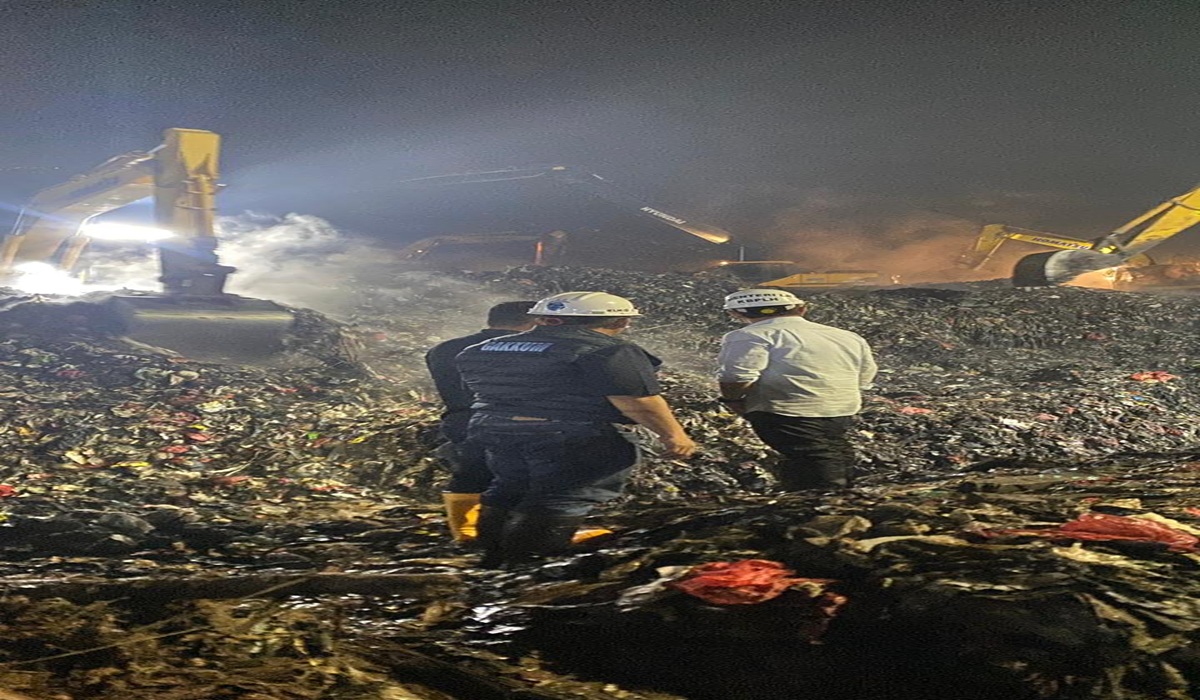
Waste in Zone IV of the Bantargebang Integrated Waste Processing Site (TPST) collapsed on Sunday, 8 March at 14.30 WIB, resulting in five fatalities. Environment Minister and Head of the Environmental Control Agency (KLH/BPLH), Hanif Faisol Nurofiq, confirmed on Monday, 9 March that his office is launching a comprehensive investigation and vigorous law enforcement to ensure that Jakarta’s prolonged waste management crisis does not claim further lives.
“Bantargebang is an ‘iceberg phenomenon’ representing the failure of Jakarta’s waste management, which has now accumulated a critical burden of 80 million tonnes of waste over 37 years,” the Minister stated.
According to Nurofiq, the Bantargebang landslide serves as an alarm for the government to halt waste management using the open dumping method. The Minister contended that employing open dumping at this location violates Law Number 18 of 2008, as the existing system is no longer capable of mitigating safety risks for residents.
These non-compliant conditions not only threaten public safety due to the potential for additional landslides, but also constitute a massive source of environmental pollution.
“This incident need not have occurred if waste management had been conducted in accordance with regulations. The Bantargebang TPST must serve as a lesson for us all to undertake urgent reforms in the interests of human life and environmental preservation,” Minister Hanif stated whilst inspecting the landslide site.
This is not the first such incident at Bantargebang. In 2003, a waste landslide buried residential areas nearby. The collapse of Zone 3 in 2006 claimed lives and buried dozens of waste pickers. This pattern of systemic failure continued until January 2026 when the subsidence of a platform dragged three waste trucks into a river, followed by further waste landslides.
According to Minister Hanif, this series of recurring incidents demonstrates the fatal risks posed by overload conditions at the Bantargebang TPST. Given the repeated occurrences and associated risks to human life, the Minister has affirmed that responsible parties will face strict enforcement action in accordance with Law Number 32 of 2009 concerning Environmental Protection and Management. Criminal penalties range from 5–10 years imprisonment with fines of 5–10 billion rupiah for those whose negligence has resulted in death.
The Environment Ministry had previously issued warnings regarding waste management conditions at Bantargebang, which were assessed as presenting a high level of risk. Through the Deputy for Environmental Law Enforcement on 2 March 2026, a Notice of Investigation Commencement (SPDP) was issued against several waste management facilities deemed to be at risk, including the Bantargebang TPST.
Following the Bantargebang landslide, the government has prioritised the evacuation of all victims whilst initiating a comprehensive investigation to strictly enforce penalties for management negligence that endangers residents’ lives. As a long-term solution, the Bantargebang TPST will be converted exclusively for inorganic waste processing through strengthened waste segregation at source and optimisation of the Refuse Derived Fuel (RDF) facility at Rorotan. Inter-agency coordination will be strengthened to ensure Jakarta’s waste processing capacity reaches 8,000 tonnes daily.
Bekasi Municipality has conducted evacuations following the landslide at the Bantargebang facility, with Bekasi Mayor Tri Adhianto expressing concern. West Java Governor Dedi Mulyadi has extended condolences and urged all parties to remain vigilant against unforeseen disasters.
Jakarta DKI Legislative Council Member Hardiyanto Kenneth has called for the Provincial Government to conduct a comprehensive evaluation following the Bantargebang TPST collapse.
Heavy equipment has been deployed to search for victims of the waste landslide at the Bantargebang facility in Bekasi Municipality. If waste management issues are not urgently addressed, numerous landfills are projected to reach maximum capacity by 2028. Environment Minister Hanif Faisol has endorsed the Indonesian Ulema Council’s (MUI) fatwa declaring it impermissible to dump waste into rivers, and has pledged to swiftly revoke administrative sanctions against dozens of waste management contractors in Puncak, Bogor.