
Ministry of Education launches digital Makassar language dictionary for young people
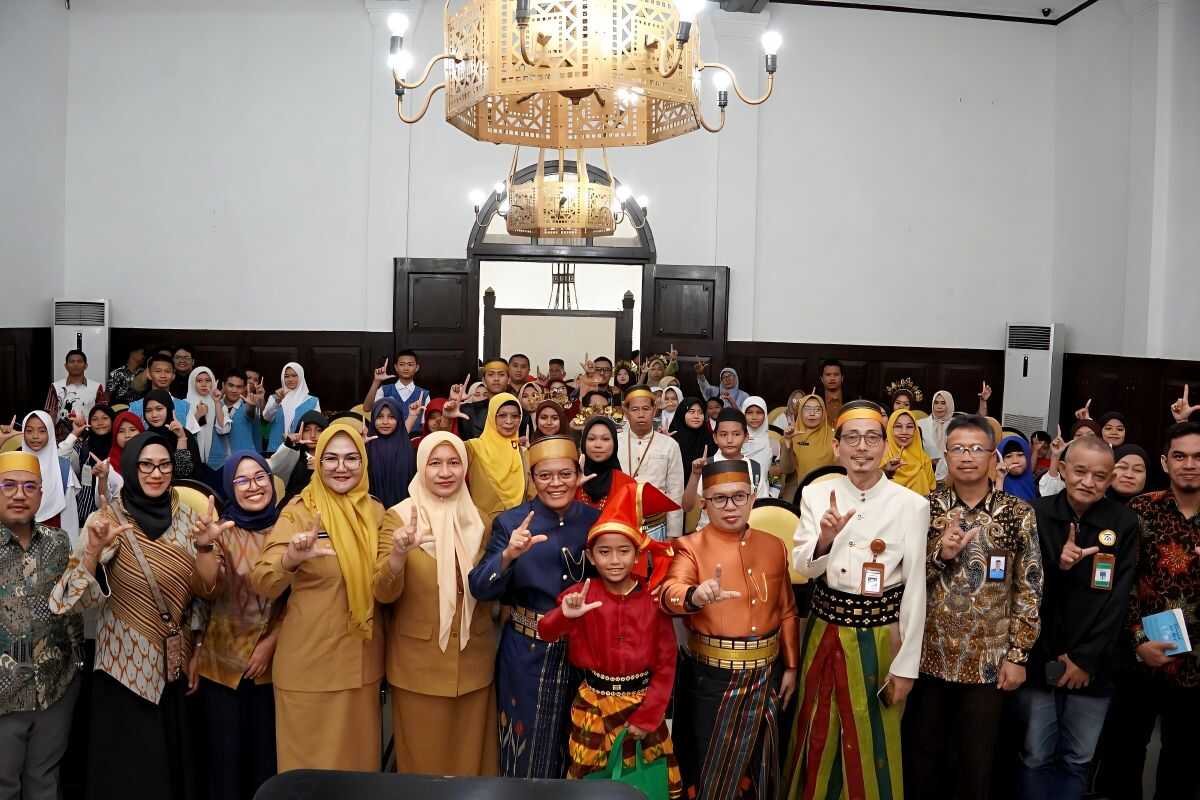
Jakarta (ANTARA) - The Agency for Language Development and Improvement (Badan Bahasa) of the Ministry of Basic Education and Culture (Kemendikdasmen) has launched the “Dictionary in Schools” programme, in the form of a digital Makassar-Indonesian-English dictionary, as an effort to protect and revitalise regional languages through the use of digital technology, in order to reach young people.
“Young people are the focus this time because they are the generation that has the strongest means of expression with all the ease of information technology that they master. The aim of involving young people is to ensure that the mother tongue does not become foreign to their daily lives,” said Minister of Basic Education and Culture (Mendikdasmen) Abdul Mu’ti in a written statement in Jakarta on Thursday.
The Head of the Agency for Language Development and Improvement of the Ministry of Basic Education and Culture (Kemendikdasmen), Hafidz Muksin, added that the mother tongue has a crucial role in shaping national identity.
“By 2025, the Badan Bahasa will have revitalised 120 languages throughout Indonesia and compiled 228 regional dictionaries as an effort to protect cultural identity,” he said.
Unlike conventional dictionaries, this application is designed as a “living dictionary” that allows the public to participate in suggesting new vocabulary. Each suggestion, he said, will be verified by a team of experts from the Badan Bahasa before being officially added.
To attract students, the dictionary is equipped with various modern features, ranging from translations that include Makassar, Indonesian, and English, to multimedia support in the form of pronunciation videos to help users understand the pronunciation and context of the words accurately.
In addition, interactive quizzes are also included as an innovative and fun learning medium for students.
On the same occasion, the Mayor of Makassar, Munafri Arifuddin, emphasised that this dictionary is a vital tool to strengthen local identity in the era of globalisation.
Full support also comes from the Makassar City Education Office, which will soon socialise the use of this application in all educational units.
The Head of the Makassar City Education Office, Achi Soleman, affirmed the importance of this application so that children in Makassar do not lose their identity.
After the launch, elementary and junior high school students participated in a trial of the Digital Makassar Language Dictionary and showed enthusiasm when trying out the vocabulary search feature and interactive quizzes.