
Ministry of Creative Economy Views AI Utilisation as a Way to Bridge the Technology Gap
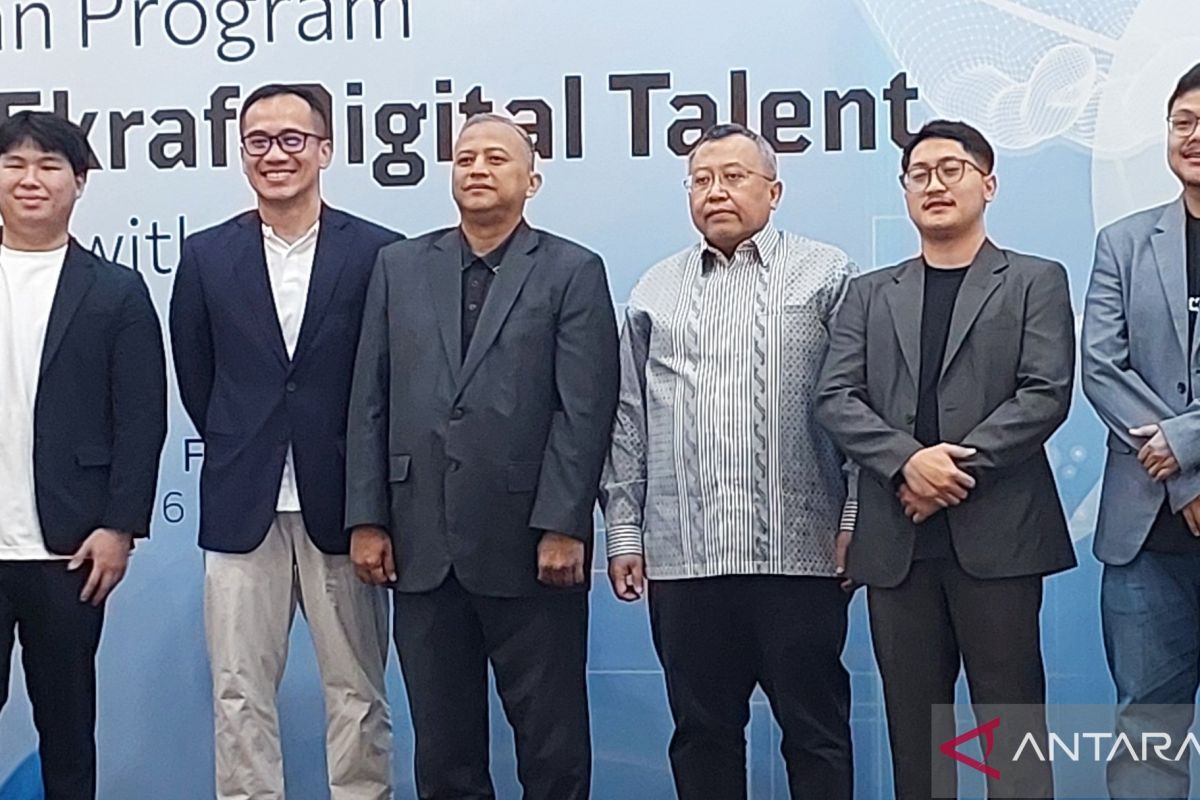
Jakarta (ANTARA) - Director of Applications at the Ministry of Creative Economy, Tri Wahyudi, stated that human resources capable of using artificial intelligence or AI in their productivity can break the technology gap, which is a challenge in enhancing the global competitiveness of Indonesia’s human resources.
“When the global level is already using AI, it means we need talent and the ability of our developers to learn AI, and of course, this will create new job opportunities, and we will also improve global competitiveness,” said Tri during a discussion at the launch of the Badan Ekraf Digital Talent (BDT) 2026 programme in Jakarta on Tuesday.
Tri said that based on PwC data, artificial intelligence has provided benefits to its users in increasing productivity by 96 per cent, with active users being Gen Z.
As many as 28 per cent of companies have employed 18 million people skilled in AI technology, but still 57 per cent of companies assess that they lack talent or human resources with the ability to operate AI technology.
“The biggest risk if our talent does not adapt to AI is that they will certainly lose competitiveness in creativity and innovation, and we will only become a user country that uses foreign technology; we cannot improve our capabilities, and of course, the technology gap will become even wider,” he said.
Tri stated that to address the need for digital talent capable of utilising AI, the Ministry of Creative Economy is facilitating the Badan Ekraf Digital Talent (BDT) 2026 programme, which will increase productivity and efficiency with AI-based technology, improve the quality of works, and enhance the digital adaptability of creative economy actors.
By expanding the reach of AI-related education, it is hoped that the BDT programme can be utilised by creative economy actors to have standards that can compete at the global level and prepare more adaptive digital talent quality, so that productivity from the national applications subsector can compete in the international world.
“Of course, besides expanding job opportunities, they will also become more competitive and not just users but can also access markets that impact Indonesian products,” said Tri.