
Minister of Immigration and Corrections Wants to Turn Prisons into Centres of Excellence for Food Products
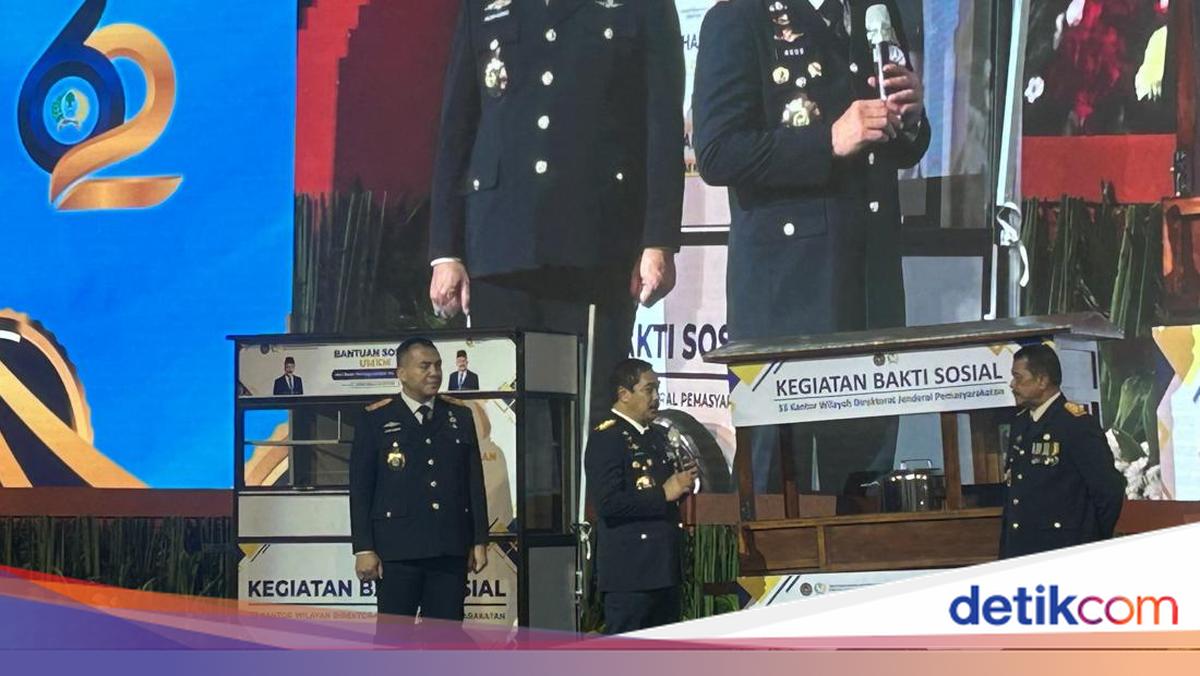
Minister of Immigration and Corrections (Imipas) Agus Andrianto led the commemoration of the 62nd Correctional Services Day. He expressed his desire for the correctional system to become a centre of excellence for food products.
Agus conveyed this in his speech at the Tangerang Immigration and Corrections Polytechnic on Monday (27/4/2026). He initially invited the correctional staff to evaluate what has not yet been achieved.
“Today, on the 62nd Correctional Services Day, I invite us all to engage in deep reflection on what we have achieved, what we have not, and, more importantly, what we can do together to make the correctional system an integral part of national development,” said Agus.
He urged the correctional staff to take concrete steps that impact the lives of inmates. He mentioned that inmates could be involved in supporting the national food security programme.
“In line with the government, one of our flagship programmes that is now our main focus is national food security, which is directly integrated with rehabilitation activities in prisons and detention centres. We want inmates to become active agents in nation-building, not merely passive objects of rehabilitation. Behind the walls of correctional institutions lies extraordinary potential from the inmates,” he explained.
Agus stated that his side is undergoing changes to make correctional institutions centres of sustainable, independent business. He mentioned that inmates are trained and rehabilitated to become empowered upon returning to society.
“We have thousands of workers ready to be trained and lands ready to be cultivated. This potential is what we optimise to make the correctional system a centre of excellence in food products. We are transforming correctional institutions into centres of independent, sustainable business that provide real contributions to the wider community,” he said.
“This is the new face of our correctional system: not just confining but building, not just restraining but empowering,” he added.