
Minister of Cooperatives Requests Fibre Optic Ring Java Network Support Red-White Village Cooperatives
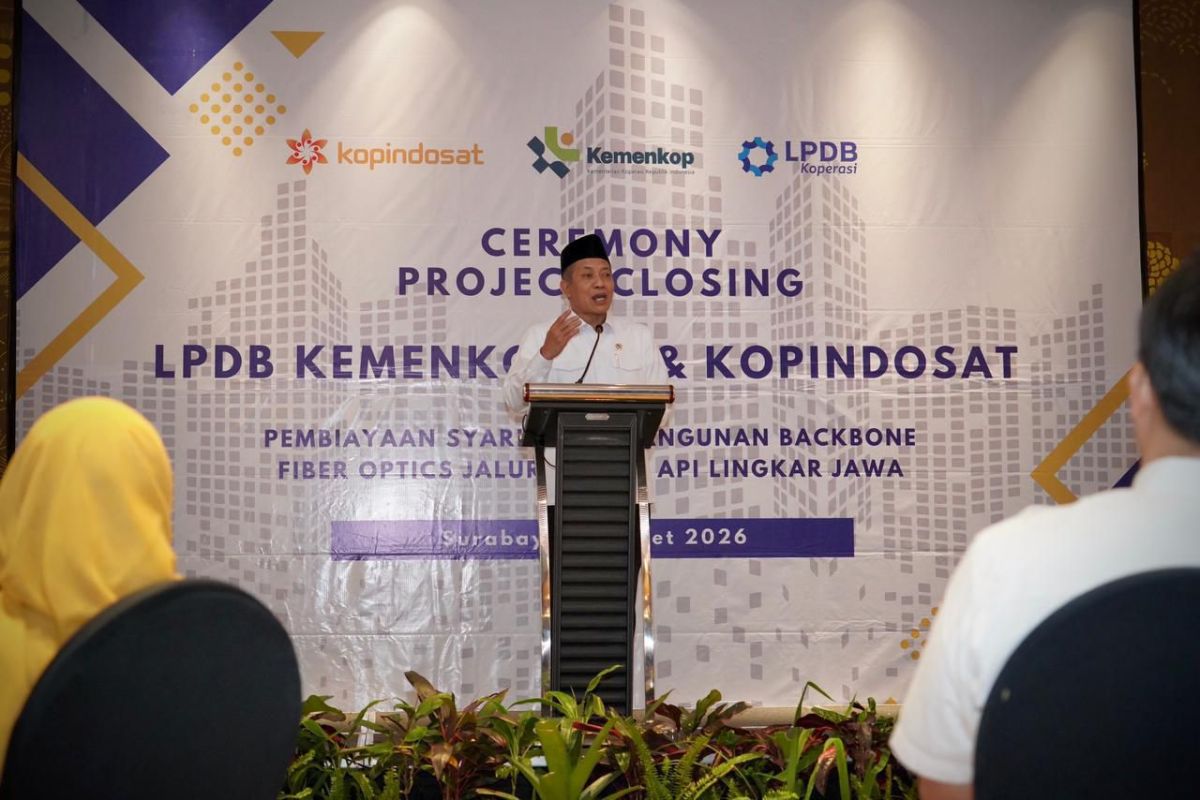
Jakarta – Indonesia’s Minister of Cooperatives Ferry Juliantono has requested that the development of a backbone fibre optic network along the Java railway ring be directly linked with the operationalisation of Village and Urban Cooperatives (Kopdes/Kelurahan) Merah Putih.
This statement was made during a field visit to the backbone fibre optic project along the Java railway ring, which was initiated by Indosat Employee Cooperative (Kopindosat) at Gubeng Station in Surabaya on Monday.
The Minister of Cooperatives commended the implementation of the backbone fibre optic project, which is currently at the project closing stage.
Ferry emphasised that one of the classic obstacles faced by villages and urban centres in remote areas is limited internet and electricity networks. He added that once the fibre optic network begins operating commercially, this service is expected to provide affordable, fast, and accessible internet to residents’ homes.
He stated that the Ministry of Cooperatives, through the Cooperative Revolving Fund Management Agency (LPDB), is ready to provide additional support in the form of competitive financing, including the possibility of assisting with installation to residents’ homes so that the service genuinely reaches all levels of society.
Beyond infrastructure, Ferry emphasised the importance of improving the capacity of management staff at Kopdes/Urban Cooperatives Merah Putih. According to him, limited human resources capacity is a genuine challenge that needs to be addressed immediately through training and digitalisation support.
Meanwhile, Kopindosat Chief Executive Officer Wahono explained that the backbone fibre optic network is being developed along the entire railway line, spanning approximately 4,600 kilometres, stretching from Cikampek to Banyuwangi with several branches.
The project received financing support from the Cooperative Revolving Fund Management Agency of approximately Rp47–48 billion.
“This project is expected to be a solution for accelerating the equitable distribution of internet networks across various regions, particularly in remote villages and urban centres,” said Wahono.