
LPEM UI Forecasts March Inflation to Ease Despite Rising Oil Prices
Jakarta – The Institute for Economic and Social Research at the Faculty of Economics and Business, University of Indonesia (LPEM FEB UI) has projected that annual inflationary pressure will decline in March 2026, following sharp increases to 3.55% in January 2026 and 4.76% in February 2026.
“Entering March 2026, annual inflation is estimated to decline to the range of 3.07% to 3.51% (year-on-year),” according to the LPEM Macroeconomic Analysis Series for March 2026, released Thursday, 12 March 2026.
The LPEM economics team stated that the inflation forecast already accounts for potential energy price pressures stemming from the escalating conflict between Iran and the United States and Israel in the Middle East. This conflict has disrupted one of the world’s major energy trade routes, the Strait of Hormuz.
The escalation of the Middle East conflict is expected to push global crude oil prices to the range of $170 per barrel, with greater inflationary risks if disruptions at the Strait of Hormuz persist.
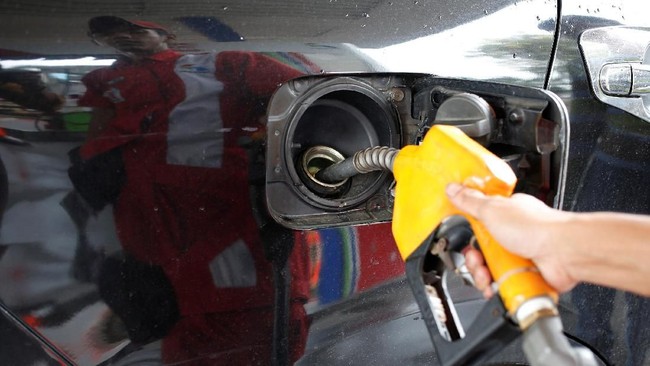
The LPEM economics team noted that the adjustment of non-subsidised fuel prices on 1 March could influence the cost structure of transportation and logistics, although the impact would be less significant than if subsidised fuel prices increased.
The principal factor accounting for the forecast moderation in inflationary pressure in March 2026 is the diminishing effect of the low base as the comparison period ends—specifically when electricity tariff discounts were eliminated in March 2025. Nevertheless, price pressures will still emerge from seasonal patterns associated with Ramadan and Eid al-Fitr.
Additionally, government infrastructure projects, including downstream industrialisation initiatives and housing development programmes, could add gradual upward pressure on prices if implementation acceleration becomes more pronounced in early 2026.
“This projection still faces upside risks, particularly from increased food demand during Ramadan, rises in transportation tariffs related to Eid celebration and holiday travel, and impacts from non-subsidised fuel price adjustments on 1 March 2026,” said the LPEM economics team.