
Local Governments Declare Readiness to Facilitate Implementation of Junior High School Academic Ability Test 2026
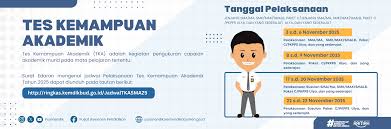
Local governments in several regions have stated their readiness for the organisation of the Academic Ability Test (TKA) for junior high school level, which will take place on 6 April 2026. The TKA is a national assessment instrument to measure students’ academic achievements according to the curriculum, it is non-mandatory, and does not determine graduation.
The Head of the Junior High School Division of the Manokwari Regency Education Office, West Papua, Parjiyanti, explained that the regional government has undertaken various preparations from the beginning to ensure the TKA runs smoothly.
“We have conducted socialisation to school principals and school operators from February to March 2026, including special training related to the TKA implementation. Socialisation was also carried out through school principals’ consultation forums and learning communities,” she said, quoted from an official statement on Friday (3/4).
The regional government has also ensured that all ninth-grade students are registered as TKA participants through coordination with the Civil Registration and Population Office to validate student data, including anticipating duplicate NISN possibilities.
To date, around 3,375 students in Manokwari Regency have been registered as TKA participants and it is ensured that none are left out. From the infrastructure side, checks on device and network readiness have been conducted in all schools.
“Every educational unit is required to follow simulations and clean rehearsals. For areas with network limitations, schools can join the nearest school,” she explained.
In addition, the regional government has coordinated with PLN and Telkom Indonesia to anticipate technical disruptions such as power outages and network issues during the TKA implementation.
Meanwhile, the Head of Junior High School Development at the Sikka Regency Education, Youth, and Sports Office, NTT, Husein Hanafi Suaib, mentioned that device readiness remains a challenge in several schools, especially since most still rely on limited school-owned laptops.
“Some schools have requested teachers to lend laptops during the TKA implementation. We have also conducted national simulations and clean rehearsals to test device and network readiness, as well as coordinated with PLN and Telkom to ensure stable electricity and internet supply,” he said.
According to Husein, coordination between the regional government and educational units is carried out in stages, starting from socialisation of technical guidelines, participant data collection and verification, to monitoring of facilities and infrastructure.
“We conduct area mapping, establish independent school and piggyback school schemes, and prepare standby technical teams. A mechanism for follow-up exams is also prepared for participants affected by technical issues,” he explained.
From a policy perspective, education observer Totok Amin views the continuation of TKA implementation after its application at the high school level as a positive step.
According to him, the TKA is important as an instrument to view students’ learning achievements more comprehensively, especially at the junior high school level, which is a crucial phase in the learning process.
TKA results can help identify learning challenges while encouraging the strengthening of understanding-based and critical thinking learning methods, not just memorisation.
“TKA is not a national exam, not a graduation requirement, and not a requirement for entering public schools. This needs to be understood by the public to avoid excessive concerns that could lead to cheating practices. TKA is a measurement tool, not a determinant of students’ futures,” he said.
He added that TKA data can be utilised as a basis for formulating education policies, both at the regional and national levels. Through these results, the government can map student abilities, from literacy to numeracy, while identifying the needs for strengthening learning and providing teachers.
Currently, the number of TKA registrants for junior high school level is recorded at 4,207,516 students. After going through the simulation and clean rehearsal stages, the junior high school TKA implementation will take place from 6-16 April 2026 with four sessions each day.
The next stage, the elementary school level TKA is scheduled for 20-30 April 2026. For participants experiencing issues during implementation, the follow-up TKA will be held from 11-19 April 2026, with results announced on 25 May 2026.