
Legal Practitioner: Opinion Formation Plays a Major Role in Political and Geostrategic Stability
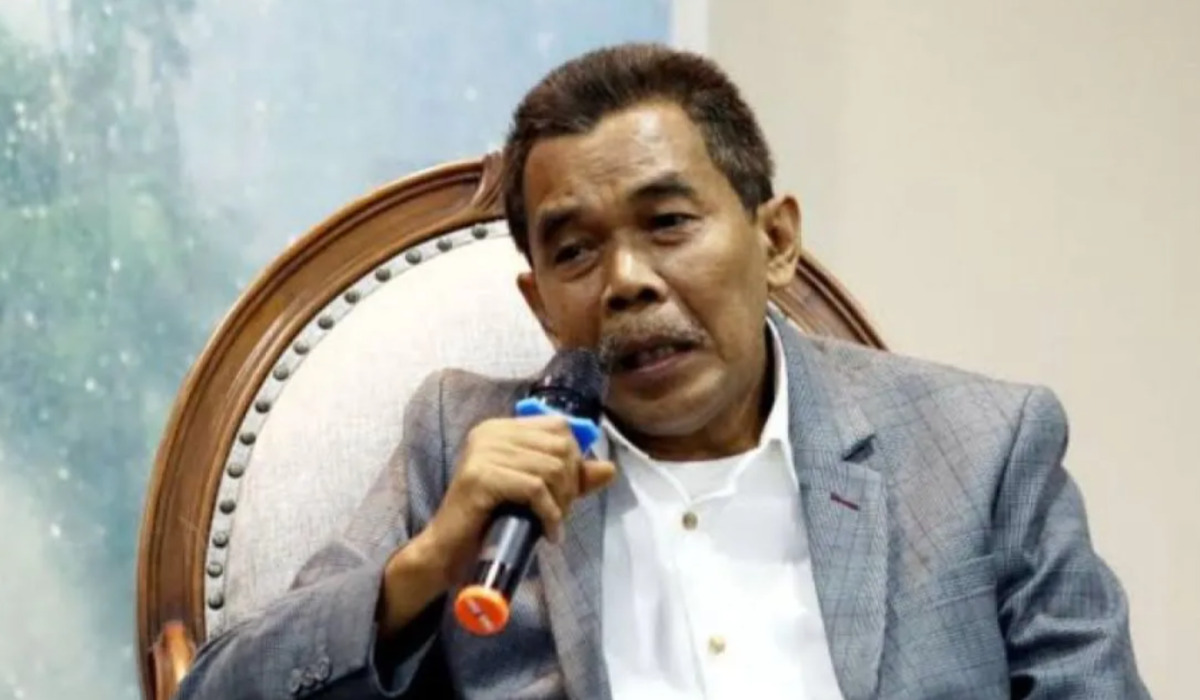
Framing or opinion formation is often used as an instrument to create political and geostrategic instability. This was stated by legal practitioner Agus Widjajanto in his analysis related to global dynamics and domestic cases.
Agus explained that framing is a technique to influence public opinion by presenting information in a specific context. This technique is usually carried out through selective presentation of information, the use of emotions, and the creation of simple narratives that are easily accepted by the public.
Agus gave an example of how framing practices occurred in international history, particularly leading up to the US invasion of Iraq, which resulted in the fall of Saddam Hussein.
One classic example is the story of Nayirah al-Sabah, who gave an emotional testimony on 10 October 1990 before the Congressional Human Rights Caucus in the United States. Nayirah claimed that Iraqi soldiers removed babies from incubators in Kuwaiti hospitals until they died.
This testimony shocked American public opinion and was cited by President George H. W. Bush to justify military intervention. However, it was later revealed that Nayirah was the daughter of the Kuwaiti Ambassador to the US, and her testimony was scripted by the public relations firm Hill & Knowlton without valid evidence.
“This is a classic example of how propaganda is used to influence public opinion and political decisions,” said Agus in his official statement to reporters on Tuesday (24/3/2026).
He also mentioned a recent case that has the potential to trigger a major conflict, namely allegations of an attempt by Ukrainian and British intelligence to steal a Russian MiG-31 fighter jet.
According to a report from Russia’s Federal Security Service, the plan involved bribing a Russian pilot with millions of dollars and foreign citizenship in exchange for flying it to a NATO base in Romania. “If it had not been uncovered, this could have become a provocation leading to a broader conflict,” said Agus.
Furthermore, Agus linked the framing phenomenon to the acid attack case against activist Andrie Yunus, which is alleged to involve four rogue members of the Indonesian National Armed Forces Strategic Intelligence Agency (BAIS TNI). He said he appreciated the Indonesian National Armed Forces’ swift action in arresting and announcing the suspected parties involved. According to him, this shows a change in approach towards transparency in maintaining public trust.
However, he reminded the public not to be easily provoked and to wait for the investigation process carried out by the TNI Military Police to be completed. “Don’t let us be pitted against each other by certain parties who want to create instability. Give space to law enforcement to uncover the real facts,” he said.
He stated that based on the current case developments, the possibility of a third party attempting to create framing to discredit the TNI and government institutions is not impossible. This is evident from questions such as why CCTV footage was not erased if the action was carried out professionally. Agus questioned the motive behind the action, especially after the approval of the TNI Law by the DPR the previous year.
“The TNI is no longer trapped in defensive practices. Transparency is the key to building credibility,” concluded Agus.
Political analyst Boni Hargens reminded that the political situation does not stand alone. External factors still play a key role in maintaining the rhythm of government.
Political stability at home is the main key for the business world to thrive and impacts economic growth.