
KPK Urged Not to Be Half-Hearted in Uncovering Customs Mafia, Investigation Deemed Must Target Entire Network
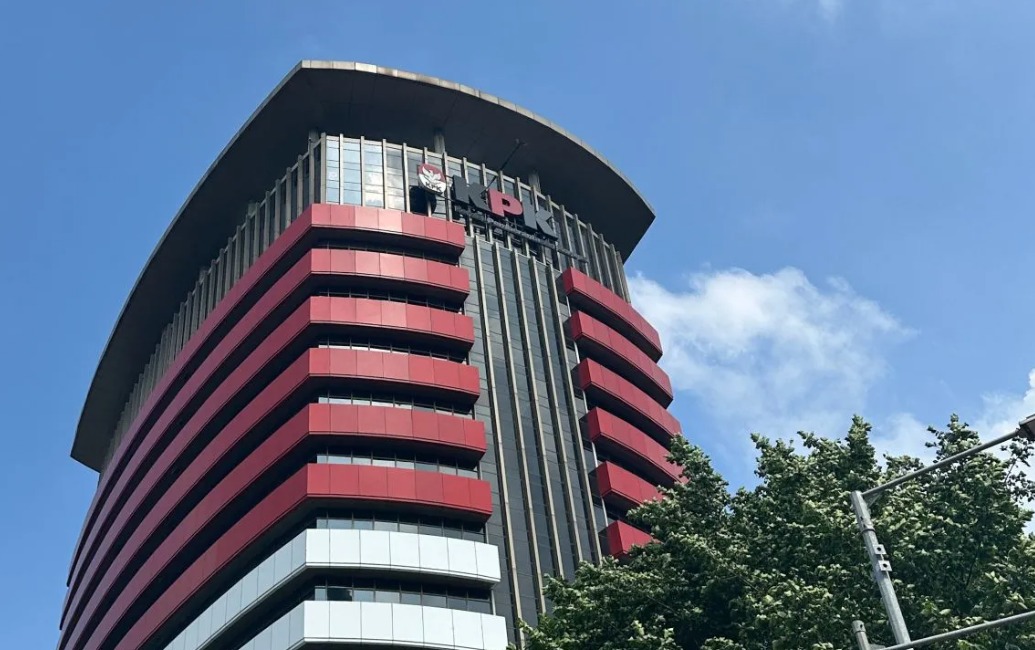
Calls for the Corruption Eradication Commission (KPK) not to stop at a single company in the alleged bribery case at the Directorate General of Customs and Excise are intensifying. Counter-intelligence analyst Gautama Wiranegara assesses that the current investigation has entered a crucial phase.
According to Gautama, after the initial target is secured, the direction of the case handling will determine whether this becomes merely a routine enforcement or evolves into a systemic dismantling. “In every operation, the phase after the first target is secured is the decider. At that point, it becomes clear whether we are just catching the perpetrators or truly dismantling the network,” he stated in a written release on Tuesday (31/3).
Gautama believes that indications of involvement by many parties in this case are already evident, referring to the KPK’s statement acknowledging the role of “other forwarders” in the case vortex. “In operational terms, that means the network has already been mapped. The question is, will this process continue or be subtly halted?” he said.
He highlighted the scale of the alleged fund flows, reportedly reaching Rp7 billion per month and ongoing for years, involving many civil servants (ASN) across positions. The discovery of two safe houses with seized assets worth tens of billions of rupiah also serves as strong evidence that such practices could not involve just one entity.
“No logistics system of that size serves only one client. Those safe houses are points of fund aggregation, not mere single transaction locations,” Gautama emphasised.
Given the scale of the findings, Gautama assesses that a case construction focused solely on one company may not reflect the actual field conditions. He reminds of the basic principle in intelligence operations: “one target is never alone”—a single target never stands alone.
“If only one company is designated as the giver, there are two possibilities: we haven’t seen the full picture yet, or we have chosen not to see it,” he added.
Gautama warns that halting the expansion of the investigation at this phase poses a significant risk, as it gives other parties room to erase traces. “Once the momentum is lost, the network will adapt or harden targets. If that happens, future proofing will be much more difficult.”
From a legal perspective, he believes the Corruption Eradication Law provides ample room for the KPK to draw in all involved parties. In the public sphere, several company names have begun to emerge and be linked to this ecosystem, such as PT Infinity Nusantara Ekspres, PT Benua Bintang Jaya, and PT Fasdeli International Express.
“This is no longer a technical matter, but one of integrity. If only one entity is acted upon while others are detected, the public will read it as selective enforcement,” Gautama said.
Besides risks in court, Gautama assesses there is a threat of systemic spread within Customs and Excise itself. The fact that an official who has just taken office for a short time can immediately be implicated indicates a structurally corrupt system.
He also mentioned improvements in Non-Tax State Revenue (PNBP) performance in the customs sector, which rose by around 5% after previously declining. “This surge is positive, but without a thorough systemic dismantling, such improvements will not be sustainable.”
In conclusion, Gautama emphasised that this is the golden window for the KPK. “The KPK is at a crossroads. Will this just become a tactical bribery case, or a strategic step for total reform in the customs sector? The public awaits that decision,” he concluded.