
KPK Reveals Potential Corruption in KIP Kuliah Programme, Many Recipients Suspected of Being Affiliated with Officials
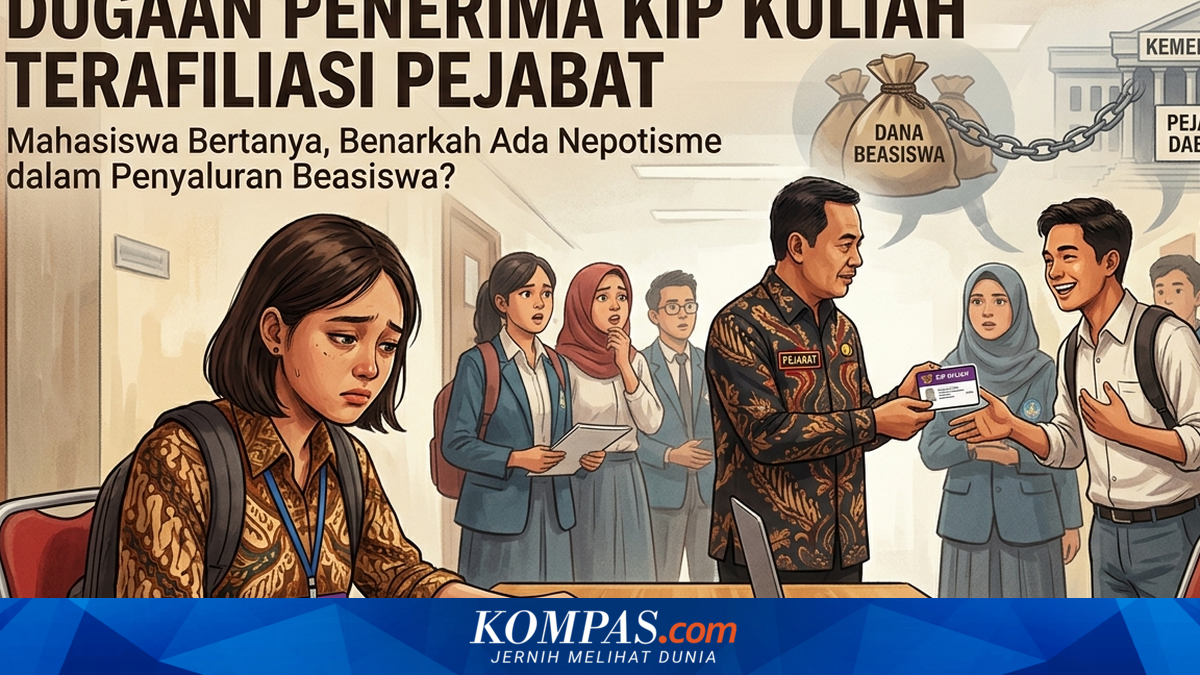
JAKARTA, KOMPAS.com - The Corruption Eradication Commission (KPK), through a study by its Directorate of Monitoring, has revealed findings of potential corruption in the Kartu Indonesia Pintar (KIP) Kuliah programme.
Several potential corruption risks include conflicts of interest, where 11 out of 16 private universities (PTs), or 68.75 per cent of the sample recipients of the largest Usmas pathway quotas, are affiliated with public officials or political entities.
“Quota allocations are also given to supervisory institutions such as the Financial Audit Board (BPK RI), creating vulnerabilities for moral hazard,” stated the KPK’s Directorate of Monitoring on Friday (17/4/2026).
The report found that only 50 per cent of the sampled campuses conducted limited field visitations due to a lack of budget.
Furthermore, the KPK found that the implementation of sanctions for violations in the management of KIP Kuliah is deemed ineffective.
“Out of 15 problematic campuses from the 2020–2023 period, 11 still received KIP Kuliah quotas via the Usmas pathway in 2024. This indicates that the sanction system has not provided a deterrent effect,” it said.
The KPK stated that this situation has the potential to facilitate practices of levies or fund deductions. Additionally, a single account can be accessed simultaneously on various devices, thereby weakening control functions against misuse.
The KPK also stated that there are indications of bribery practices in the allocation of Usmas pathway quotas.
Three campuses in the sample revealed offers of quota allocations in exchange for Rp 5 million to Rp 8 million per student promised by certain parties.
The KPK also found recipients of KIP Kuliah who also receive other scholarships, such as KJMU.
“These findings align with the 2021 BPK audit results, which showed duplication of aid in several regions,” it said.
Conduct regulatory reforms and governance improvements for the Usmas pathway.
Develop clear verification guidelines and allocate a specific budget for the process.
Update the technological architecture of the SIM KIP-K application.
Strengthen inter-agency coordination to prevent duplication of aid.
Implement multi-layered oversight mechanisms and firm sanctions.