
KPK Finds High Grant Allocations in Aceh for Central Government Agencies
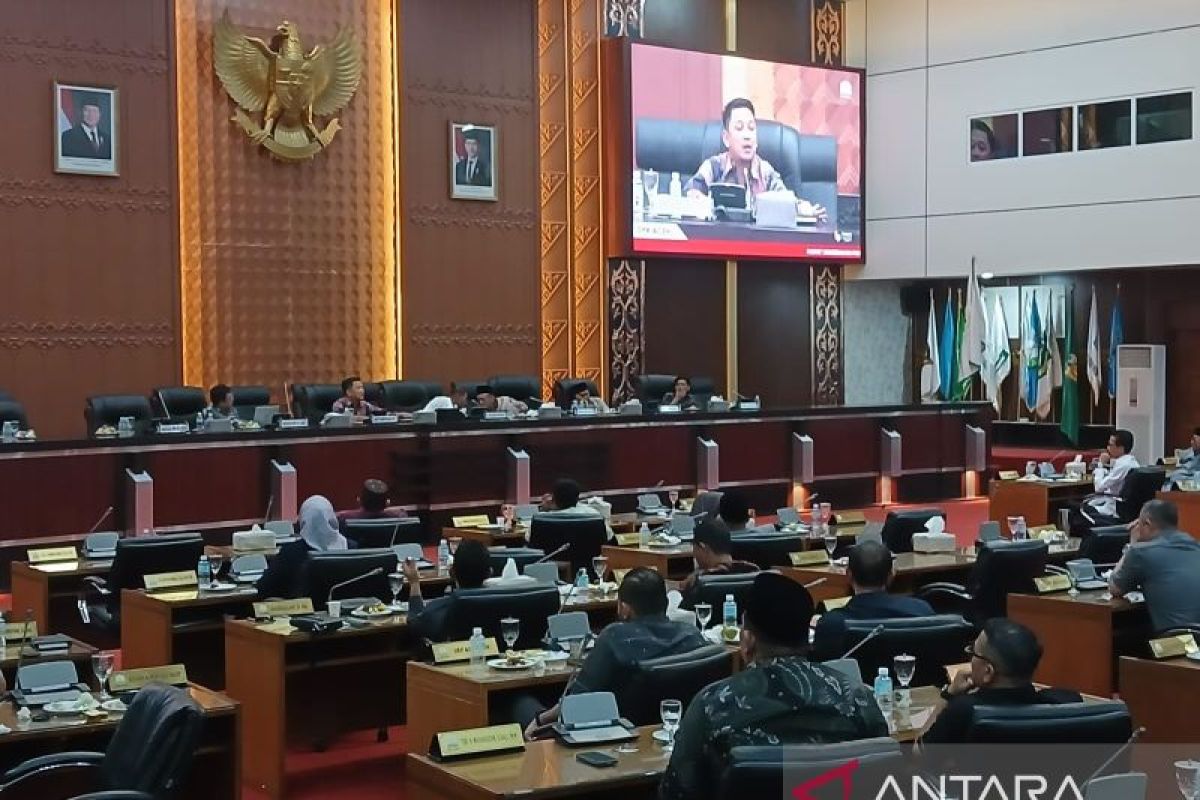
Banda Aceh (ANTARA) - The Corruption Eradication Commission (KPK) has found that Aceh’s 2025 grant allocations to central government agencies remain high even though those agencies have already received funding from the national budget. “KPK finds that grants are still provided even though central government agencies are funded by the APBN,” said Harun Hidayat, head of the KPK’s Task Force for the Directorate of Regional Coordination and Supervision, Region I, in Banda Aceh on Tuesday.
The statement was delivered at a coordination meeting on anticorruption prevention with the Aceh Representative Council (DPRA) and the district/ccity legislatures (DPRK) of Aceh, at the DPRA Main Building in Banda Aceh.
In its briefing, the KPK noted that Aceh’s grants to central government agencies in 2025 include for the continuation of the construction of the Kodam IM hall Rp4.7 billion, and the continuation of the Aceh High Prosecutor’s Office Training Building Rp9.6 billion.
Then, the continuation of the construction of the Propam building of Aceh Regional Police Rp6.68 billion or more, rehabilitation of the Intelkam Directorate building of Aceh Police Rp6.86 billion, and the continuation of the official residence of the Aceh Deputy Attorney General (Wakajati Aceh) Rp1.35 billion.
However, for other agencies (the TNI/Polri/Attorney General’s Office), there are other regulations governing them such as Permendagri Number 77 of 2020. For example, grants should not be provided for two consecutive years, with the exception of the Indonesian Red Cross (PMI) and KONI, which is not an issue every year.
“Yet for other agencies, regulations exist and they must comply. Also, the amount need not be 100 percent fulfilled; for instance, if they request Rp100 billion but fiscal capacity is insufficient, then no. It’s a matter of prioritisation, urgency and fiscal capacity,” he said.
He also explained that if a local budget (APBD) in a region is small and the area is hit by a disaster, and efficiency is a factor, then grants should not be forced. “If necessary, the grant could be Rp0. Focus more on disaster response, for instance. Is it reasonable to grant to central government agencies while our people affected by a disaster suffer more?” said Harun.
Central government approval is required for every grant to central agencies, via the parent agency in the centre or the Government Internal Supervisory Apparatus (APIP) of the relevant ministry.
Periodic synchronisation of grant data between regional and central governments is required to prevent double funding.
Finally, public transparency requires local government to openly publish the recipient’s name, address, grant value and the intended use.
“Principally, grants are not an issue as long as they conform to regulations and are verified; what is not acceptable is not to verify,” Harun added.