
Jimly Proposes Using Omnibus Method to Revise Electoral Law, Integrating 16 Laws
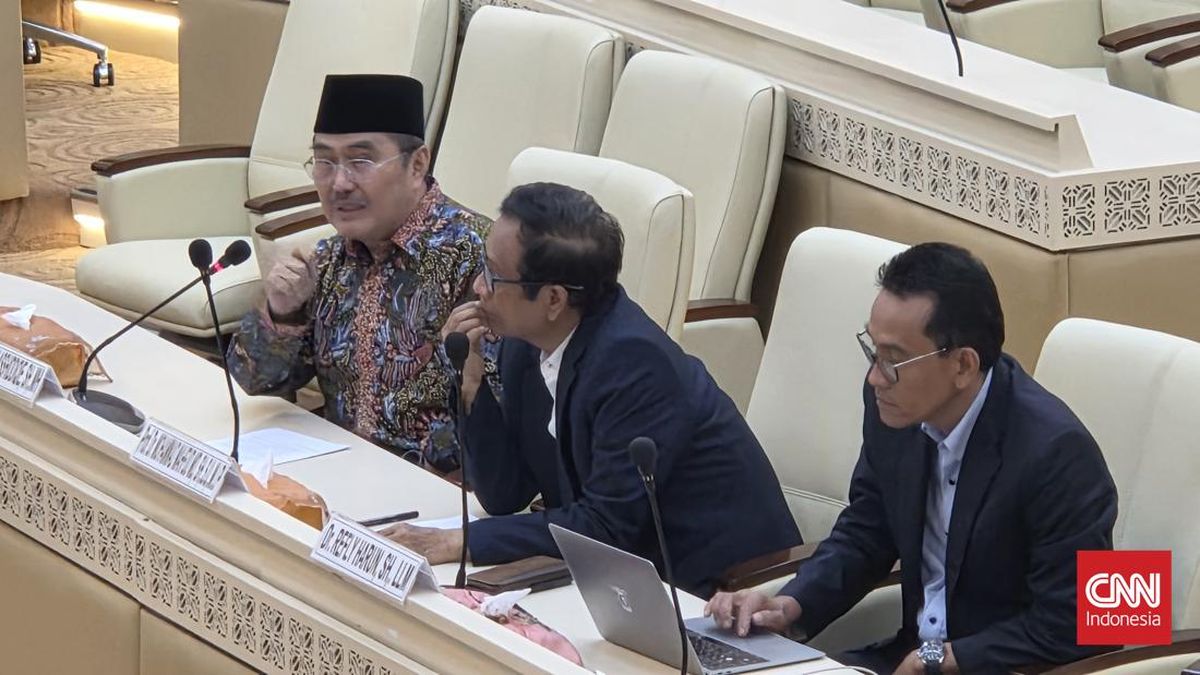
Former Constitutional Court (MK) Chief Justice and constitutional law expert Jimly Asshiddiqie has proposed using the omnibus method to revise the Electoral Law.
He stated that there had previously been agreement to revise the Electoral Law through limited codification. He then proposed complementing this approach with a limited omnibus technique.
“But alright, since limited codification has already been agreed upon, I propose that we also use the omnibus method with a limited technique,” Jimly said during a working meeting with Commission II of the House of Representatives on Tuesday, 10 March.
According to him, there are 16 laws that need to be considered for integration into the Electoral Law revision through the omnibus method.
“Friends, these 16 laws are what I believe need to be subject to the omnibus approach,” he said.
Jimly cited several laws that regulate regions with specific characteristics, such as Aceh and Jakarta.
He noted that Aceh does not have a General Election Commission (KPU), but rather an Independent Election Commission (KIP).
Likewise, the electoral supervisory body is called Panwaslih, which differs from Panwaslu in other regions.
“When established, Panwaslih has five members. Panwaslu throughout Indonesia has three members, appointed at the national level. The two additional members are selected from the local provincial legislature. Later, during implementation, there are disputes over budgets. So, please correct this in this law,” he said.
In Jakarta, Jimly cited the example of electoral organising institutions that exist in cities and regencies despite there being no local elections.
“The KPU exists in every city down to the Thousand Islands Regency. The population is only a few thousand, yet there is a KPU there. What is the point of having a KPU? Elections only happen once every five years. There are no local elections. In that region, an ad hoc arrangement would suffice. But the KPU and Bawaslu exist in every city. This is because the law on regional administrations and the law on elections do not correct this,” he said.
He also addressed the Broadcasting Law. Jimly stated that there are no provisions in that law clearly and firmly establishing that broadcast airtime belongs to the public.
“Therefore, during election periods, all parties should have equal rights to obtain airtime for advertisements. It should not be the case that the party whose chair general owns a television station has an advertisement every five minutes, whilst other parties must pay. This needs to be addressed in the broadcasting law with one additional article,” Jimly said.
“Introducing what I call CPR, not CSR—corporate political responsibility—because whilst shareholders are private, television frequencies belong to the public. Therefore, we need to regulate this,” he added.