
Jakarta Issues New Padel Court Regulations After Widespread Resident Protests
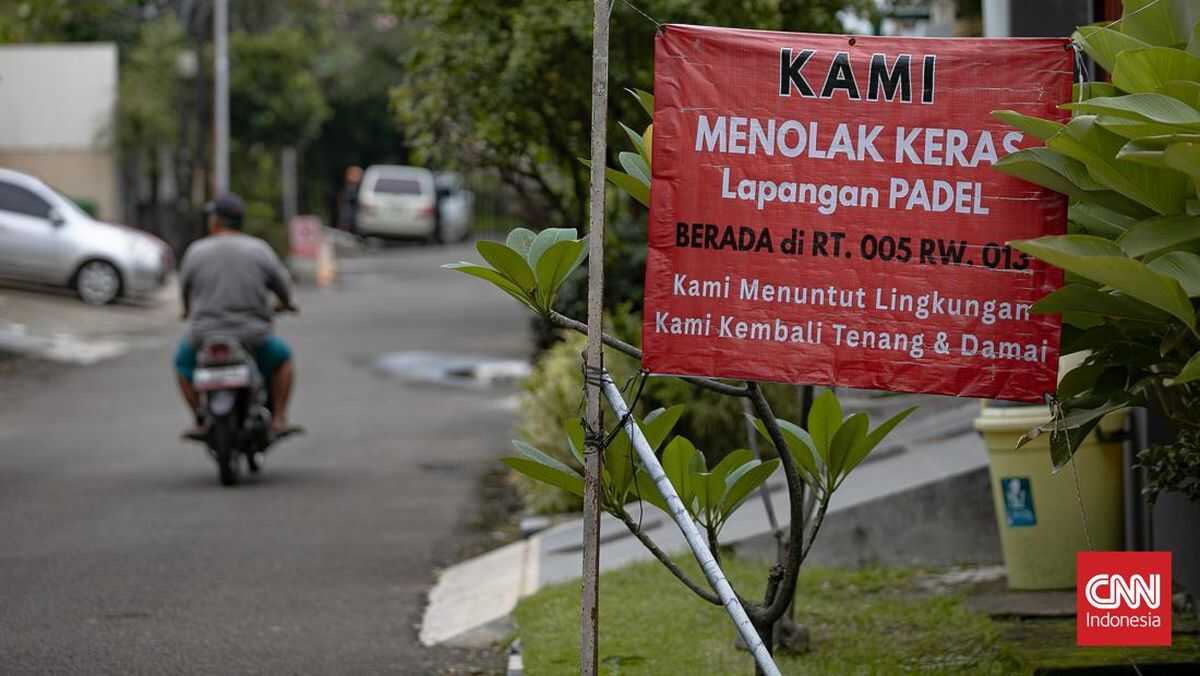
New Regulations for Padel Courts in Jakarta Following Resident Protests
The Jakarta Provincial Government (Pemprov DKI Jakarta) has established new regulations for padel court operators to ensure the safety, comfort, and order of residents. These new rules were implemented following public outcry over padel courts in Jakarta, which were criticised for causing noise pollution.
Jakarta Governor Pramono Anung stated that every policy will be based on comprehensive discussions with relevant departments. He assured that the Jakarta Provincial Government will address any issues that impact the comfort of residents.
CNNIndonesia.com has compiled a list of the new regulations for padel courts in Jakarta:
Operating Hours Regulations
Pramono has limited the operating hours of padel courts in residential areas to a maximum of 8:00 PM. Padel courts in residential areas must have a Building Approval Permit (PBG). Pramono has requested that mayors and sub-district heads negotiate with residents.
“Negotiate with residents and set a maximum time limit for the use of the padel courts, which should not exceed 8:00 PM. Therefore, for all padel courts in residential areas, the maximum operating time, even with a PBG permit, is 8:00 PM,” said Pramono at Jakarta City Hall on Tuesday (February 24).
Prohibition of Padel Courts in Residential Areas
Pramono also prohibited the construction of new padel courts in residential areas. He stated that the construction of new padel courts must be done in commercial areas.
“It has been decided that new permits for the construction of padel courts will not be allowed in residential areas. All new constructions must be in commercial zones,” said Pramono.
Pramono said that if padel courts in residential areas cause noise pollution, the operators must soundproof the courts.
“If the padel courts cause noise pollution due to the bouncing of the ball and shouting, which disturbs residents, then such padel courts in residential areas are required to be soundproofed. The bouncing of the ball should not disturb the residents,” he said.
Must Obtain Dispora Permit
Pramono also said that the construction of new padel courts must also obtain technical permits from the Youth and Sports Department (Dispora).
“Most importantly, for the construction of new padel courts, they must obtain initial technical approval from the Youth and Sports Department. This will serve as a reference so that not everyone who wants to build a padel court can simply do so in Jakarta,” he said.
Pramono emphasised that the tightening of permit requirements is not to hinder the popularity of padel, but to ensure that land use and environmental comfort are maintained.
“We do not want this sporting hobby to develop without clear rules and ultimately harm the surrounding community,” he said.
Arrangement of Padel Player Parking
Pramono also acknowledged complaints about padel players parking their cars haphazardly in residential areas. Pramono said that he would take action to address this.
“Parking. This is a problem because, I’m sorry, most padel players are people who have the ability to drive their own cars. And they often park in residential areas because there is no parking space, so they park haphazardly. This is very disruptive to residents,” said Pramono.
He emphasised that parking is one of the three main complaints of the community, in addition to noise and operating hours that are too late. According to Pramono, many padel courts in residential areas do not have adequate parking space.
As a result, players’ vehicles crowd the neighbourhood streets and disrupt access for residents.
Demolition of Padel Courts Without PBG Permits
Pramono ordered the demolition of padel courts that do not have a government permit in the form of a Building Approval Permit (PBG).
In total, there are 397 padel courts in Jakarta. He suspects that some padel courts do not have a PBG.
“Buildings or padel courts that do not have a PBG (Building Approval Permit) will have their activities stopped, be demolished, and their business permits revoked, because we suspect that there are some. The exact number will be confirmed by Citata (Department of Public Works, Spatial Planning, and Land Affairs), the padel courts that do not have a permit or PBG,” said Pramono.
The Jakarta Provincial Government recorded that as many as 185 padel courts operating in the capital do not have a building approval permit (PBG).
The Head of the Department of Public Works, Spatial Planning and Land Affairs of Jakarta, Vera Revina Sari, said that of the total 397 padel courts in Jakarta, 212 have a PBG.
“As of February 23, 2026, there are 212 padel courts that have a PBG and 185 padel courts that do not have a PBG,” said Vera when contacted on Wednesday (February 25).
(kna/dal)[Gambas:Video CNN]