
Is US Power Really Reaching Its Limits, Unable to Win a War Against Iran?
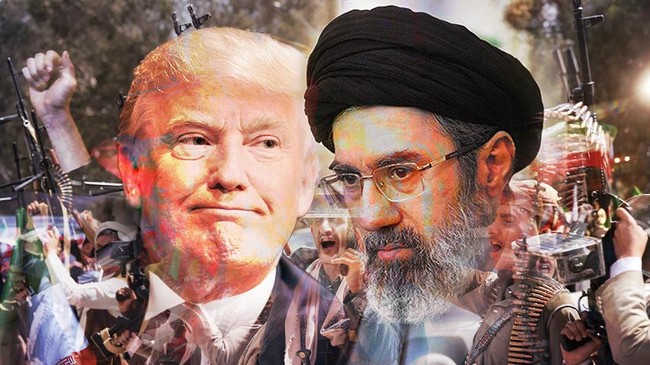
US President Donald Trump has officially declared the start of a new “golden era” in the Middle East following the announcement of a ceasefire with Iran on Tuesday. The ongoing war has, at least for now, been temporarily halted, offering the possibility that “the fighting will not resume in the near future,” although political predictions from the White House are always fraught with risks.
Chairman of the Presidium of Russia’s Foreign and Defence Policy Council, Fyodor Lukyanov, views this pause as crucial for Washington. According to him, a prolonged war would heighten risks for all parties, particularly the US itself, which has always felt uncomfortable with long-term strategic uncertainty.
“Regardless of all the bombastic rhetoric from the US government, America has always felt very uncomfortable with prolonged uncertainty and strategic risks,” Lukyanov stated in an opinion piece on Russia Today, quoted on Friday (10/4/2026).
“It is one thing to threaten, but quite another to bear the consequences when those threats fail,” he added.
Although the precise terms of this ceasefire remain unclear and may not yet be fully agreed upon, Lukyanov highlights the stark political reality. He asserts that when confronted with steadfast resistance, the US opts to step back.
“Not a single one of the major demands set at the outset of the operation has been met,” he said.
“Trump’s demands in capital letters for ‘UNCONDITIONAL SURRENDER!’ from Iran now appear more like political theatre than a strategic doctrine,” he added.
“Yet behind the social media drama, something more rational has prevailed in Washington: when pressure fails, it is better to retreat than to escalate into a situation no longer under your control,” Lukyanov remarked.
He also noted that the high-fever rhetoric prior to the ceasefire served a specific purpose for the White House. It allowed Washington to claim that Tehran had “blinked” or capitulated, while creating a sense of impending disaster so that any pause in fighting could be sold as relief.
“The White House will now try to present this restraint as a victory,” concluded Lukyanov, who is also Editor-in-Chief of the magazine Russia in Global Affairs.
Iran’s Resilience and the Failure of US-Israel Strategy?
This conflict is regarded as a historical milestone in the broader transformation of the international system, though not the final chapter in the Middle East struggle. Iran is seen to have demonstrated extraordinary resilience, shattering the core assumptions behind the US-Israel campaign that strong attacks would suffice to topple the Islamic Republic.
“Tehran’s response was not spectacular in a conventional military sense, but it was effective. Iran expanded the theatre of tension and signalled that the costs of escalation would not be limited to military targets. This forced its adversaries to reckon not only with Iranian retaliation but also with the fragility of the broader regional system,” Lukyanov explained.
In his view, the endurance of the US and its regional partners is limited, while Iran has historically shown far greater staying power. Moreover, what is termed the ‘Axis of Resistance’ has proven more durable than many assumed, with pro-Iran forces in Lebanon, Yemen, and Iraq remaining significant strategic factors.
“The broader efforts to neutralise Iranian influence have backfired. Iran has emerged bloodied but standing tall. Even if Tehran’s claims that any resolution must occur on its terms are partly negotiation tactics, one thing is clear: Iran’s regional weight has not diminished as Washington and Western Jerusalem desired,” Lukyanov emphasised, who also serves as Research Director of the Valdai International Discussion Club.
The Future of Gulf Monarchies and Israel’s Position?
Negotiations with Tehran are now seen as inevitable, but this leaves major questions about Iran’s internal ambitions and nuclear programme. For the wider region, the implications are profound, particularly for the Gulf monarchies.
“The Gulf monarchies have gained a sobering experience. There will be no return to the old comfortable formula where security could be outsourced entirely to Washington in exchange for money and loyalty. That arrangement, which has underpinned the region since the Cold War, has been severely shaken,” Lukyanov clarified.
Individually, the Gulf states are predicted to intensify their search for new partners such as China, South Asia, Russia, and Western Europe to safeguard their interests. While they will not tolerate unchecked Iranian dominance in the Persian Gulf, their policies will become more complex, involving Iran where necessary.
“Israel, meanwhile, has not achieved its proclaimed goals. No matter how loudly victory is proclaimed, the fundamental strategic reality remains unchanged. The Iranian factor persists. It has not been eliminated or sufficiently weakened for Israel to feel truly secure,” he added.
The End of American Omnipotence?
At the domestic US level, Trump’s success hinges on economic stability and oil markets. If markets stabilise, the White House will insist that disaster was averted thanks to Trump’s leadership. However, the larger lesson from these events is about the limits of American power.
“The United States remains very strong. Its military reach, financial influence, and ability to shape events are still formidable. But none of it is unlimited. America can still influence outcomes but can no longer impose its will at any cost.”