
Iran War Proves Trump's Failure, America Grows Weaker
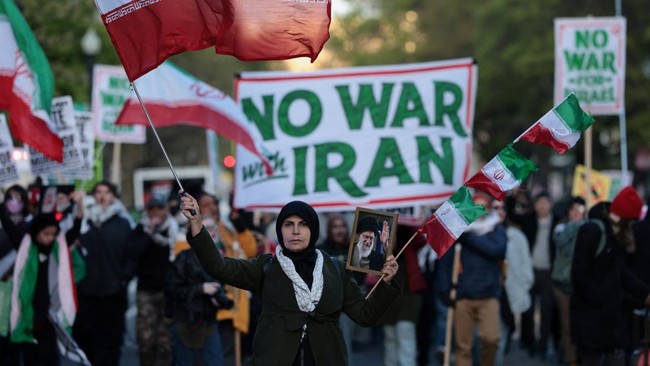
The war between Iran and the United States (US) and Israel is bad news for the world, causing many people globally to suffer once again after being hit by the Covid-19 pandemic in 2020.
Not all wars have a winner. But every war at least has one losing side, and if this is the big one, the ceasefire marking the end of the war in Iran means the biggest loser is Donald Trump.
This conflict has thwarted his main war aims and exposed the shallowness of his vision for a new way of wielding Uncle Sam’s power.
This peace is very fragile. The US and Iran cannot agree on whether the ceasefire covers Lebanon, which has been so heavily attacked by Israel that the threat to a broader ceasefire seems deliberate.
They are debating how Iran should open the Strait of Hormuz, a US prerequisite for negotiations, and their negotiating positions are so different that they cannot even agree on what plan they will discuss in Islamabad this weekend.
The best reason to think Trump will not go back to war is that he now understands he should never have started it. His reckless and disgusting posts threatening to destroy Iran seem like an attempt to hide his retreat behind a facade of defence.
He knows that renewed war would panic markets and that after touting a “Golden Age” in the Middle East, that four-dimensional chess player risks looking foolish.
Iran also has reasons to restrain itself. Its leaders continue to be killed. Although they do not care much about their citizens, including the thousands killed in the war, the massive destruction of the power grid and transportation would make the country harder to govern.
They also want the lifting of sanctions. The regime also feels that time is on its side at the negotiating table. The US cannot constantly place its troops on alert for attack. If war breaks out again, it will be because Iran is too reckless.
Therefore, the most likely outcome is an injured Iranian regime clinging to power and seeking maximum goals in negotiations. Iran has no navy or air force and has lost and expended many of its missiles and drones.
To make more, they must face the reality that their economy has been in ruins for years due to more than 21,000 US and Israeli attacks.
Trump calls it a great victory. However, it does not look like a great victory compared to the minimal progress in meeting the three most important goals of this war, namely making the Middle East safer and more prosperous by taming Iran, overthrowing the regime, or stopping Iran from becoming a nuclear power forever.
The war has damaged regional security. Before the war began, Israel had partially dismantled Iran’s proxy militia network. However, Iran has now built new sources of influence, by attacking Gulf countries and blocking shipping through the Strait of Hormuz. Iran is attempting to charge a fee for use of the strait.
Trump has even considered sharing that revenue. Gulf countries and their customers may be able to refuse this insult to freedom of navigation. But fierce fighting will occur in the future.
Even after oil producers build new pipelines to bypass the Gulf, Iran will still be able to attack critical infrastructure.
Gulf countries, which market themselves as oases of calm, must ask whether they can continue to rely on the US or whether they should rethink their security by doing more themselves, even seeking deals with Iran.
The regime remains in power, despite Trump’s weak claims that he toppled it. He may hope that the Iranian people will soon rise up against their oppressors so he can claim credit.
That may happen, but it seems less likely now than before the war, when the regime was more unpopular than ever in its 47-year history.
With Ayatollah Ali Khamenei ill, the regime faces a dangerous transition to a new generation. The war has realised that transition, crowning Ali’s son, Mojtaba, as leader.
Unlike Ali, he is merely a symbol. Control lies with the Islamic Revolutionary Guard Corps and competing factions within it, all aggressive nationalists.
And the war may have worsened the nuclear threat. The US and Israel have further damaged Iran’s infrastructure, but around 400 kg of highly enriched uranium, enough for ten bombs, is still buried at nuclear sites.
Trump insists that Iran hand over this “nuclear dust.” Iran wants sanctions lifted, but the incentive to prevent future attacks by using it to make bombs has increased, potentially causing regional nuclear proliferation. That would be a horrific outcome, but to stop it, Trump and future presidents may have to attack every few years. Based on the evidence from this war, that will be hard to sustain.
So what is the fate of the architects of this conflict? Israel has never had such great military power. However, this war shows the limits of what can be achieved and how their appetite for preemptive strikes causes fear and hatred in the region.
For many Israelis, fighting as equals with America revives pride.