
Iran Ceasefire Extended, What Are the Next Steps?
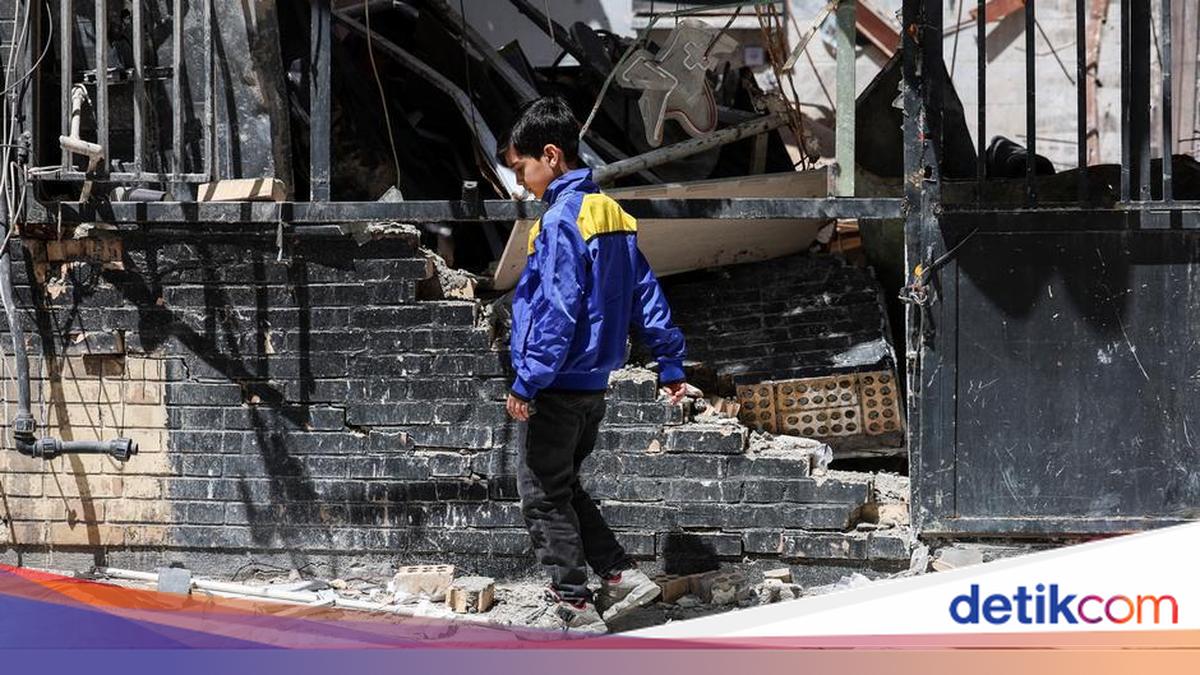
US President Donald Trump issued another ultimatum to Iran in early April to pressure it into taking steps in the ongoing conflict. However, as the deadline approached, Trump announced a 14-day ceasefire instead. After that period ended without results, the agreement was extended again. In the latest extension, no final deadline was set. Trump stated that the US would delay attacks on Iran until the country submits a new proposal to end the conflict. He described the process as being resolved “one way or another.” Meanwhile, the US Navy continues its blockade of Iranian ports. Three scenarios: which one will occur? The 14-day ceasefire did allow for the first direct negotiations between the US and Iran in nearly a decade. However, a lack of trust on both sides has so far prevented the start of the next round of talks. On several occasions, prospects emerged for a new meeting in Islamabad mediated by Pakistan. However, those plans were postponed or completely cancelled. The US insists on a 15-point plan, while Iran has its own 10 demands. Nevertheless, both sides are unlikely to want to maintain the current uncertain situation for long. Therefore, there are two other completely different scenarios that could occur. Both sides could return to negotiations, narrow their positional differences, and ultimately reach a peace agreement. Or, the tone of relations could continue to deteriorate, and the tense military situation in the Strait of Hormuz could intensify, potentially reigniting fighting. What are the main differences between the US and Iran? Of the US’s 15 demands, two are considered the most important: Iran must halt its nuclear programme and ensure freedom of navigation in the Strait of Hormuz. On the nuclear issue, Trump does not want to return to the nuclear deal negotiated by his predecessor, Barack Obama. Trump unilaterally withdrew from that deal in 2018 and reimposed previously lifted sanctions, citing the desire for a “better deal.” US media reported that the latest negotiations are primarily stalled on the timeframe issue. Iran is said to be willing to halt its nuclear programme for five years, while the US demands at least 20 years without uranium enrichment. Differences also arise regarding the monitoring mechanism and the fate of Iran’s existing uranium stockpile. The second major issue arose since the war began on 28 February. In response to attacks by the US and Israel, Iran halted civilian shipping in the Strait of Hormuz, a vital global trade route. After seeing the effectiveness of that blockade, Iran then proposed implementing some form of tariff or levy. This tariff imposition is seen as economically beneficial for Iran. As the world begins to experience shortages of fuel and other commodities, this move also gives Iran significant bargaining power. Even after the ceasefire extension, Iran announced that its Revolutionary Guard attacked three cargo ships in the strait. The US completely rejects that blockade. In mid-April, Trump imposed a counter-blockade on ships entering or leaving Iranian ports. As a result, Iran is currently cut off from vital trade routes for its economy. To return to free navigation as before the war, an international naval mission is needed so that shipping companies no longer worry about the safety of their ships and crews in the Strait of Hormuz. Other factors influencing the dynamics This war has impacted US President Donald Trump’s domestic position. Some MAGA movement supporters are starting to distance themselves because he is seen as breaking his promise not to lead the US into long and costly foreign military operations. The economic impact of the blockade is also beginning to be felt domestically, not just in fuel prices. In this situation, Trump may choose not to issue a new ultimatum to avoid being in a position where he must take further military action. In the next six months, the US will face midterm elections that will determine the composition of Congress. If the Republicans lose their majority to the Democrats, the consequences for Trump will be significant. This adds pressure on him, on one hand to avoid getting bogged down in a prolonged war, and on the other to achieve favourable results. In Iran, the government under the new Supreme Leader, Mojtaba Khamenei, is likely not under the same time pressure, although the US blockade still impacts the country’s economy. However, this does not fully apply to the Revolutionary Guard, which experts describe as a state within a state, and whose influence has grown due to the conflict. This group is seen as more focused on power than de-escalation. Another important factor is Israel’s involvement since the start of the conflict. The Israeli government’s war aims under Prime Minister Benjamin Netanyahu are not entirely aligned with those of the US. Israel is within range of Iranian rockets, so its security interests are fundamental. In addition to airstrikes on Iran, the conflict between Israel and Hezbollah in Lebanon has intensified again. In the first few days of the US-Iran ceasefire, Israel continued major attacks on Hezbollah. A Trump-mediated ceasefire currently applies between Israel and Lebanon. The calculation is that if these two countries, which have been officially at war since 1948, can normalise relations, and if Lebanon succeeds in disarming Hezbollah, this will enhance Israel’s security. However, such an outcome is not certain, and the process i