
IPPA to Strengthen Data-Driven Policy
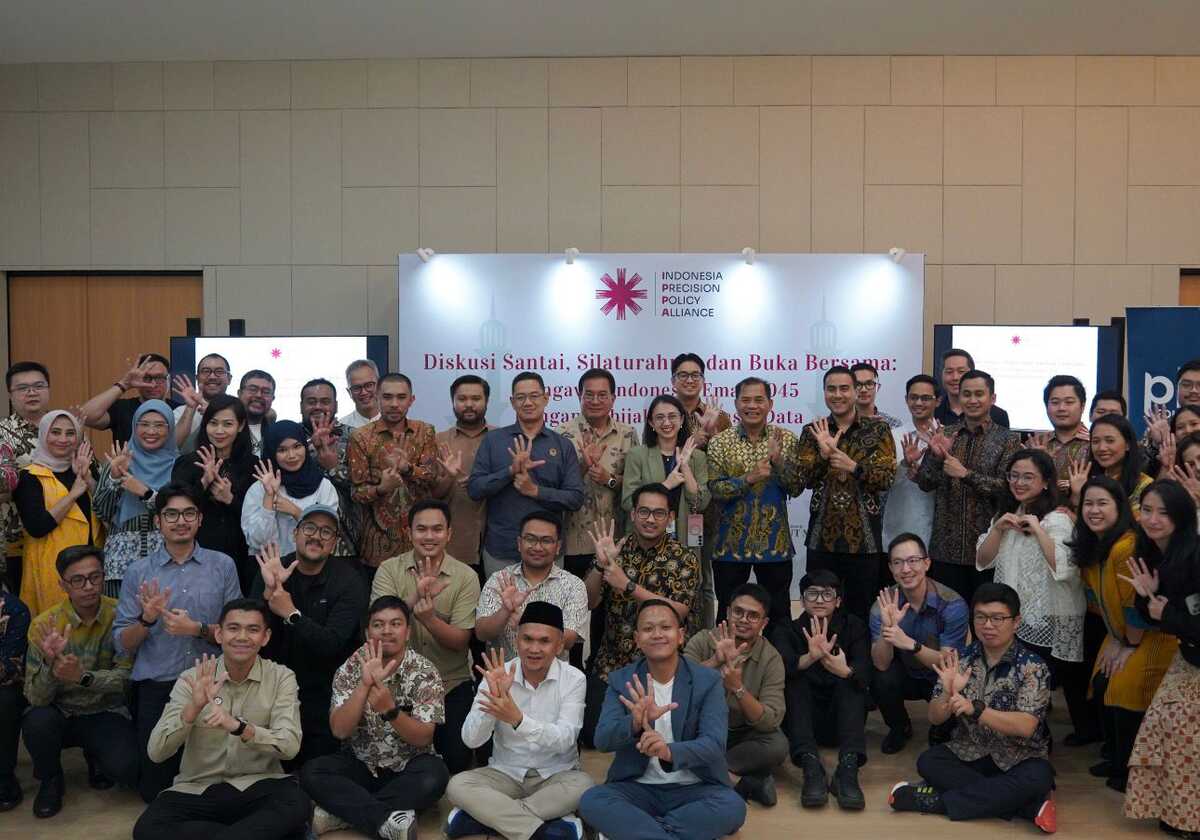
PIJAR Foundation officially unveiled the Indonesia Precision Policy Alliance (IPPA) at an event at its headquarters in the Kuningan district of South Jakarta. The launch was attended by founding members from across the public sector, ranging from ministerial special staff to legislators and senior officials (eselon I) in ministries and agencies of the Red-and-White Cabinet. Around 60 participants from various sectors attended.
The establishment of IPPA is motivated by the looming target of Indonesia Emas 2045, which now has about 19 years remaining. In that period, development challenges are seen as increasingly complex, so policy formulation cannot rely on trial and error anymore. The government requires skilled policy personnel, robust data resources, and policy execution units able to ensure programmes run effectively and targeted.
CEO and Executive Director of Pijar Foundation, Cazadira Fediva Tamzil, explained that the organisation aims to be a collaborative space to strengthen development toward Indonesia’s 2045 vision. ‘Pijar Foundation, as a home for collaboration, exists to safeguard the Indonesia 2045 vision which still has 19 years to go. The various initiatives we have driven thus far are aimed at that direction.’
Through IPPA, Pijar Foundation has prepared three main strategies to promote the systematic adoption of precision policy in governance. The first step is to strengthen the capacity of policy-makers through a comprehensive training programme. The training is designed to enhance data analysis capability, policy evaluation, programme impact assessment, and evidence-based decision-making.
The second step is to provide access to a verified dataset repository from various sources. The datasets are not intended to replace the government’s Satu Data programme, but to supplement and enrich data references that can be used in policy formulation within government agencies.
The third step involves providing technical assistance from professionals who can help accelerate the implementation of various strategic initiatives across ministries and cross-ministerial cooperation. This support will be delivered in conjunction with civil servants to ensure policy formulation and implementation remain evidence-based throughout the policy cycle.
One of the figures involved from IPPA’s early days, Ferro Ferizka, Special Staff to the Coordinating Minister for Human Development and Culture, regards the initiative as important to strengthen the implementation of government programmes. ‘President Prabowo has many outstanding programmes for Indonesia’s progress. His vision must be supported by effective and efficient ways of working. This can only happen if we are supported by skilled human resources and reliable, ready-to-use datasets.’ He added that the demand for a more precise policy system is felt by many officials in the government.
‘In my capacity as Special Staff, I found that many other special staff and colleagues share this view, and face the same challenges. Then we gathered and, with the support of Pijar Foundation, IPPA was born.’
IPPA was established together with founding members from various agencies, including Pandu Kartika, Special Staff to the Minister of PAN RB, Rama Notowidigdo from the Ministry of National Development Planning (Bappenas), Pradana Indraputra from the Ministry of Energy and Mineral Resources (ESDM), and Rachmat Kaimuddin, Deputy for Coordination of Basic Infrastructure at the Coordinating Ministry for Infrastructure. Additionally, Imam Machdi as Secretary of the Coordinating Ministry for Political, Legal and Security Affairs (Kemenko PMK), Alfreno K from the Ministry of Communications and Digitalisation (Kementerian Komdigi), Tiar Karbala, Special Adviser to the President, and Noor Sona Maesana Mushonnif from the Ministry of Investment.
From the perspective of government bodies that could benefit from the collaboration, the Head of the National Civil Service Agency (LAN), Dr Muhammad Taufiq, DEA, says the IPPA approach is relevant to strengthening the quality of public policy. ‘LAN has long trained tens of thousands of policy analysts and continues to promote policy innovation. The problem statements and solutions offered by IPPA, I see, address the challenges faced by many ministries and agencies. Therefore, collaborations like IPPA are essential to strengthen policy quality and public sector innovation,’ said Muhammad Taufiq. (I-3)
Challenges such as equitable development and social stability require collaboration that is not limited to a single organisational body. He notes that Prabowo’s main message is to strengthen defence posture while also building public trust in the state.
The Central Executive Board of GenMuda Pembaharu Indonesia (Gempar Indonesia) urged the government to accelerate development in the 3T regions (Underdeveloped, Frontier, and Outer) and called for a more people-focused approach to development beyond physical projects. Deputy Speaker of the MPR RI, Lestari Moerdijat, said that an environmentally aware and sustainable working basis must guide stakeholders in development.