
International Support for Indonesia's Digital Royalty Governance Proposal Strengthens
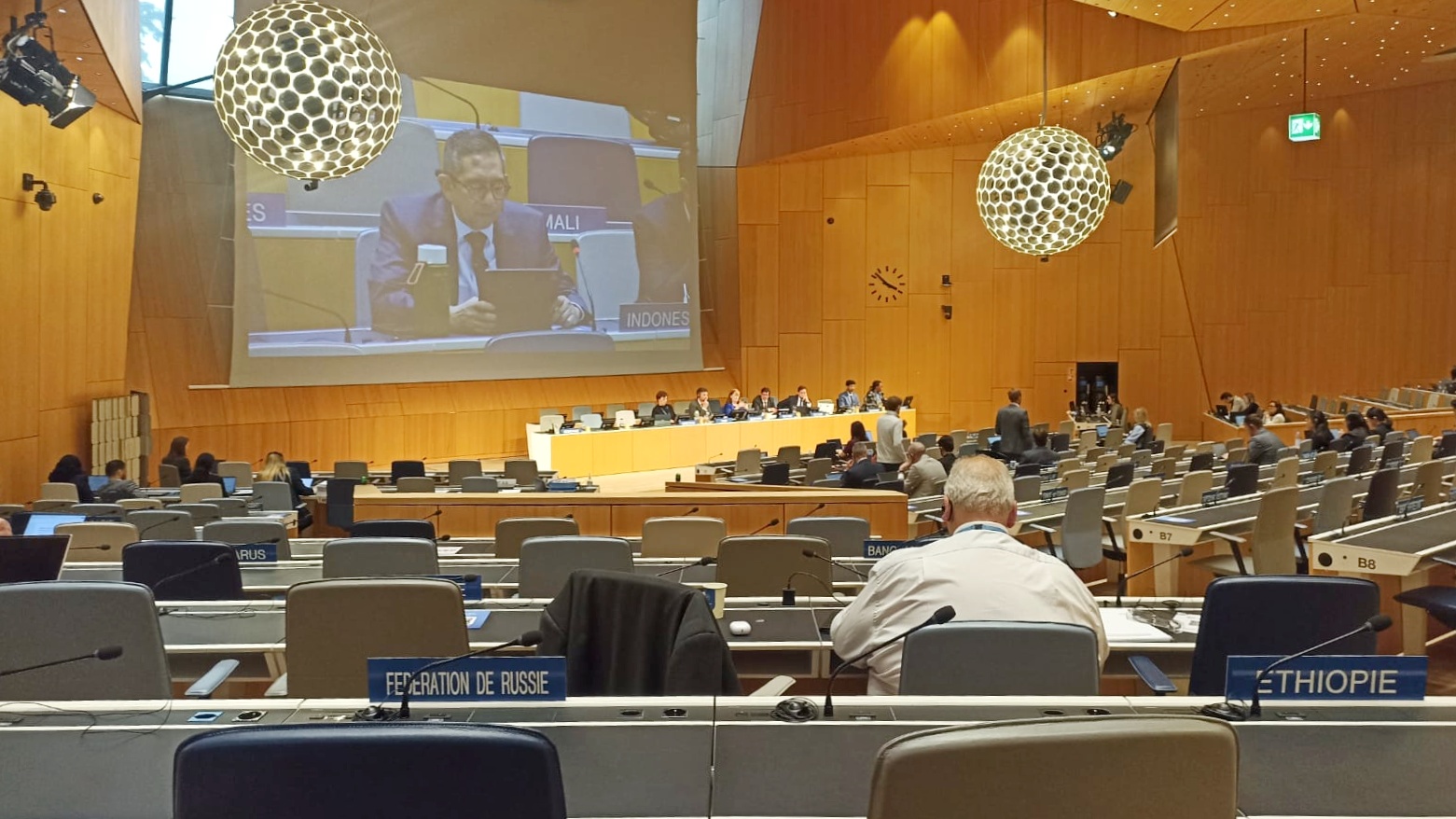
International support for Indonesia’s proposal on digital royalty governance has strengthened during the Standing Committee on Copyright and Related Rights (SCCR) meeting at the World Intellectual Property Organization (WIPO) in Geneva, Switzerland. Some countries and international organisations have begun expressing explicit support, openness, and commitment to continue substantive discussions on Indonesia’s Elements Paper.
Hermansyah Siregar, Director General of Intellectual Property at Indonesia’s Ministry of Law and Human Rights, said the developments indicate growing global awareness of the need for transparent and accountable royalty governance instruments in the digital age.
‘Indonesia is seeing more countries recognise that the digital ecosystem requires more transparent, interoperable, and equitable royalty governance for creators. This is a positive signal that creators’ welfare is now a shared concern of the international community,’ said Hermansyah Siregar in Geneva, Switzerland, on Monday, 25 May 2026.
The Asia and Pacific Group (APG), represented by Saudi Arabia, stated that Indonesia’s proposal was welcomed by most group members. Support was also expressed by Iran, Brazil, Sri Lanka, India, Belarus, and Saudi Arabia in their national capacities. Brazil even described Indonesia’s proposal as having clear cross-regional interest and voiced support multiple times during the sessions.
The Group of Latin American and Caribbean Countries (GRULAC) assessed that Indonesia’s proposal aligns with their plans for copyright in the digital environment. International organisations such as CISAC, the International Affiliation of Writers Guilds, Abramos, the Kazakhstan Authors Society, and the South Centre also highlighted cross-border royalty transparency and governance as a pressing issue requiring immediate attention.
Russia appreciated Indonesia’s consultative approach and encouraged further research. China supported continued discussions on digital copyright, while the African Group and the African Regional Intellectual Property Organization (ARIPO) urged constructive engagement from all members in the dialogue process. Germany, representing Group B, also expressed strong interest in monitoring the proposal’s progress at future meetings.
According to Hermansyah, the shift in member states’ responses is a significant achievement for Indonesia’s international diplomacy. He noted that this development shows digital royalty governance is no longer seen as merely a regional issue but an urgent global necessity.
‘In a relatively short time, Indonesia’s proposal has opened up broader dialogue among member states. This is a crucial moment to build a global copyright ecosystem more adaptable to digital technology developments,’ he said.
SCCR Chair Peter Lábody officially decided in his closing remarks that discussions on Indonesia’s proposal would continue at the next SCCR-49 meeting. The topic remains under ‘Other Matters’ pending broader consensus among member states to make it a permanent agenda item.
As a follow-up, Indonesia announced plans to host the Global Forum on Copyright Royalty Governance in the Digital Environment ahead of SCCR-49. The forum will involve member states, collective management organisations, and stakeholders to deepen technical discussions on global digital royalty governance.
The Indonesian government stressed that copyright protection and transparent royalty governance are vital for sustaining the creative industry. Through a robust intellectual property system, creators can secure legal certainty and fair economic benefits for their work amid the evolving global digital ecosystem.