
Indonesian diplomat warns of risks in new Indo-Pacific bilateral cooperation
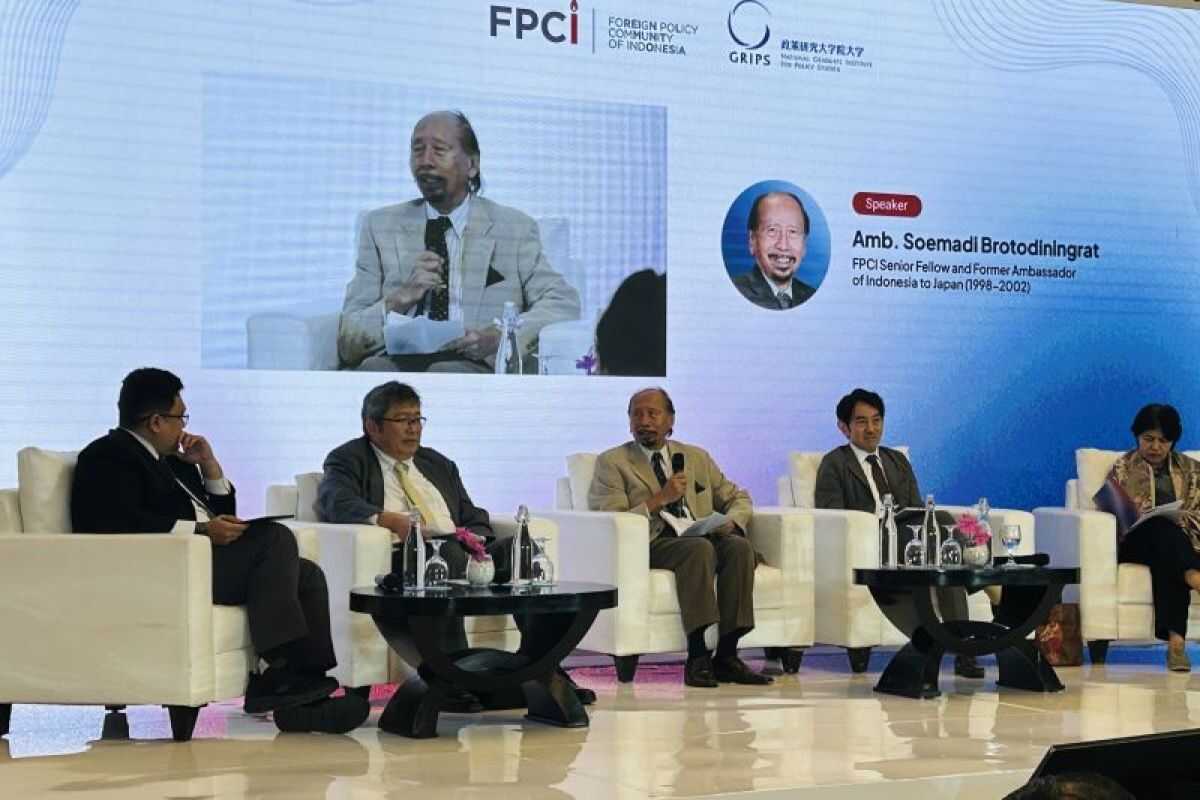
Jakarta (ANTARA) – An Indonesian diplomat has warned of the risks of mixing economic, trade, political and security interests in newly formed bilateral cooperation practices in the Indo-Pacific region, which are considered capable of undermining commitments to rules-based international agreements. The warning was delivered by former Indonesian Ambassador to Japan Soemadi Brotodiningrat at the FPCI-GRIPS Joint Seminar in Jakarta on Friday, referring to the growing diversity of cooperation instruments involving countries in the Indo-Pacific region. ‘With transitional bilateral practices that include commitments to accepted rules, as well as the mixing of economic and trade interests with political and security objectives, it is important for us to reflect carefully on how this may affect us,’ Soemadi said. He assessed that such transitional bilateral practices could potentially affect the relationships that have been built through various rules-based agreements, including the bilateral partnership between Indonesia and Japan. ‘What worries me is that the implementation of rules-based agreements could be jeopardised by new commitments introduced through bilateral-type systems,’ he said. He cited the concepts of Free and Open Indo-Pacific (FOIP) and the ASEAN Outlook on the Indo-Pacific (AOIP), which emphasise stability, openness and cooperation between countries. In addition, there are various regional mechanisms centred on ASEAN, such as ASEAN Plus One, Plus Three, and Plus Five. In the context of bilateral relations, Soemadi said Indonesia and Japan have successfully moved beyond historical conflicts and developed into a closer strategic partnership. ‘We realise that good relations are not only the result of shared interests and values, but also mutual understanding and acceptance of differences,’ he said. Therefore, he argued that the key in interstate relations, especially between Indonesia and Japan, is to ensure that every difference does not develop into conflict. ‘The most important thing is that both parties are willing and prepared to prevent differences from turning into conflicts and seeds of conflict,’ he said.