
Indonesia Shifts LPG Import Sources, Bahlil Ensures Secure Supply
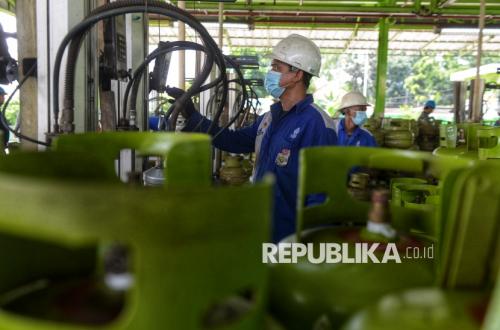
Minister of Energy and Mineral Resources (ESDM) Bahlil Lahadalia has assured that the national LPG supply remains secure amid adjustments to energy import sources. The government is redirecting LPG supplies previously sourced from the Middle East to several other countries to ensure the sustainability of domestic supply.
Bahlil stated that this redirection is part of the government’s strategy to strengthen national energy resilience. The government is preparing several alternative supply options to keep energy needs for the public and business sectors intact amid global market dynamics.
“LPG? Up to now, insyaallah, with our prayers, it remains safe,” said the ESDM Minister in Jakarta on Monday (6/4/2026).
Bahlil explained that the government is not only focusing on LPG availability but also ensuring that the national energy supply chain remains flexible. According to him, adjusting import sources is an important step so that Indonesia does not become overly dependent on one supplier region.
He mentioned that LPG supplies from the Middle East have now been redirected to several alternative countries. This redirection aligns with the government’s strategy to maintain energy supply stability amid changes in international market conditions.
“Because what we took from the Middle East has already been redirected to other countries, yes, like in America, in Australia, several other countries,” Bahlil said.
He added that a similar pattern is being applied to crude oil supplies. The government is beginning to adjust import sources from the Middle East region to several countries in Africa, such as Angola and Nigeria, to broaden supply options.
Bahlil stated that this step cannot be separated from the global energy situation that demands the government to be more adaptive. In conditions like the current ones, the government must ensure that supplies remain available and are not disrupted by international trade dynamics.
At the same time, the government is also opening options for importing fuel oil (BBM) from various countries. He assessed that this approach is necessary because the government’s main priority is to maintain domestic energy availability, rather than just determining the origin country of the supplier.
Bahlil revealed that competition for energy supplies in the global market is also becoming increasingly tight. According to him, goods that have already entered the tender process can still shift to other buyers if there is a higher price offer.
The government is also continuing diversification efforts through the implementation of B50, scheduled to take effect on 1 July 2026. With this import redirection strategy and strengthening of alternative energy, the country is striving to maintain national energy resilience amid global pressures.