
IESR highlights the importance of implementing Euro 4 fuel standards for health and the environment
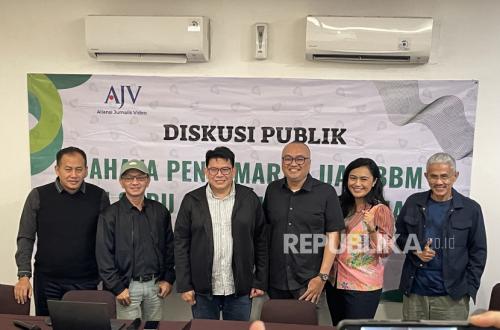
Jakarta — The Institute for Essential Services Reform (IESR) is urging accelerated adoption of the Euro 4 minimum fuel standard in Indonesia. This is important to improve fuel quality while reducing emissions that could affect health and the environment.
IESR CEO Fabby Tumiwa said raising the fuel standard can improve air quality, especially in areas with high levels of fuel distribution activity such as public petrol stations (SPBU).
According to Fabby, regulations on vehicle emission standards and fuel standards have actually been in place for several years. However, their implementation has proceeded gradually, so not all types of fuels in circulation meet the standards.
‘Improving the quality of fuel sold to the public is important. Therefore we urge the government and fuel suppliers to accelerate the adoption of the Euro 4 minimum standard,’ Fabby said at a journalist discussion in Jakarta on Saturday, 7 March 2026.
Fabby explained that some fuels already meet the standard, such as Pertamax Turbo with RON 98 and Pertamax Green 95. However, several products widely used by the public have not fully adopted the emission standards.
Besides emissions, improving fuel quality is also seen as helping reduce the emission of volatile organic compounds (VOCs) that arise from fuel vapour during storage and refuelling at SPBU. Prolonged VOC exposure can harm health. The lower the fuel quality, the greater the potential VOC generated.
Fabby noted that vapour control can be strengthened through the use of vapor recovery system technology. This system captures gasoline vapour during the refuelling process so that it does not escape into the air.
‘Technology of vapour recovery is already used at some SPBU, but its deployment is not uniform. In the future there needs to be clearer policy so that this technology can be expanded,’ he said.
From the workers’ protection side, Abdul Gofur, president of the ASPEK Indonesia Workers’ Trade Union Federation, said SPBU workers are potentially exposed to fuel vapour for long periods because they work for hours in the refuelling area.
He sees occupational safety aspects needing joint attention, including the use of appropriate standard personal protective equipment for field workers. According to Gofur, PPE use and periodic health checks can help minimise health risks that may arise from exposure to fuel vapour.
‘SPBU workers are closest to the source of exposure because they work for hours in the refuelling area. It is therefore important to ensure they use adequate protection and receive regular health checks,’ he said.
In addition, he emphasised the importance of workers’ participation in social security and health programmes. With such protection, workers have coverage if they experience health issues related to work risks.
Muhammad Mufti Mubarok, chairman of the National Consumer Protection Agency (BPKN), said his agency would follow up on the VOC issue by coordinating with relevant ministries and agencies.
Mufti noted that the issue relates to both consumer protection and worker protection. Cross-sector coordination is needed so that policies can provide adequate protection.
‘We will follow up this issue by coordinating with stakeholders from energy, environmental, and labour sectors. The aim is to strengthen protection for consumers and workers,’ Mufti said.
Mufti added that BPKN is open to collecting input from various parties, including businesses and regulators, to seek constructive solutions to improve safety and health standards in the fuel distribution sector.