
Government's 6 Strategies to Face Prolonged Dry Season
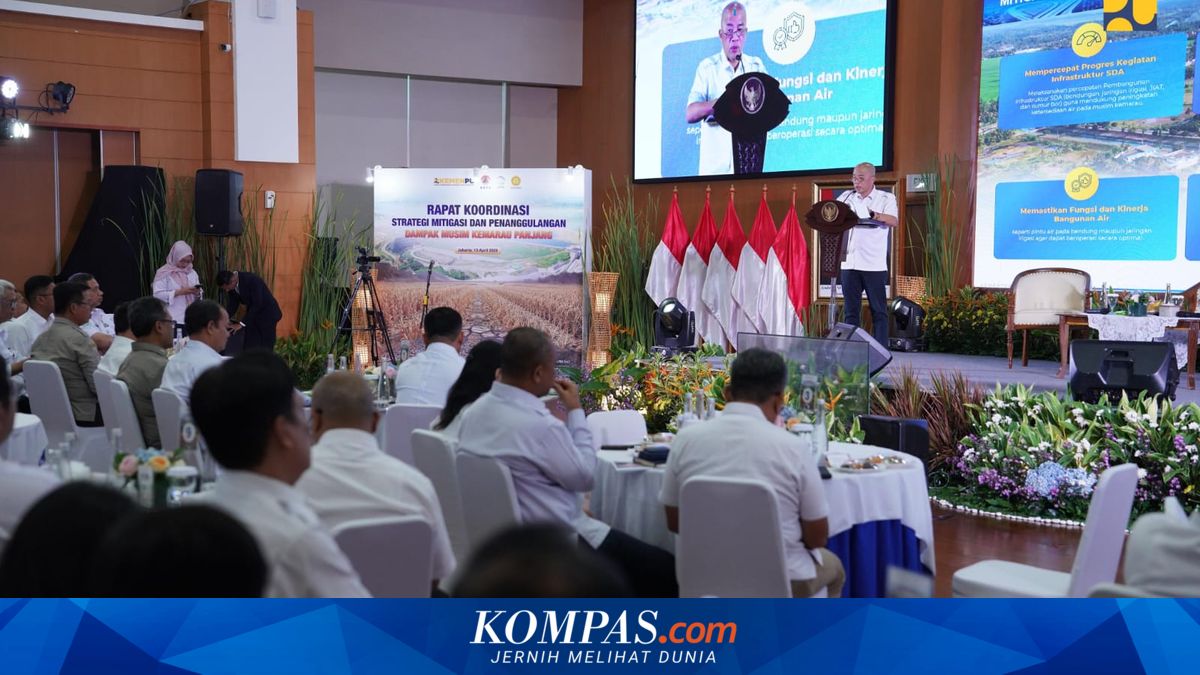
JAKARTA, KOMPAS.com - The Ministry of Public Works and Public Housing (PUPR) is preparing six main strategies to anticipate the potential for a prolonged dry season in 2026, which is expected to arrive earlier and last longer than normal conditions.
Acting Director General of Water Resources at the Ministry of PUPR, Adenan Rasyid, stated that these mitigation steps are crucial to implement early, given their broad impacts on water, food, and environmental resilience.
This was conveyed by Adenan during the Coordination Meeting on Strategies for Mitigating and Addressing the Impacts of the Prolonged Dry Season in 2026 in Jakarta on Monday (13/4/2026).
“The 2026 dry season is expected to arrive earlier, last longer, and have a higher level of dryness than normal conditions. This situation poses a serious threat to water, food, and environmental resilience, necessitating planned, measured, and integrated mitigation efforts,” he said.
Based on an analysis by the Meteorology, Climatology, and Geophysics Agency (BMKG), the 2026 dry season is expected to coincide with the El Niño phenomenon starting in July with weak to moderate intensity and a 50-80 percent likelihood.
The drought impacts are anticipated to spread across various sectors, from reduced river flows, diminished reservoir volumes, to depleted groundwater reserves.
In the agricultural sector, this could disrupt planting patterns, while environmentally, the risk of forest and land fires, particularly in peat areas, is also increasing.
To anticipate this, the Ministry of PUPR has established six main strategies: optimising water storage operations through priority-based allocation and real-time data; strengthening irrigation networks to minimise water loss; enhancing the readiness of facilities and infrastructure to ensure all equipment is operational; adjusting planting patterns according to water availability and climate conditions; accelerating the construction of water resources infrastructure such as dams and irrigation, as well as alternative water sources; and optimising the functions of all water structures.
Adenan emphasised that these mitigation efforts require cross-sectoral collaboration, not just the responsibility of one agency.
“We cannot avoid the dry season, but we can ensure its impacts do not develop into a crisis. Anticipation, speed, and coordination are the keys we must maintain together,” Adenan asserted.