
Gerindra-PSI Faction Requests Change in Bali's Tourism Direction
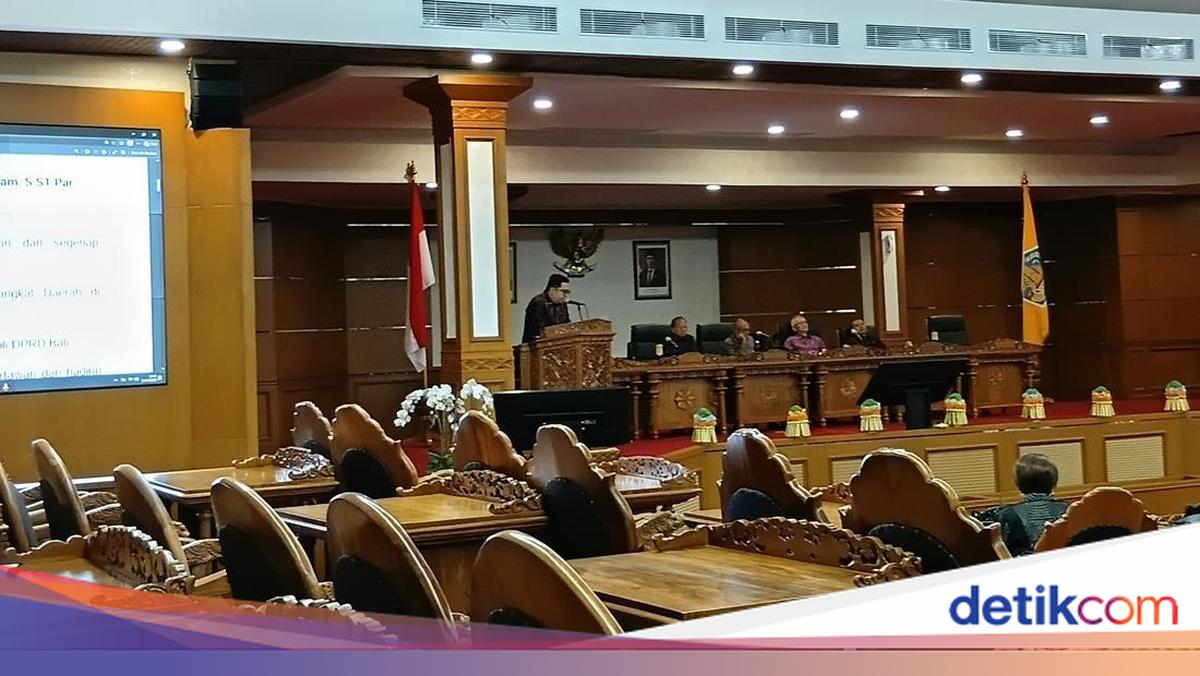
The Gerindra-PSI faction in Bali’s DPRD has requested that the Governor of Bali change the direction of tourism policies, including in managing local taxes. The reason is that Bali’s tourism has so far been viewed merely as an industrial sector.
The chairman of the Gerindra-PSI faction in Bali’s DPRD, Gede Harja Astawa, stated that if tourism is only seen as a source of income, it risks neglecting long-term impacts. According to him, Bali’s tourism sector is also related to many parties, such as the environment, culture, and the lives of local communities.
“The concept of tourism is multidimensional and multidisciplinary,” said Gede Harja Astawa during the 33rd plenary session at the DPRD Bali building on Tuesday (14/4/2026).
He also emphasised that the drafting of the Regional Regulation (Raperda) on Tourism should refer to President Prabowo Subianto’s policy, namely Law No. 18 of 2025 on Tourism.
In addition, Harja Astawa touched on the management of regional revenue, which he assessed as still lacking in transparency. He considered this improvement important so that Bali’s tourism does not only focus on quality but is also sustainable and benefits local communities.
Furthermore, he criticised the rules on quality tourists, which he deemed still too lax. This is evident from tourists who can enter too easily. “The quality tourist rules are alternative, meaning that fulfilling just one characteristic is enough to be called quality,” he added.
Therefore, the Gerindra-PSI faction proposes that the assessment be tightened by requiring all criteria to be met.
In addition, he criticised policies and budget management, including foreign tourist levies (PWA). “Transparency and objectivity are needed in managing budgets sourced from PWA,” said Harja Astawa.
He proposed that tourism revenue such as hotel and restaurant taxes be managed by the Bali Provincial Government (Pemprov Bali). According to him, rules on tariffs that are too detailed can be complicating, and it would be better to make them more flexible.
In addition, he highlighted the performance of the regional government in handling disasters, which he assessed as still too slow. From environmental issues like rubbish and beach abrasion to social issues that have not yet been handled well.
“Development must not just chase image, but also focus on real quality,” emphasised Harja Astawa.