
Fuel Supply at Shell-BP Service Stations Empty, Here's What Bahlil Says
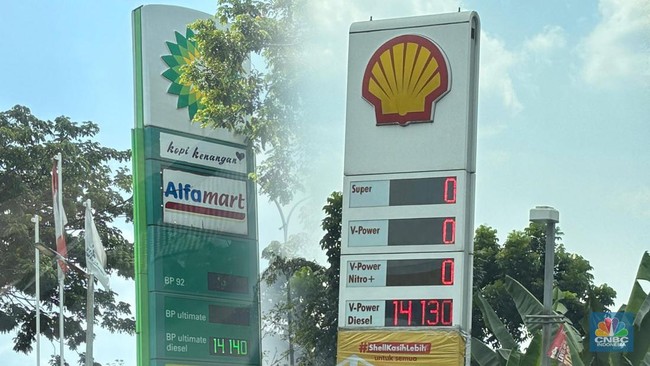
Jakarta — Energy and Mineral Resources Minister Bahlil Lahadalia has commented on the empty stocks of fuel at several privately-operated service stations (SPBU) such as Shell and BP.
Bahlil called on private businesses to seek independent commercial solutions to secure their supply chains. The minister emphasised that the government’s primary focus is to maintain energy availability for the broader population nationally. He suggested that private SPBU operators establish commercial cooperation between businesses, or Business to Business (B2B) arrangements, to address supply shortages.
“Please go B to B. That’s how it is. I’m not talking about individuals. The state is not here to manage one group. For groups that want to survive and maintain stock, go ahead and collaborate with other business entities,” Bahlil said when met at the Energy and Mineral Resources Ministry office in Jakarta on Tuesday, 17 March 2026.
According to CNBC Indonesia’s monitoring, Shell service stations have had empty fuel stocks since the beginning of 2026. Meanwhile, BP service stations have experienced shortages of certain fuel types more recently.
In contrast to the situation at private service stations, Bahlil guaranteed that fuel supplies managed by PT Pertamina (Persero) are secure. He ensured that the availability of fuel, liquefied petroleum gas (LPG), aviation fuel (avtur), and electricity is sufficient to meet public demand ahead of and during the Eid al-Fitr holiday period.
The government recognises that escalating geopolitical conflict in the Middle East has triggered market panic in several countries. However, Bahlil assured that the Indonesian Government will not completely liberalise fuel prices to market mechanisms and will maintain the subsidy scheme.
“Regarding prices, the state will continue to provide subsidies. We will continue to be there. How much the subsidy will be depends on how geopolitical developments unfold. But regarding prices, God willing, if it reaches US$100 per barrel — the average now is around US$70 — if it reaches US$100, God willing, it will still be within the budget framework and we can still manage it,” he stated.