
Finally, Residents on the Indonesia-Timor Leste Border Enjoy Smooth Roads via IJD
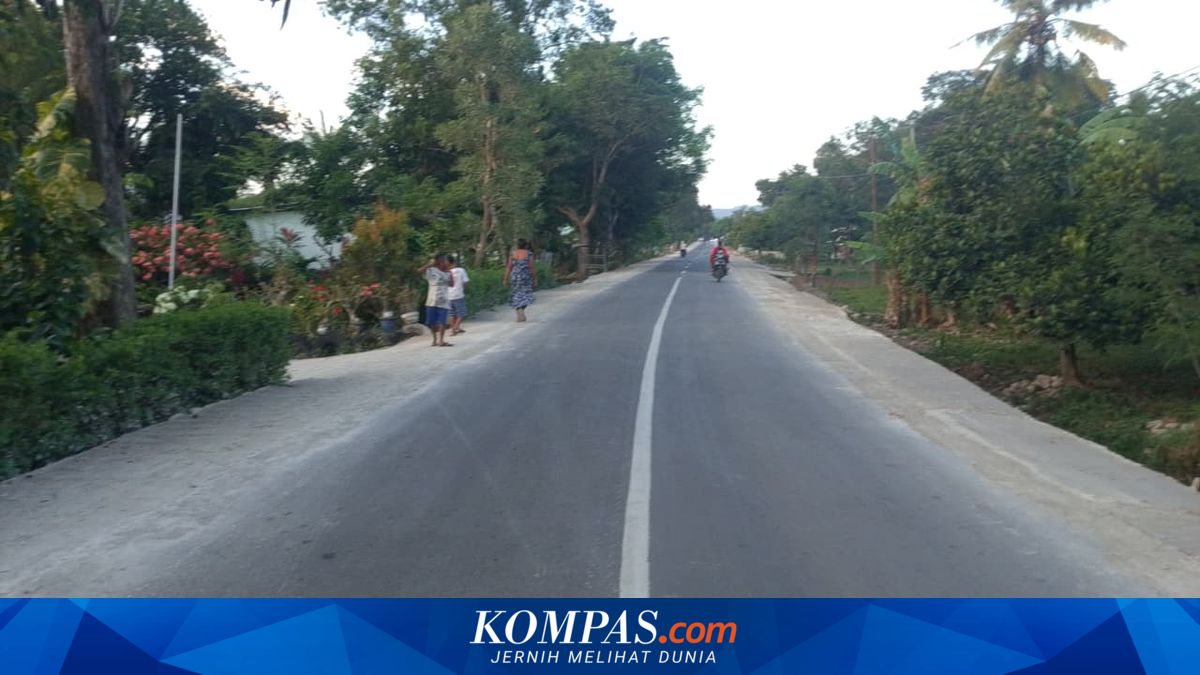
KUPANG, KOMPAS.com – Residents in the border region, specifically in Mandeu Village, Raihat Subdistrict (Rainanuk), Belu Regency, East Nusa Tenggara (NTT), can finally experience smooth and proper road access.
The construction of the road through the Inpres Jalan Daerah (IJD) programme, spanning 4 kilometres in the village, has been completed.
This project is part of the IJD programme for the 2025 fiscal year, carried out by the National Road Implementing Unit Region II, the NTT National Road Executing Agency (BPJN), under the Directorate General of Highway Development, Ministry of Public Works (PU).
One resident of Mandeu Village, Loris Lay, expressed gratitude and thanks for the road construction.
He revealed that previously, the road condition was severely damaged and full of potholes, making daily activities difficult for residents.
“We are very grateful to the BPJN NTT and the contractor for building this road. Previously, the road was badly damaged, now it’s smooth and very helpful for us,” he told Kompas.com on Friday (24/4/2026).
According to Loris, this road improvement has a significant impact on community mobility, especially in taking children to school.
“Now, children are no longer late for school. We also find it easier to go to church, because previously small vehicles had difficulty passing due to large potholes,” he added.
Nevertheless, he hopes the government can continue road construction towards Malaka, which is still damaged for about 20 kilometres, including the route to Teun, which has not yet been repaired.
A similar sentiment was expressed by another resident, Lorens. He admitted to being greatly helped by the well-built quality road.
“If possible, the government should appreciate the agency and contractor for delivering a road that is very beneficial to the community,” he said.
“Now, going to the market can be done quickly after this smooth road was built,” he stated.
Lorens also hopes that the road quality remains maintained so it can be used for a long time, and similar constructions can be continued in other areas that still need it.
This road infrastructure development serves as tangible proof of the government’s presence in improving connectivity and community welfare, especially in border regions.