
Failed to Become ASN, DPR Proposes Special Incentives for 638,000 Private Madrasah Teachers
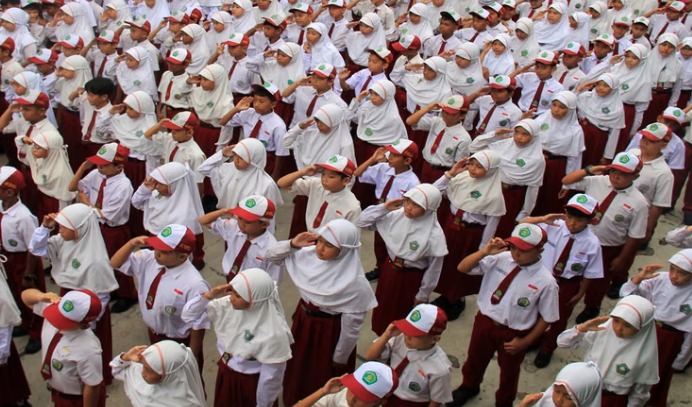
Commission VIII of the Indonesian House of Representatives (DPR RI) has urged the Ministry of Religious Affairs (Kemenag) to promptly seek breakthroughs to enhance the welfare of 638,000 private madrasah teachers across Indonesia. This call arises after hundreds of thousands of these educators were confirmed unable to be appointed as Civil Servants (ASN) or PPPK due to legislative barriers.
Deputy Chairman of Commission VIII DPR RI, Abidin Fikri, explained that based on a meeting with the Ministry of Administrative and Bureaucratic Reform (Kemenpan-RB), their appointment is obstructed by Law No. 20 of 2023 on ASN. This regulation does not permit teachers working in private institutions to become government employees.
“I believe a breakthrough is needed. The 638,000 madrasah teachers proposed by Kemenag must not face a dead end, leaving them in limbo,” Abidin stated at the Parliament Complex in Senayan on Tuesday (31/3/2026).
As a solution to this impasse, Abidin proposed a scheme for special incentives sourced from the state budget. This PDI Perjuangan politician suggested calculating incentives based on the ratio of students and the teacher’s service period in Madrasah Ibtidaiyah (MI), Tsanawiyah (MTs), and Aliyah (MA).
Abidin provided an illustration: if the ideal ratio is one teacher to 15 students, the government can simply calculate the total teacher needs from the number of all private madrasah students nationwide.
“Then calculate the number of students in all madrasahs in Indonesia, how many teachers receive incentives, and add the incentive value based on the length of service,” Abidin clarified.
Furthermore, Abidin requested the Director General of Islamic Education (Pendis) at Kemenag to meticulously calculate the required budget. Abidin mentioned an estimated range of Rp2 million to Rp5 million per month as a reasonable incentive value for each teacher.
However, he emphasised that the absolute condition for the success of this scheme is data accuracy. Kemenag must have valid and transparent student data to ensure the incentive distribution is accountable.
“The principle is that the state must be present. They have struggled with extraordinary dedication, but their welfare has been neglected. We will oversee so that this scheme is included in Kemenag’s budget next year,” he concluded.